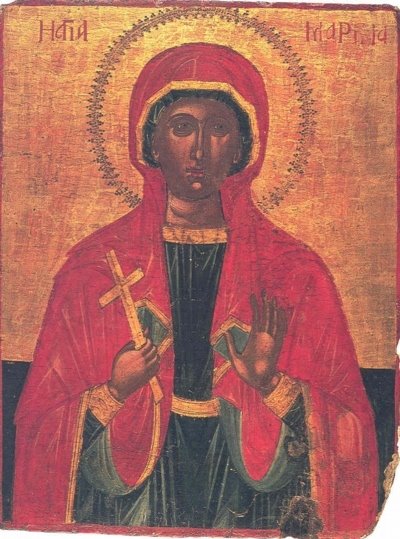
The Life and Martyrdom of Saint Kyriaki
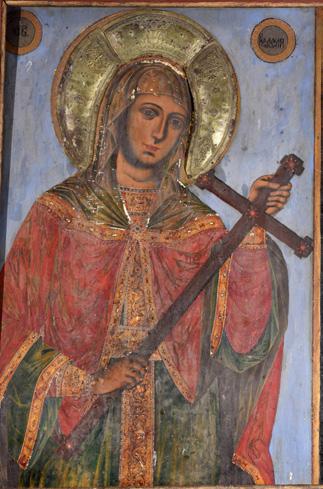
Dorotheos and Eusebia prayed for a child and raised their daughter Kyriaki in the Christian faith. Inspired by the Theotokos and Saint Paul’s teaching, Kyriaki chose virginity and dedicated her life to Christ.
Archive Collection
Saints’ lives and readings for the Church year.
Discover the saints through their lives, struggles and witness. Explore readings for the feasts and commemorations of the Church year.
436 recordingsGreek audio · Greek and English texts

Collection
436 recordings
Dorotheos and Eusebia prayed for a child and raised their daughter Kyriaki in the Christian faith. Inspired by the Theotokos and Saint Paul’s teaching, Kyriaki chose virginity and dedicated her life to Christ.
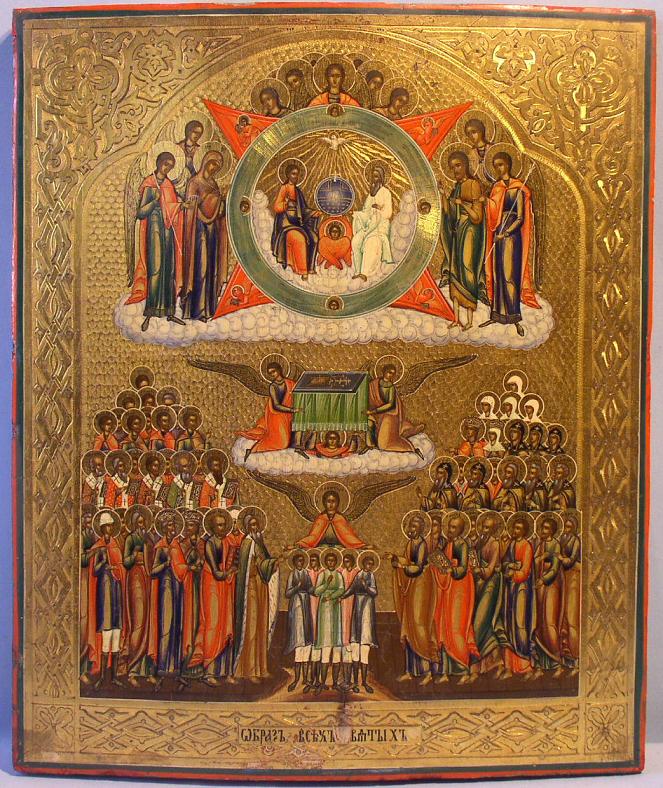
Born in Antioch of Pisidia, Marina was raised by a Christian caregiver, baptized at twelve, and disowned by her pagan priest father. At seventeen, she refused a prefect’s marriage proposal and openly confessed her faith in Jesus Christ.
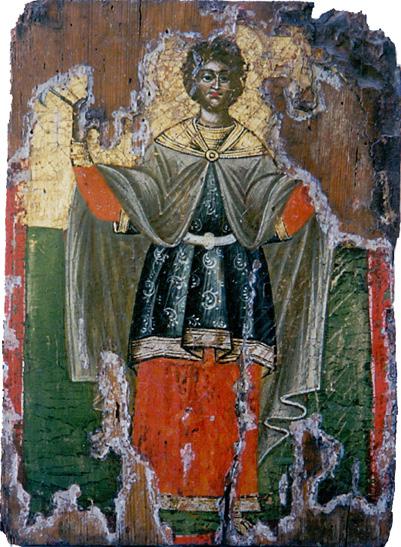
Saint Theodora of the Peloponnese entered the Monastery of Panaitsa disguised as a monk named Theodore. Her patience, obedience, and humility earned the trust of the monks, who assigned her work outside the monastery.
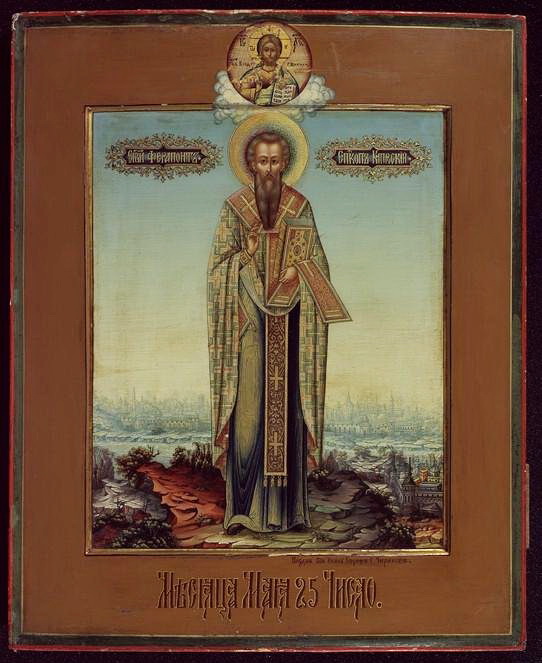
Born to devout parents in Alamannia, Therapon embraced an austere life of Scripture study and was ordained a bishop. He taught Orthodoxy, brought many people back from heresy, and defended the veneration of holy icons.
This account begins with the Orthodox rite of bringing a child to church after forty days and connects baptism with belonging to the Church. In the early 1950s, residents of Terpsithea sought permission to build a church through their own contributions.
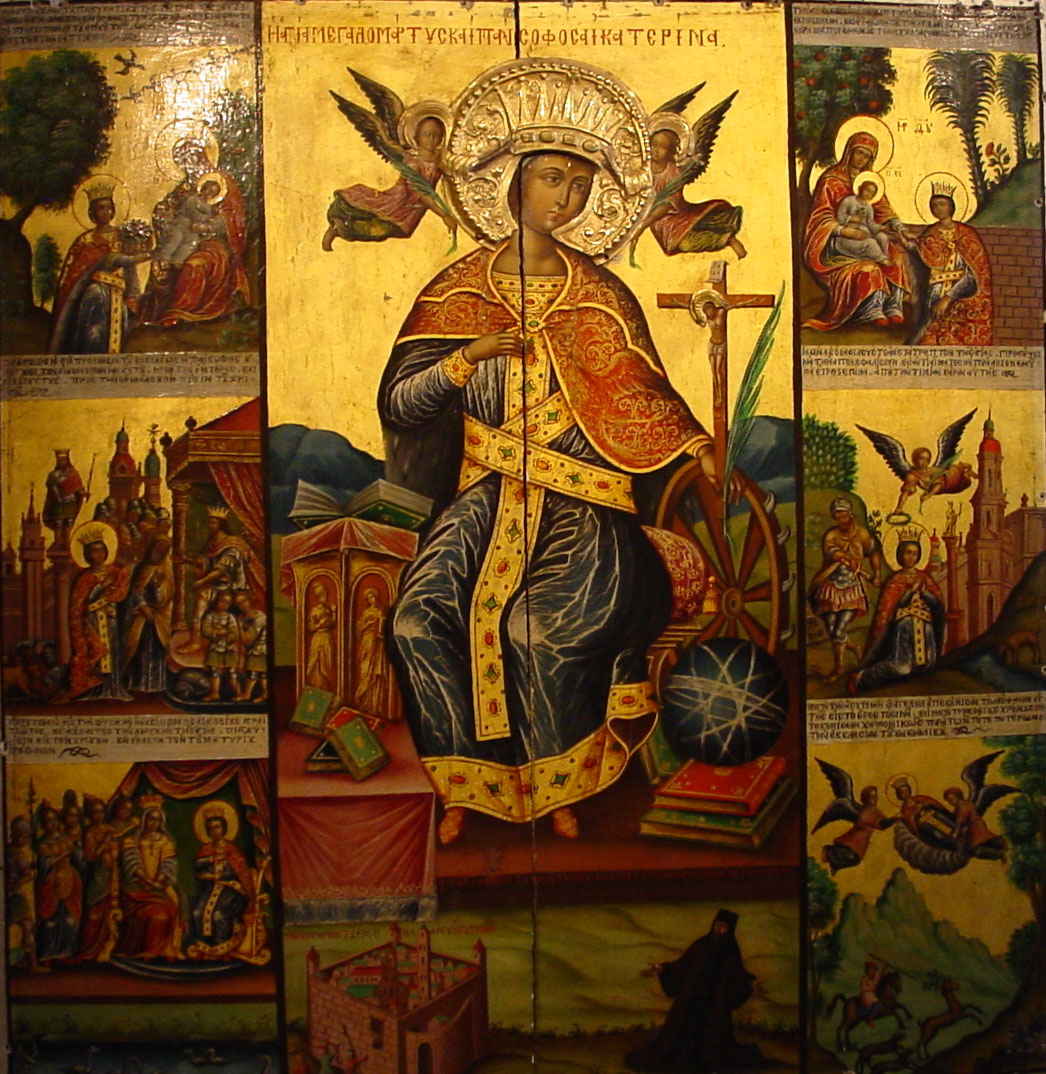
Catherine of Alexandria was admired for her learning and beauty but resisted her family’s pressure to marry. An ascetic directed her toward Christ and gave her an icon of the Theotokos, prompting a vision that led her to seek instruction in the Christian faith.
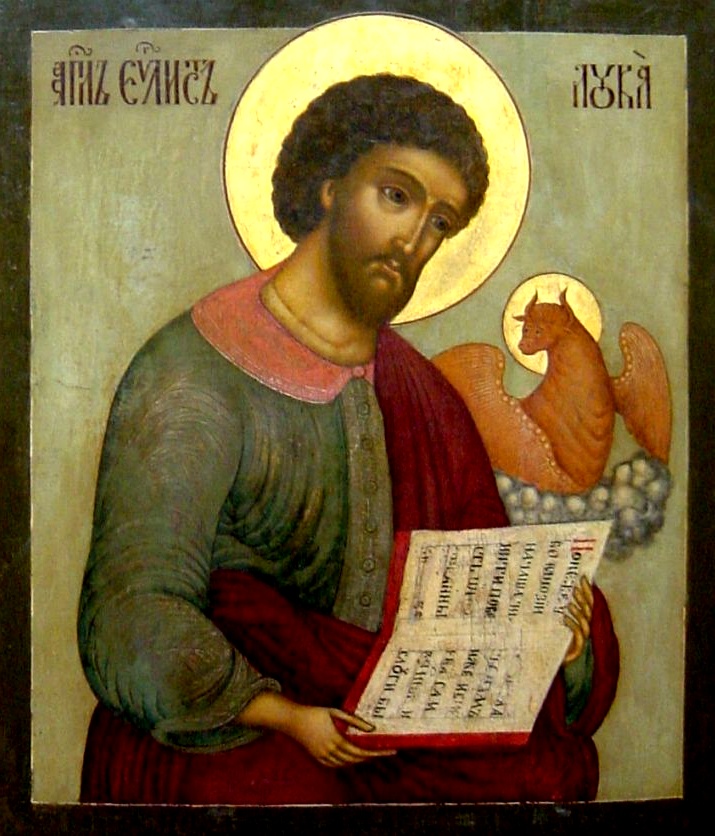
This account introduces Luke as a Greek physician from Antioch who wrote the Gospel of Luke and Acts of the Apostles. Orthodox tradition attributes early icons of the Theotokos and Christ Child to Luke, including an icon associated with the Monastery of Mega Spilaio.
Anastasia, a Constantinopolitan noblewoman in Justinian’s era, left the imperial court and founded a women’s monastery near Alexandria. She later lived in the Egyptian desert under Abba Daniel of Scetis, praying and fasting in seclusion while known as the monk Anastasios.
Catherine of Alexandria seeks a bridegroom whose nobility, wealth, wisdom, and beauty surpass her own. An ascetic elder gives her an icon of the Theotokos, and a vision directs her to learn the Christian faith.
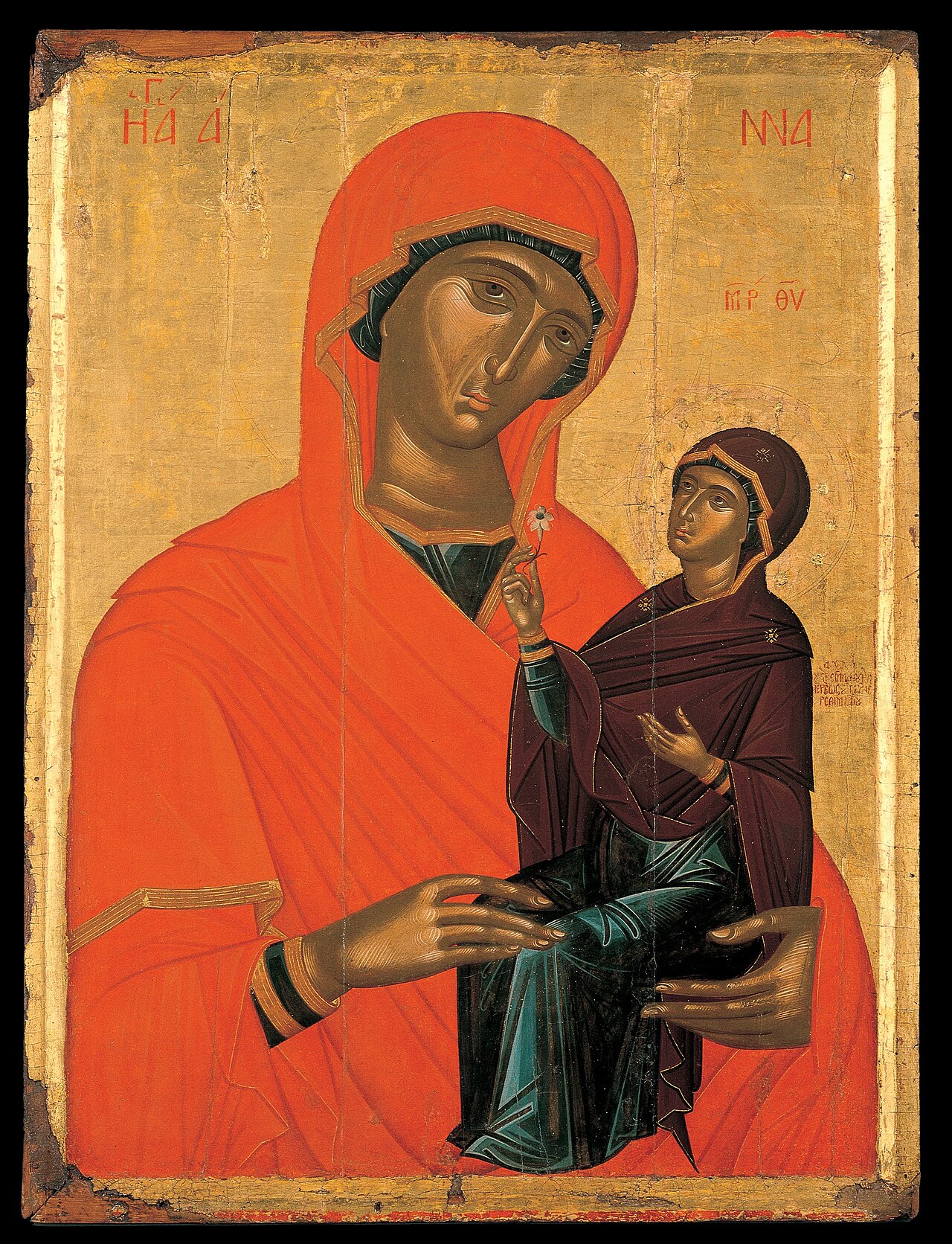
Saint Anna, from a priestly family, married Joachim, and they lived faithfully in Galilee. Their childlessness brought public shame, prompting Joachim to fast in the mountains and Anna to pray in their garden.
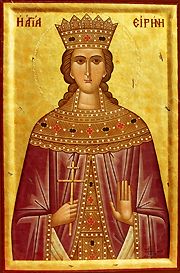
Saint Irene grew up in Magedon, Persia, as the daughter of Licinius, under the care of her tutor Apelianus. After embracing faith in Christ, she refused to abandon it despite her father’s demands.
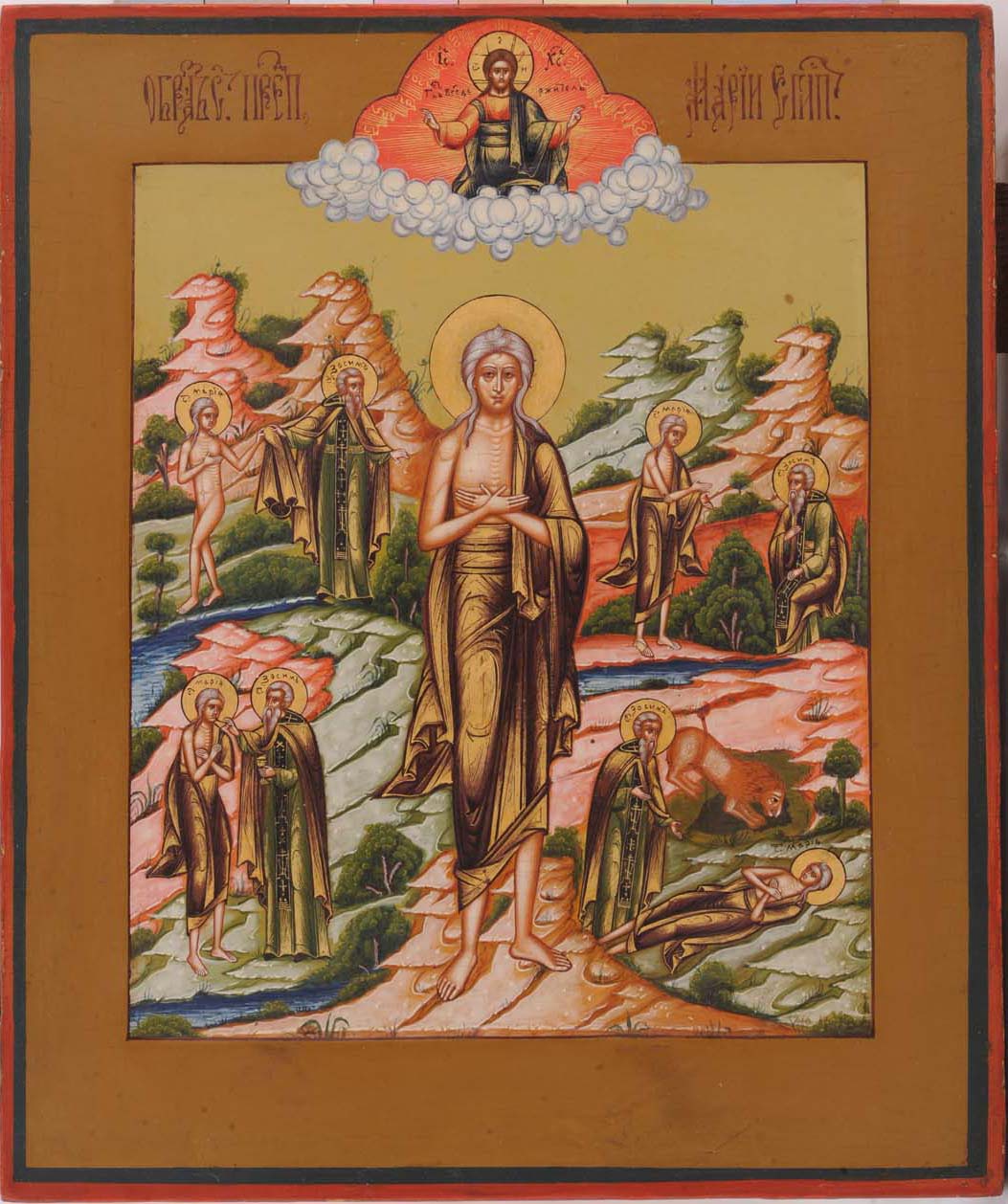
Mary of Egypt turned from a life of sexual sin after an unseen force prevented her from entering the Church of the Resurrection to venerate the True Cross. She prayed before an icon of the Theotokos, entered the church, and followed a call to cross the Jordan into the desert.
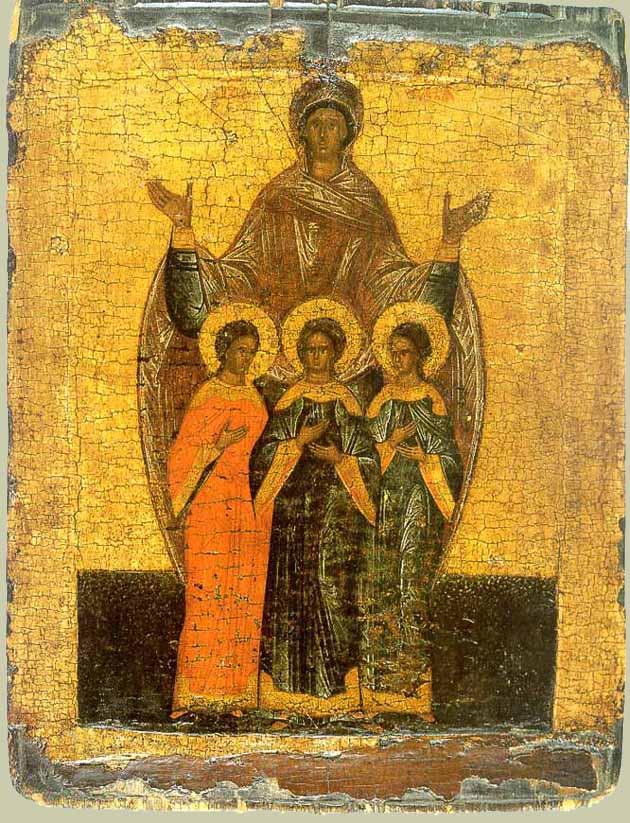
Saint Sophia raised her three daughters as Christians in Rome during the reign of Emperor Hadrian, naming them for the virtues praised by the Apostle Paul. After Antiochus reported their faith, Hadrian summoned the family and demanded that they renounce Christ.
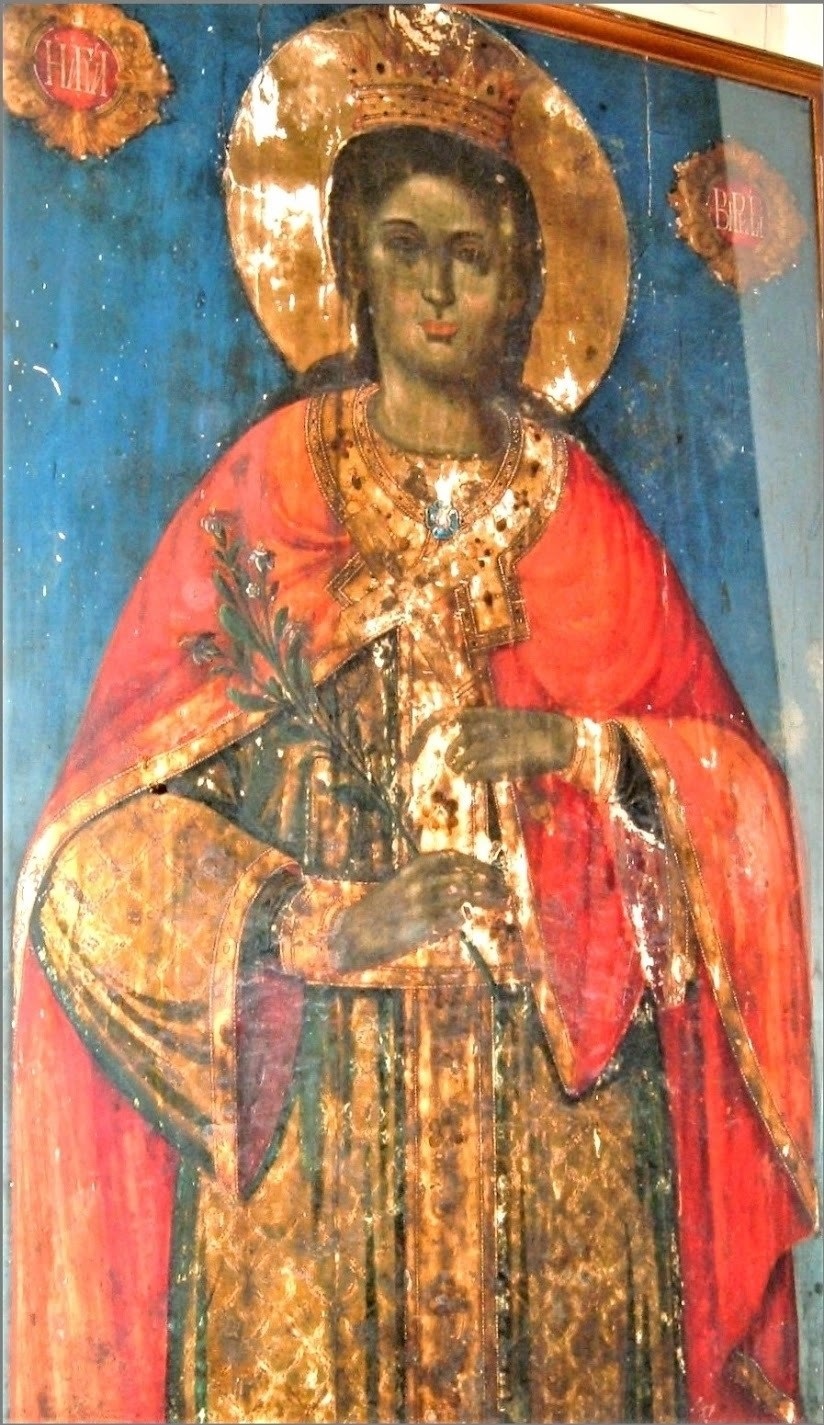
Saint Barbara, daughter of the pagan official Dioscorus, lived in Heliopolis during the reign of Diocletian. Confined in a tower, she declared her Christian faith by adding a third window to a bath as a sign of the Holy Trinity.
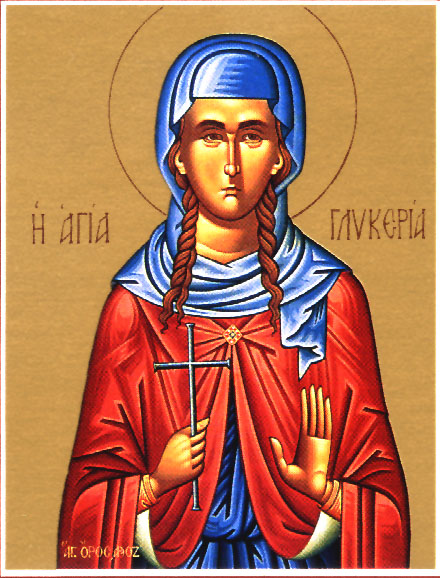
Born into a prominent Roman family, Glyceria encouraged Christians in Thrace who gathered secretly to pray. When Emperor Antoninus ordered sacrifices to the gods, Glyceria openly confessed Christ before Governor Sabinus.
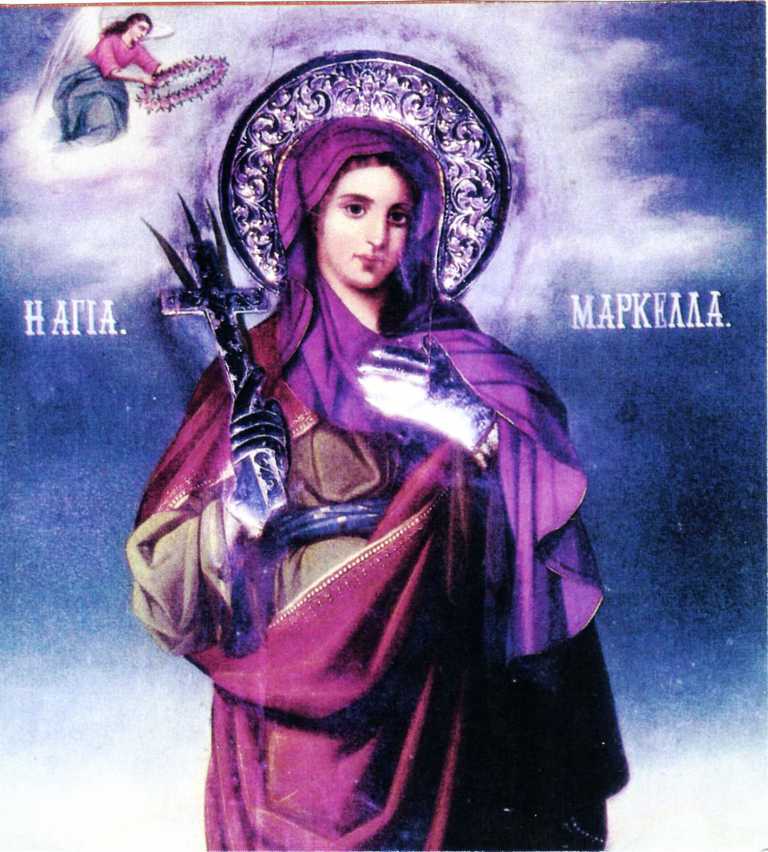
Born in Volissos on Chios, Markella lost her mother young and was raised by her wealthy father. She devoted herself to prayer, chastity, helping the poor, and becoming a bride of Christ.
Named for the day of her birth, Paraskevi was raised by devout parents to defend the word of God. After her parents died, she gave her wealth to the poor and devoted herself to God.
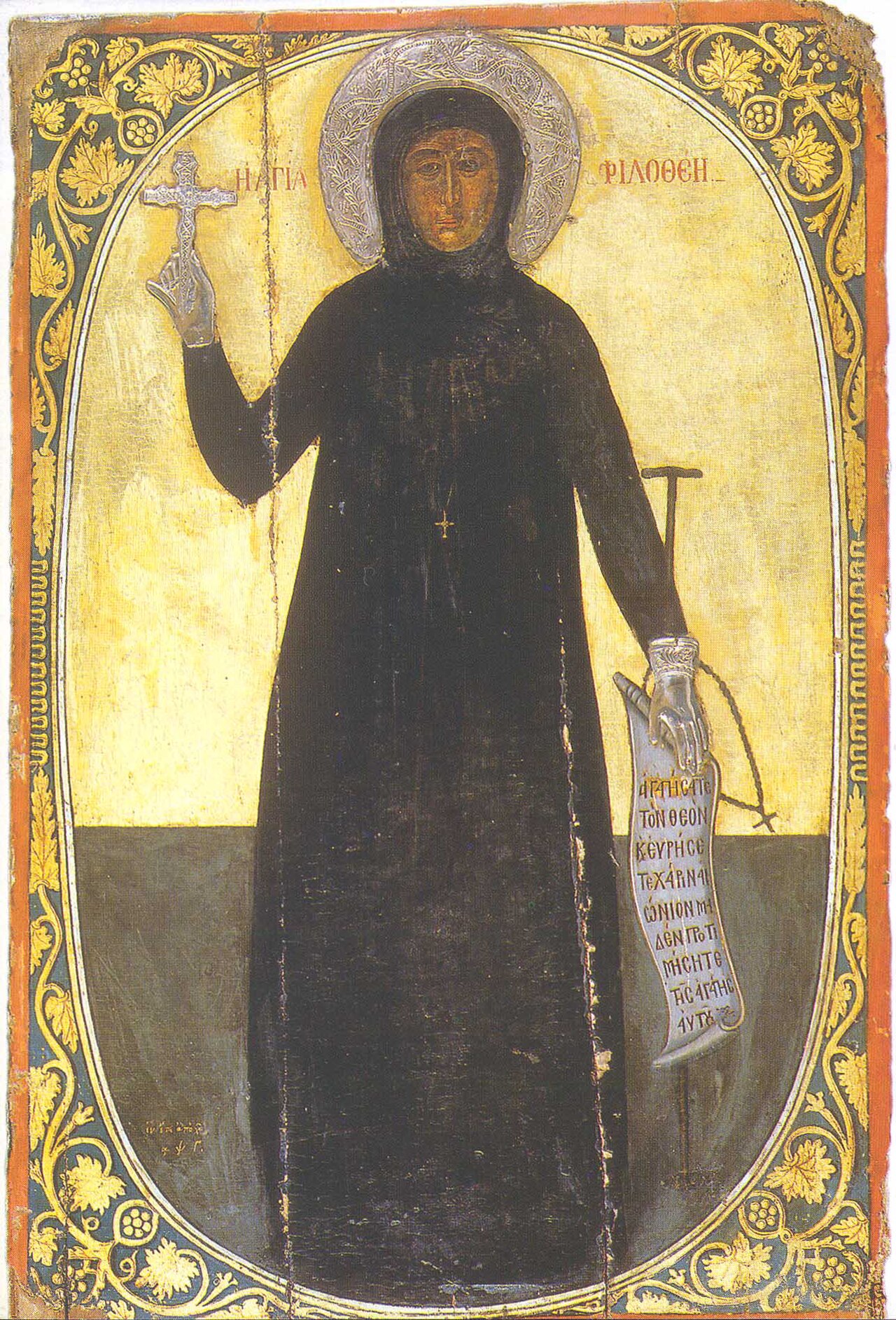
Born Revoula Benizelou in Ottoman-era Athens, Philothei grew up in a family known for wealth and almsgiving. Although she wished to become a nun, she married under family pressure and endured an abusive husband until his death.
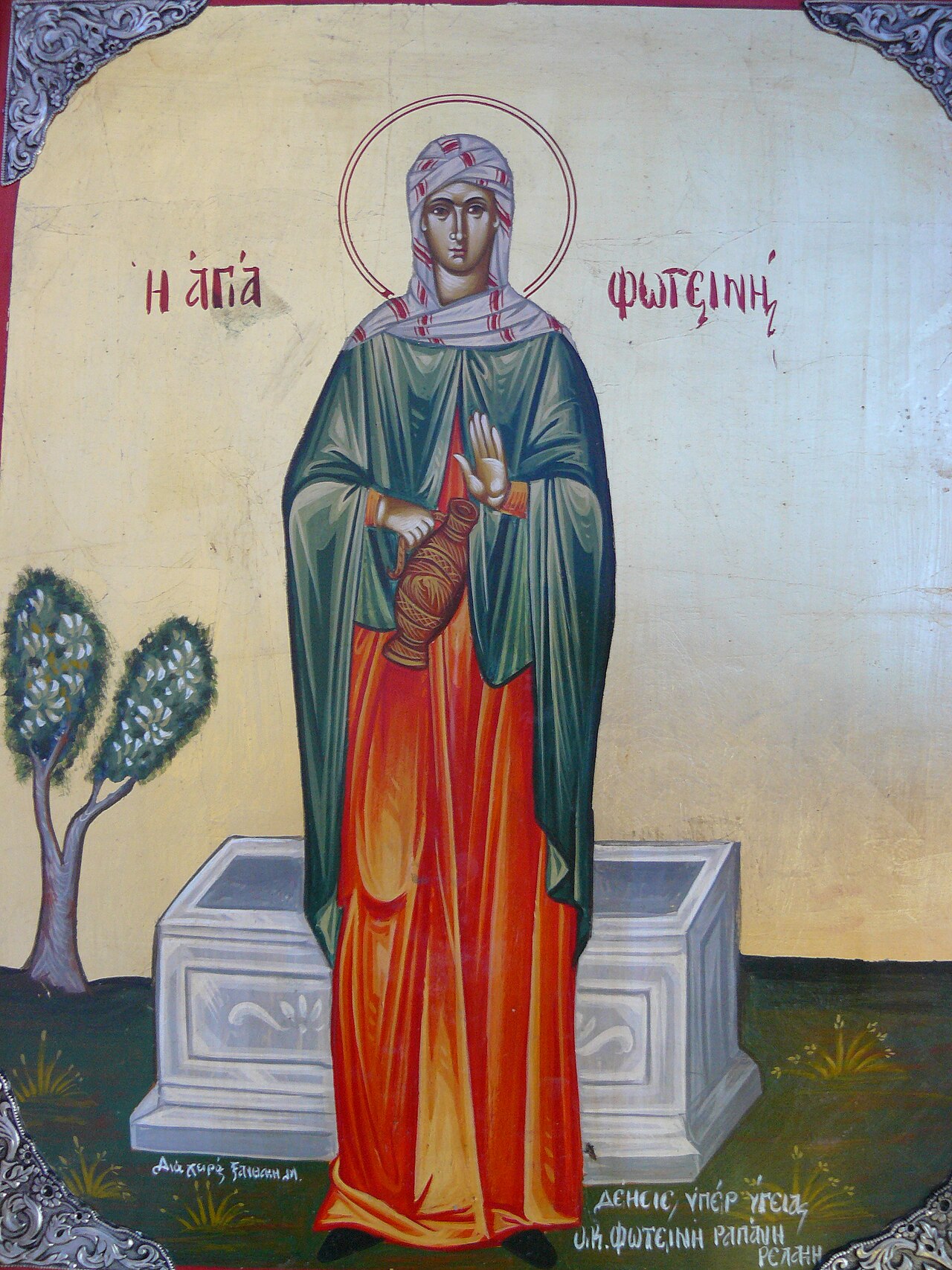
Saint Photini, a Samaritan woman from Sychar, met Jesus at the well despite being shunned for her way of life. Jesus spoke to her of living water and showed that he knew her life without humiliating her.
Saint Emilianos began as a monk at the Bosporus monastery founded by Patriarch Tarasios of Constantinople. As bishop of Cyzicus from 787 to 815, he was known for his virtue, generosity, and joyful character.
The Church of Saint Andrew in Patras was founded in 1908, inaugurated in 1974, and houses the apostle’s skull and a portion of his martyrdom cross. Andrew’s skull returned from Rome in 1964, followed by the cross relic in 1980, and both are treasured by the local Church.
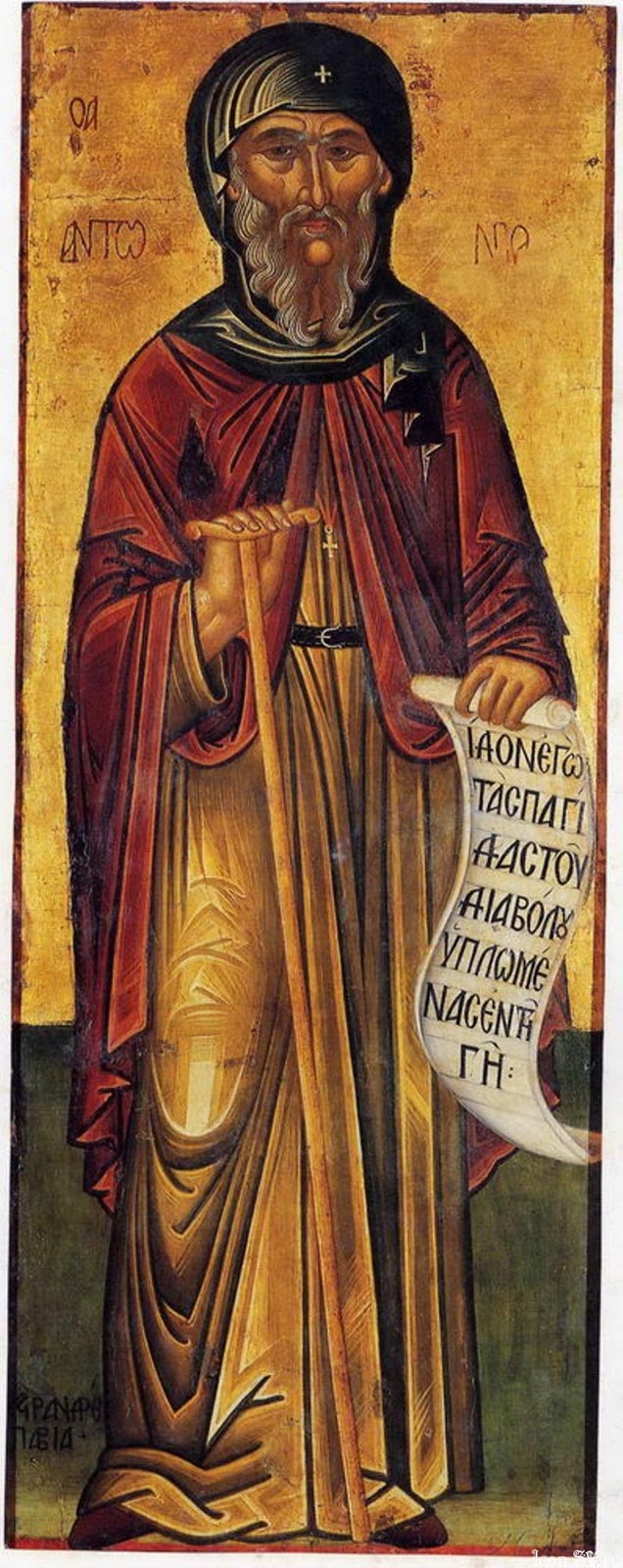
Born in Egypt in 251 to Christian parents, Anthony grew devoted to church readings and later began an ascetic life near an elder monk. He entrusted his sister to a Christian community, gave his earnings to the poor, and practiced fasting, prayer, charity, and self-discipline.
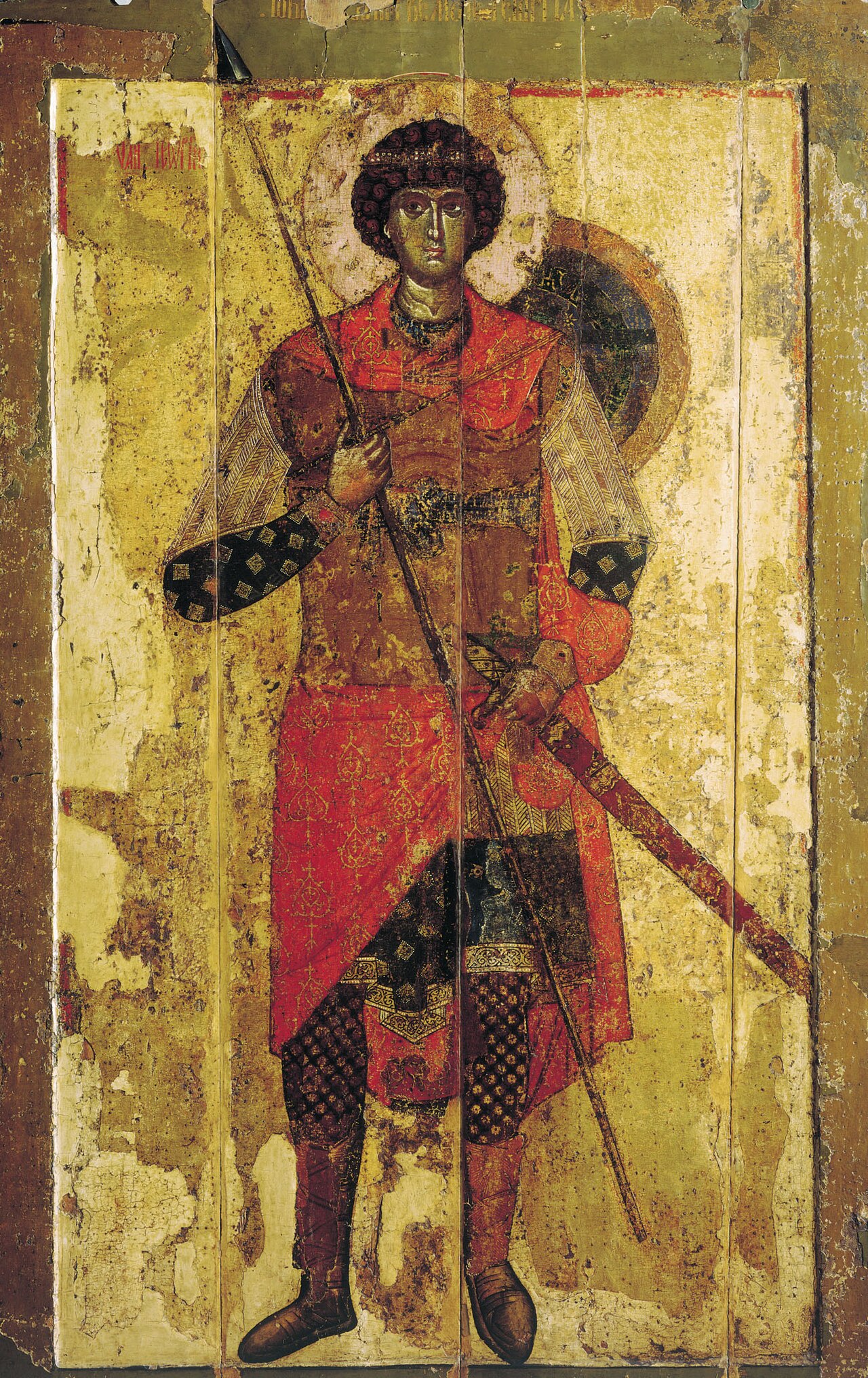
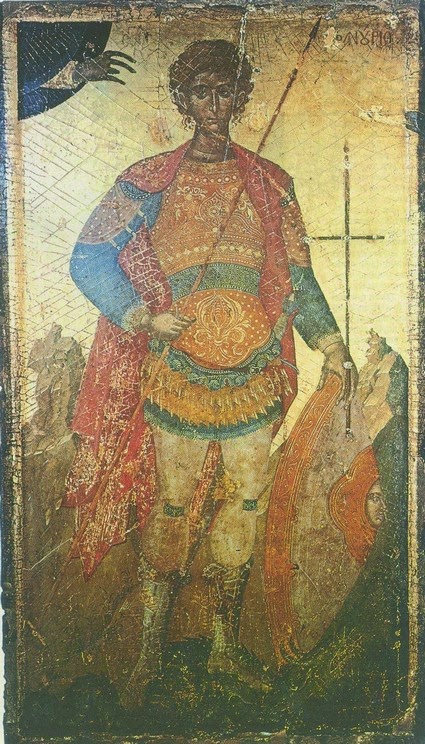
Born in Cappadocia to Christian parents, George was raised in Lydda, Palestine, after his father’s death. He joined the Roman army at eighteen, rose through its ranks, and received a command from Emperor Diocletian.
Saint Demetrius served as an official in fourth-century Thessaloniki while teaching young people the Christian faith. He refused the emperor’s demand to renounce Christ and remained steadfast through imprisonment and the threat of death.
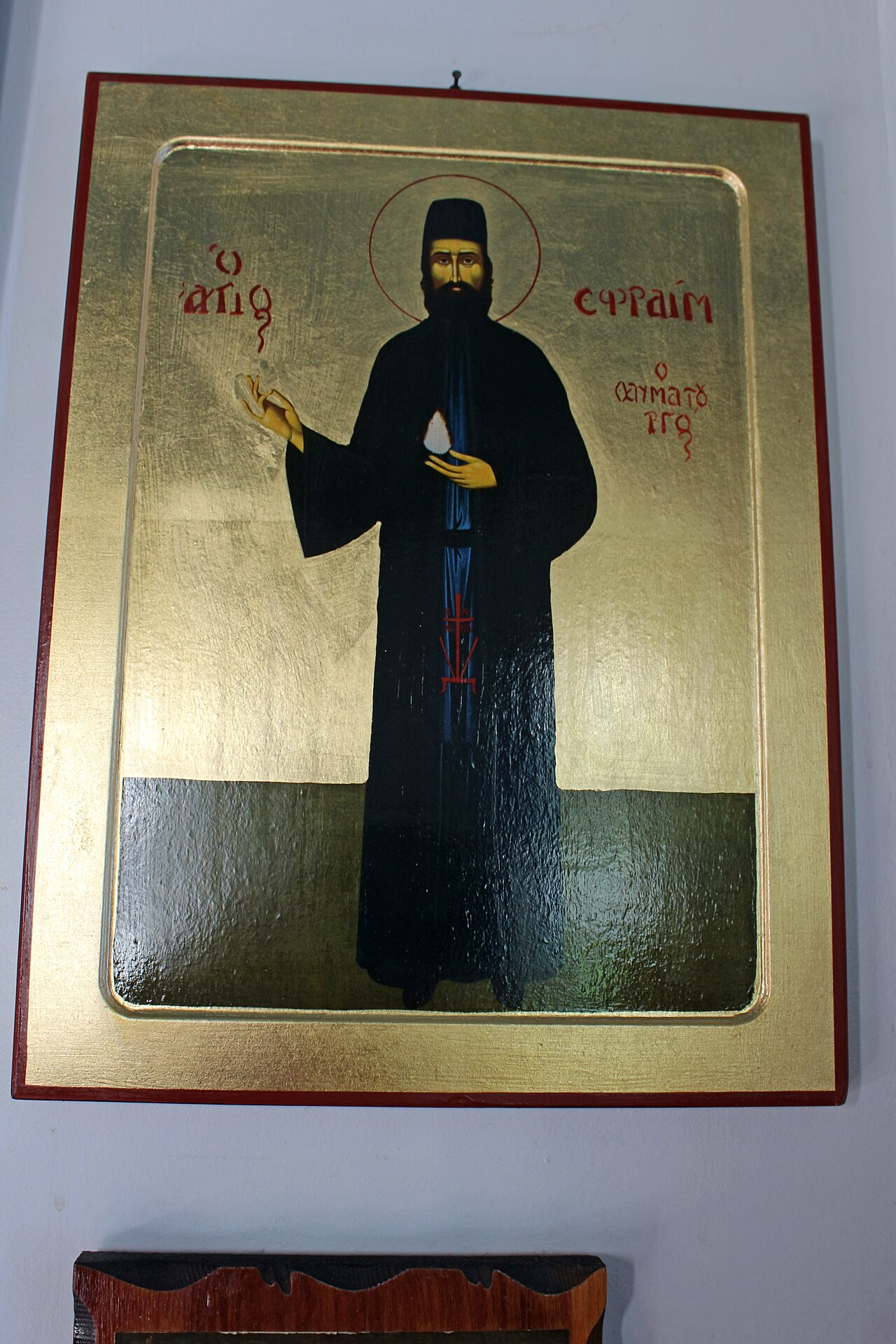
Born Constantine in Trikala in 1384, Saint Ephraim grew up in a devout family after his father’s death. At fourteen, he left home on his mother’s advice to escape the Ottoman recruitment of Christian boys.
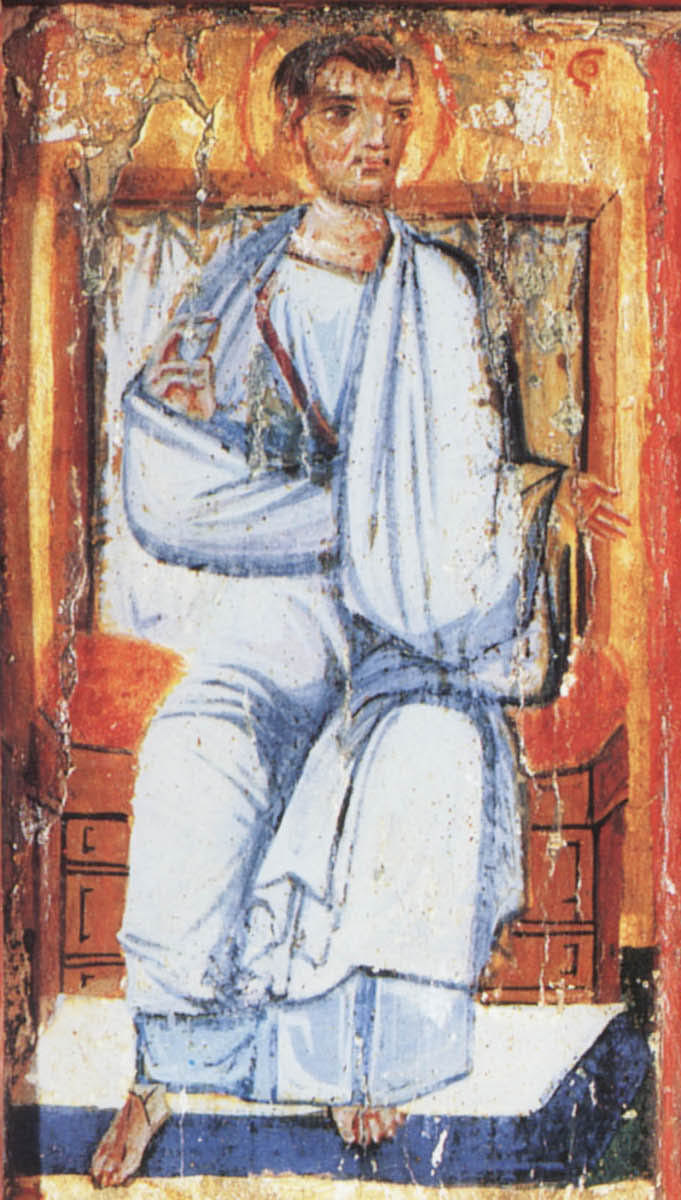
Saint Jude Thaddeus is introduced as one of the Twelve Apostles, the son of Alphaeus and brother of James the Less, distinct from Judas Iscariot. After Pentecost, he served in Jerusalem, preached the Gospel in Mesopotamia, and was martyred in Edessa.
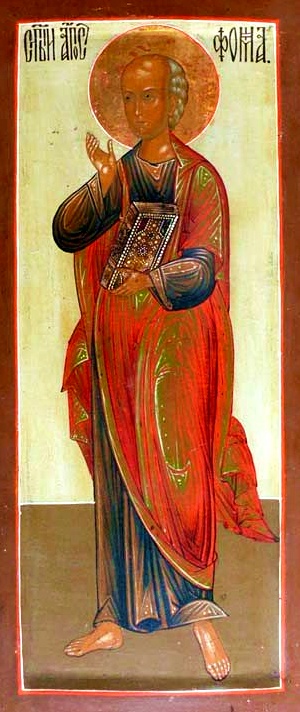
Absent from Christ’s first appearance to the apostles, Thomas believed after seeing the risen Lord’s wounds and confessed, “My Lord and my God.” Thomas was present at Pentecost and, according to Church tradition, later found the Theotokos’s tomb empty after her Dormition.
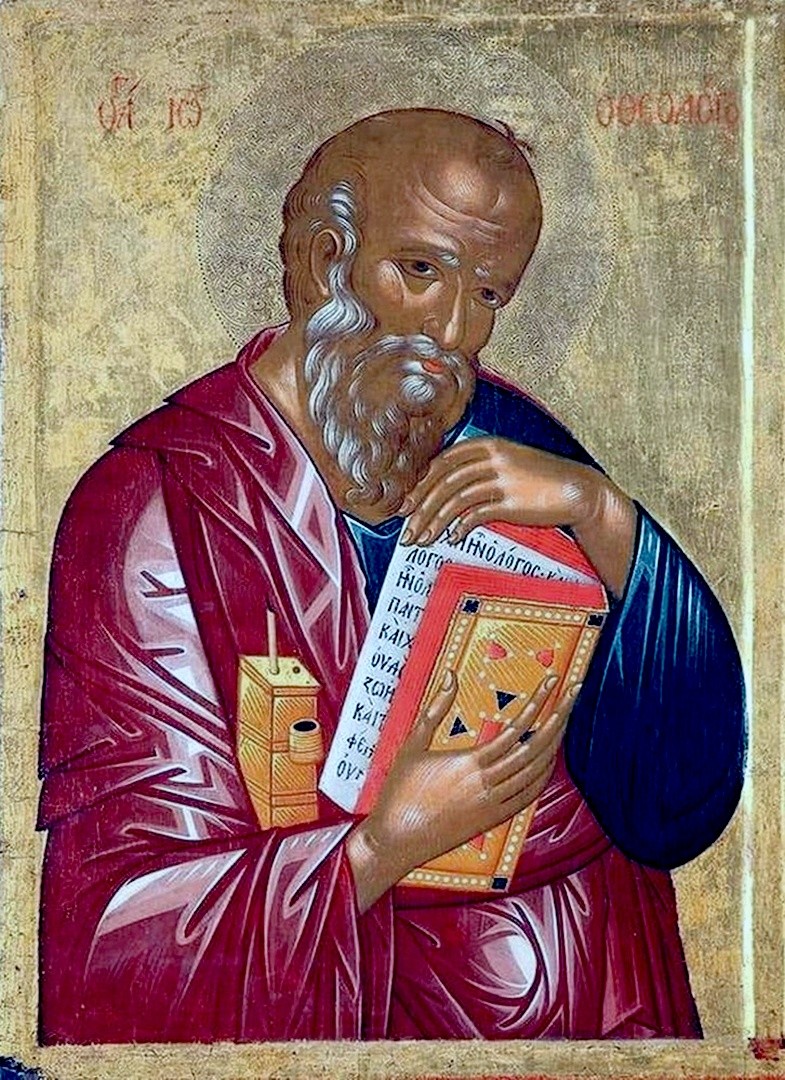
John grew up in a fishing family in Galilee with his brother James and followed Jesus when called. As a close disciple, John witnessed the Transfiguration, stayed near Jesus during the Passion, and was entrusted with the care of the Theotokos.
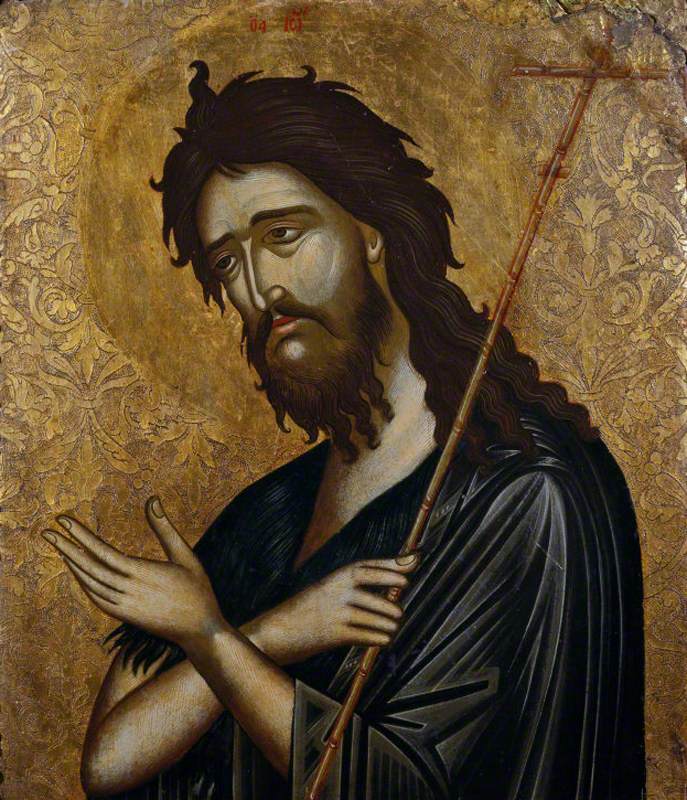
John the Baptist is presented as the last prophet of the Old Testament and the forerunner of Jesus Christ. The Archangel Gabriel foretold his birth to the elderly Zechariah and Elizabeth, and Zechariah regained his speech when he named the child John.
Born in Aetolia, Saint Cosmas studied at Mount Athos, became a monk at Philotheou Monastery, and was ordained a priest. With patriarchal permission, he traveled widely to preach the Gospel, drawing crowds too large for local churches.
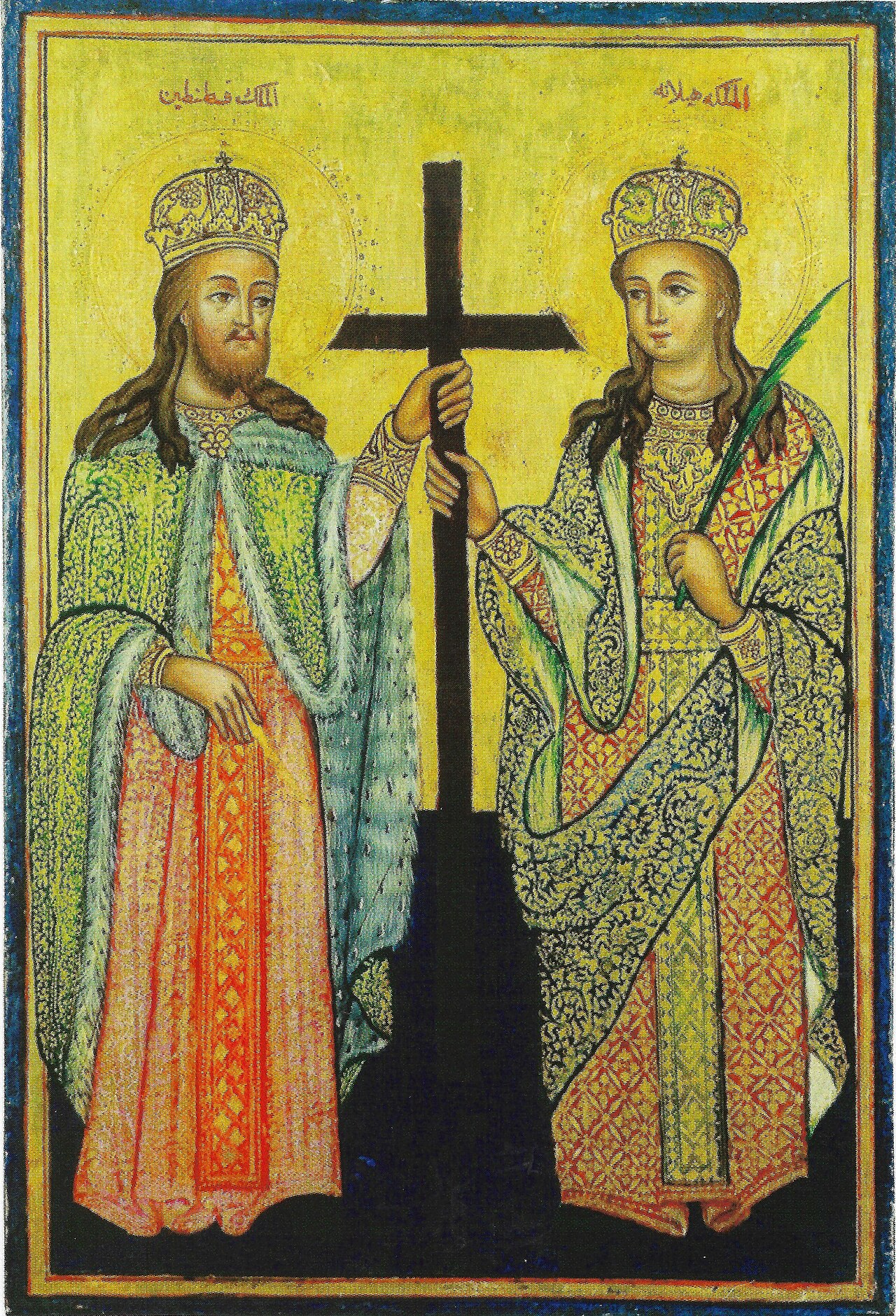
Helen grew up in Bithynia, embraced Christianity, married Constantius Chlorus, and raised their son Constantine in the faith. Constantine combined his mother’s Christian teaching with military training and rose through the Roman army.
Born in Cappadocia in 1035, Meletios grew in faith under the care of his parents, John and Sophia. He chose devotion to Christ over marriage and possessions, then journeyed to Jerusalem despite threats and abuse.
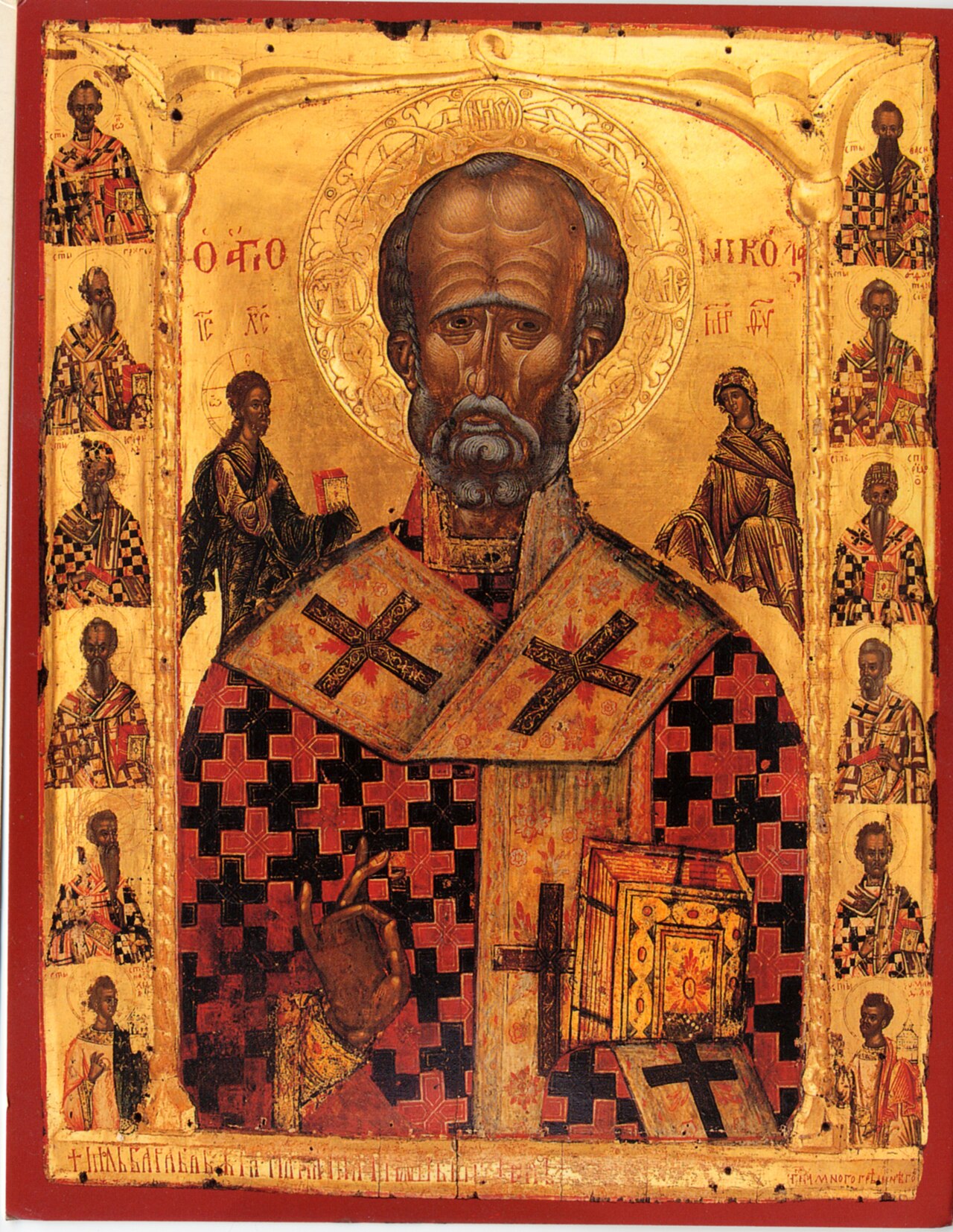
Saint Nicholas the Wonderworker was born in Patara, Lycia, and raised by devout Christian parents. From childhood he loved the Church and grew into a virtuous and pious man.
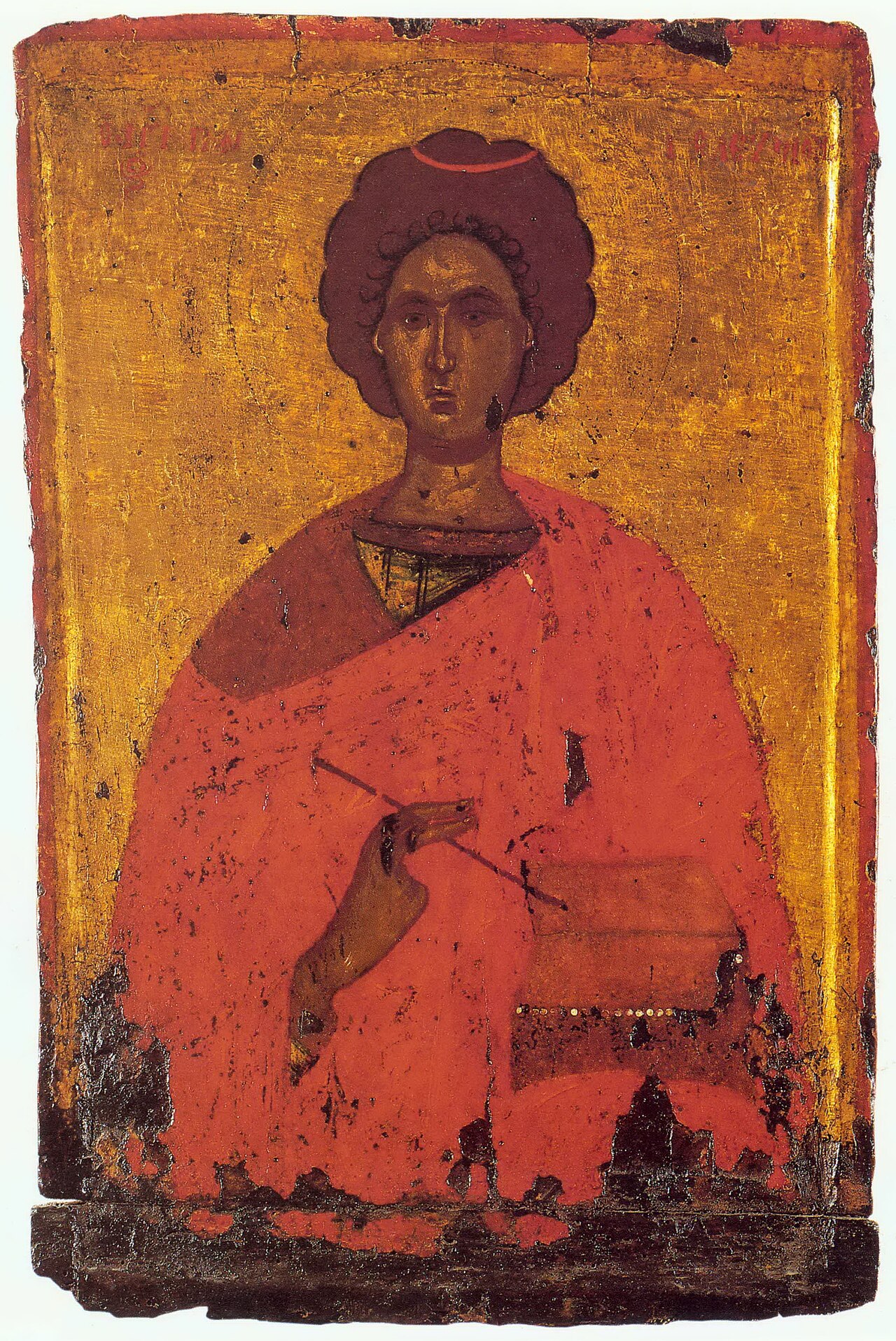
Born in Nicomedia to a Christian mother and pagan father, Panteleimon studied medicine under Euphrosynus. The priest Hermolaus taught him about Christ, and Panteleimon sought baptism after praying for a child killed by a snakebite.
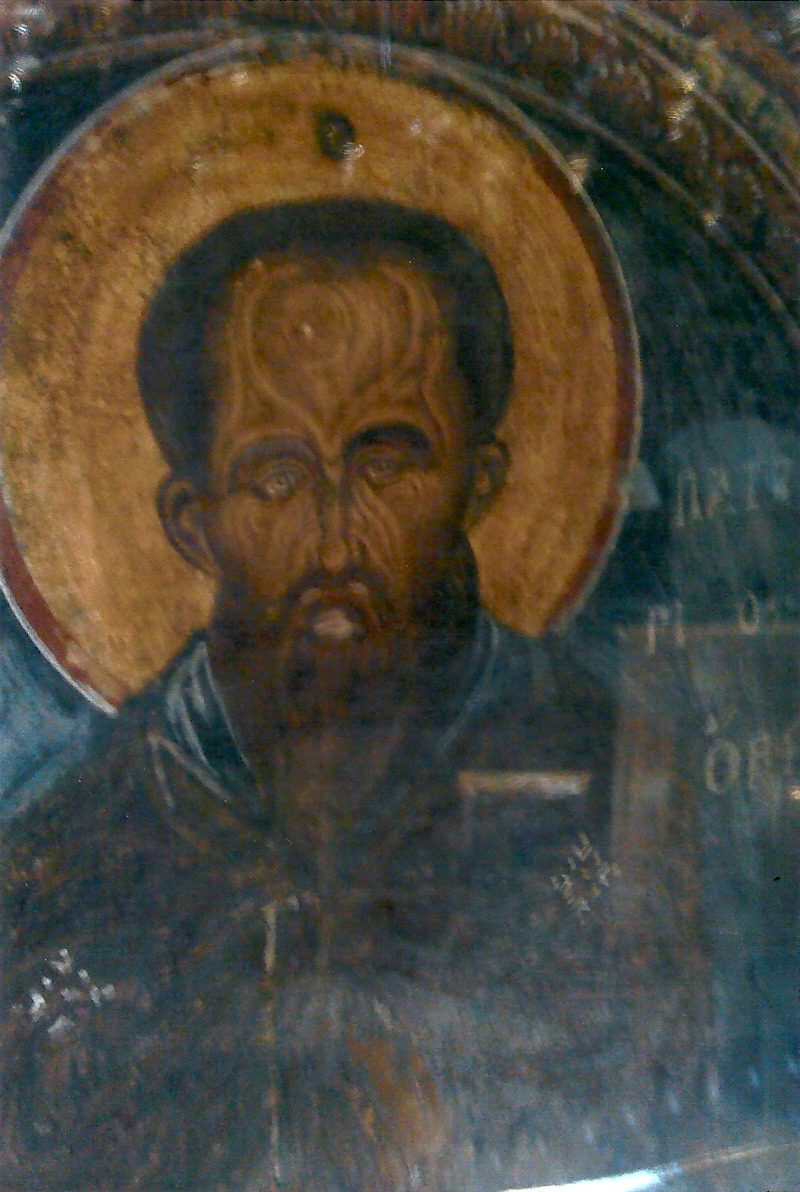
Born in Thebes, Egypt, in 380, Patapios grew drawn to ascetic life through the examples of Saint Athanasius and Anthony the Great. As a young man, he sought the counsel of desert hermits and, according to the account, healed a merchant named Amoun and his camel through prayer.
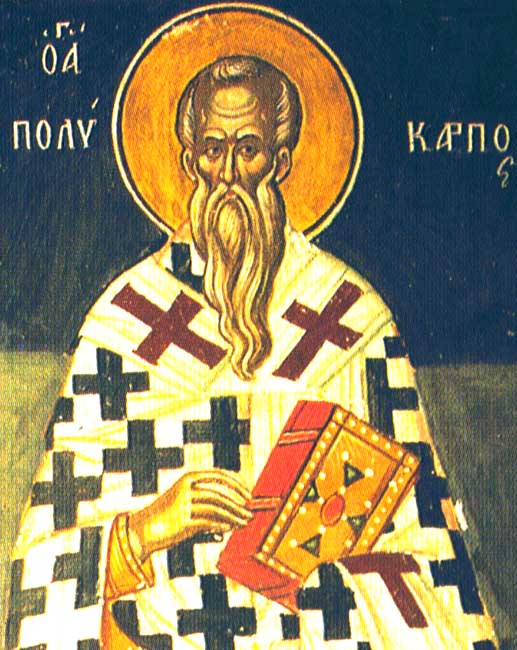
This account recounts Polycarp’s birth in Ephesus, his parents’ martyrdom, and his upbringing by a wealthy adoptive mother. It describes his generosity during a famine and the miraculous replenishment of a storehouse, after which he was called Polycarp.
Born Evangelos Bairaktaris in Euboea in 1906, he was drawn to monastic life after reading about Saint John the Hut-Dweller. After experiencing divine grace as a young monk, he returned from Mount Athos because of illness and was later ordained a priest with the name Porphyrios.
After Christ sent the Holy Spirit to the Apostles, seven deacons were appointed to help serve the growing Christian community. Stephen, one of the seven, preached Christ boldly and drew others to the faith.
Timothy and Maura marry in the Thebaid of Egypt and devote their life together to Christ and works of charity. Twenty days after their wedding, the governor Arrianus arrests Timothy and demands the sacred books he uses to teach Christians.
This account marks the 1703 transfer of Saint Dionysios’s relics from the Strofades Monastery to Zakynthos. As a young monk, Dionysios spent his nights praying in a cave; the speaker recounts how the monastery gates opened and closed at his prayers.
Born into a devout Christian family, Basil studied rhetoric, philosophy, medicine, and other subjects in Caesarea, Constantinople, and Athens. Influenced by his siblings Naucratius and Macrina, he was baptized, gave away his wealth, embraced ascetic life, and wrote rules for monastic communities.
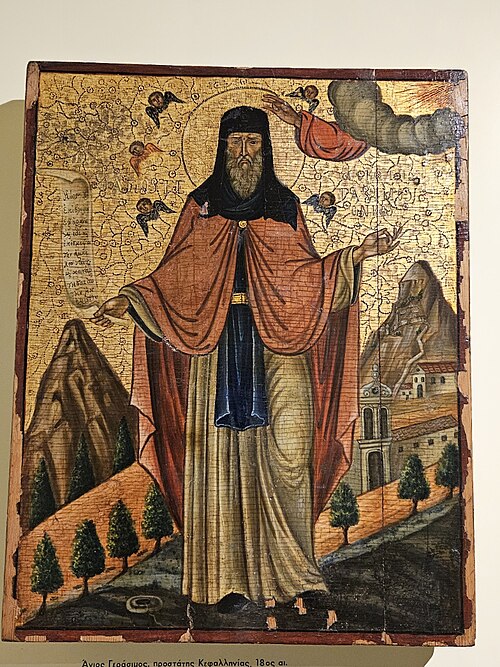
This account opens by honoring Christian marriage and tracing Saint Gerasimos’s family roots and early ascetic life. Gerasimos lived as an ascetic near Karyes and Kapsala before traveling to Jerusalem, where he served at the Holy Sepulchre for twelve years.
Eleutherios became a bishop while still young, and his inspired preaching led many people to believe. Emperor Hadrian ordered him tortured because of his Christian faith.
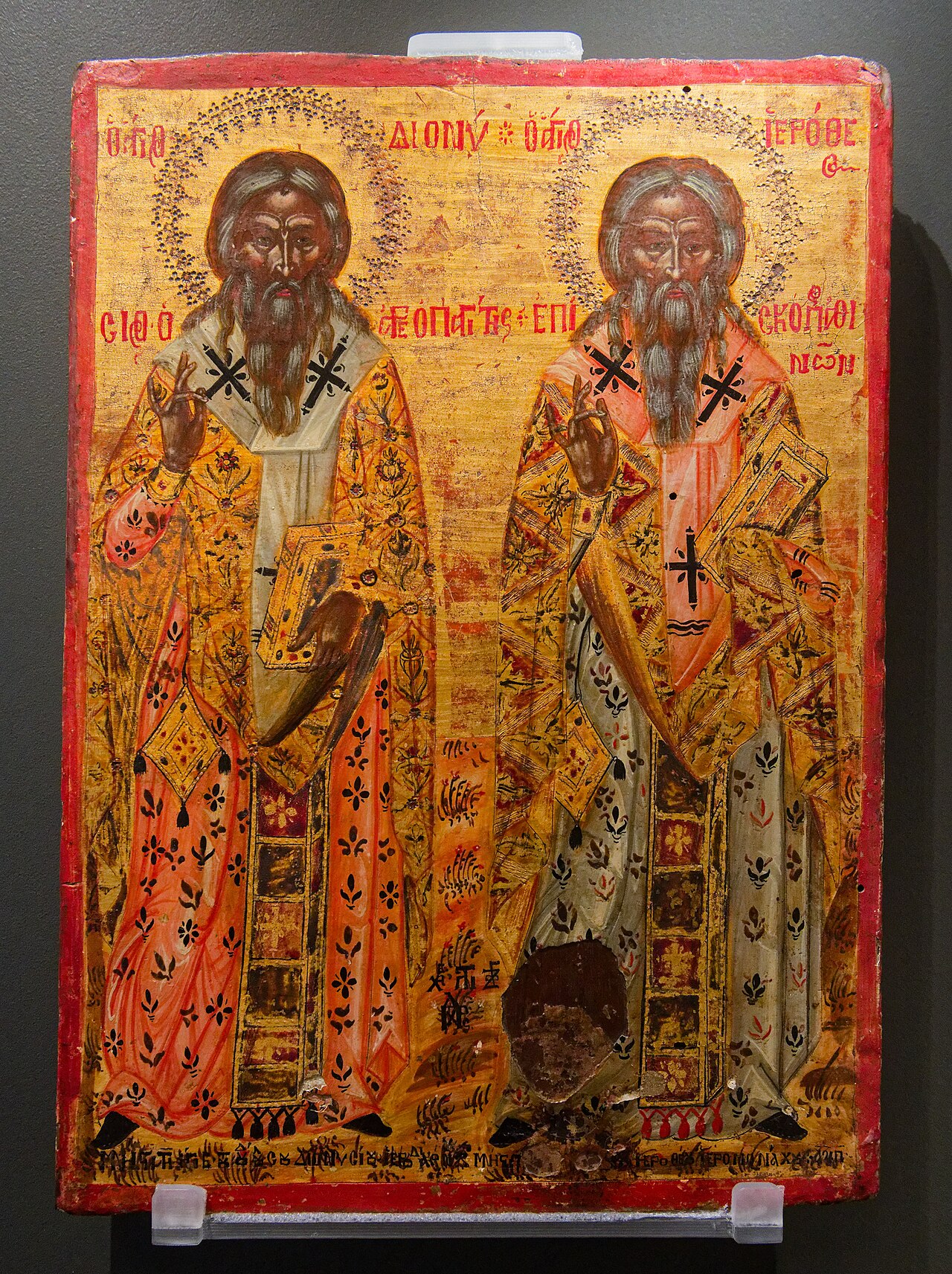
This account presents Hierotheos as a highly educated Athenian Platonist and member of the Areopagus who sought wisdom through moral discipline. It recounts a tradition that he witnessed the darkness at Christ’s crucifixion and later embraced the Christian faith.
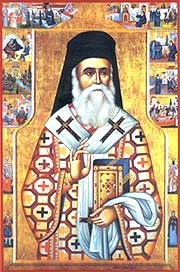
Saint Nektarios chose Aegina for his monastery because of its earlier monastic history and its association with Saint Athanasia. Born in Thrace, he learned to pray as a child and later worked in Constantinople, where a neighbor answered his letter asking Christ for help.
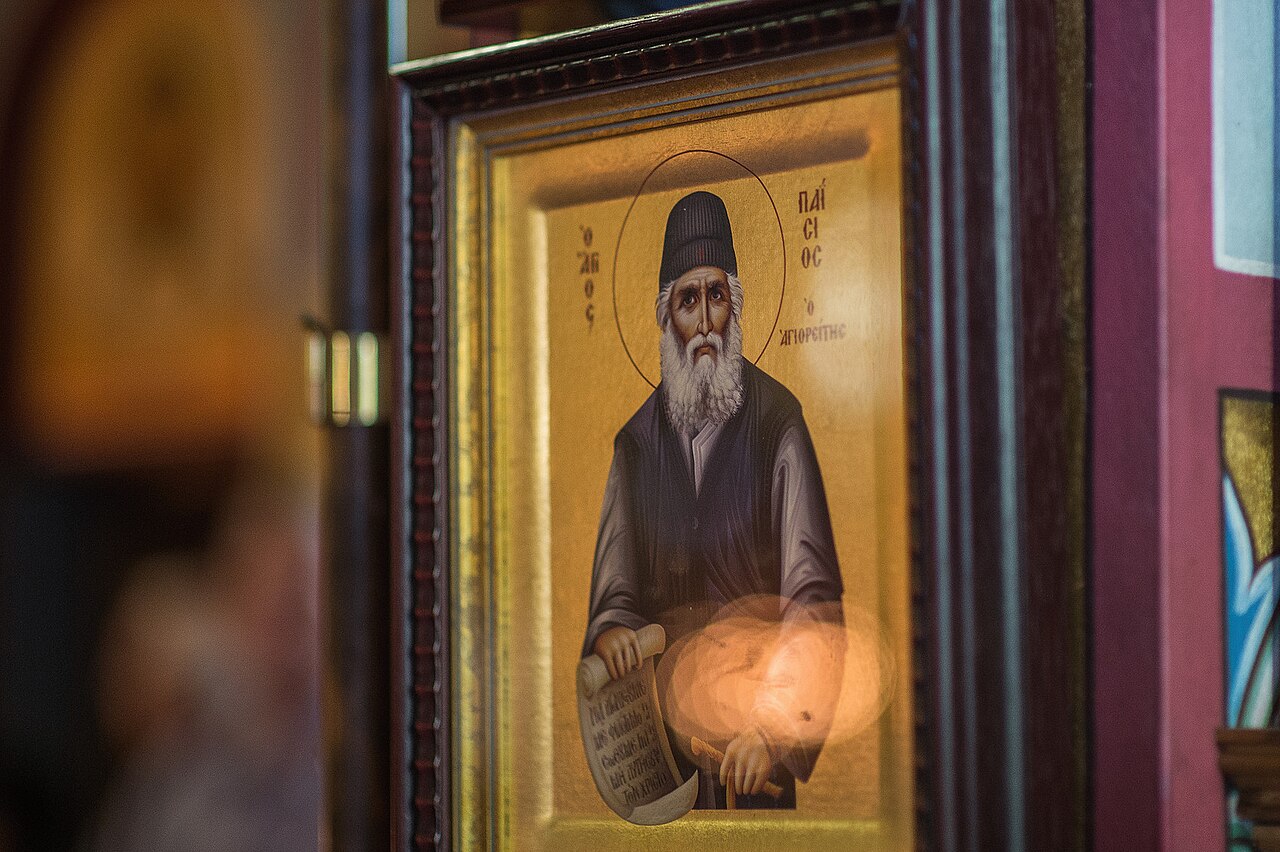
Born in Farasa, Cappadocia, Saint Paisios was baptized Arsenios by Saint Arsenios shortly before his family resettled in Greece. Growing up in Konitsa, he devoted himself to prayer and fasting, trained as a carpenter, and later served in the military as a radio operator.
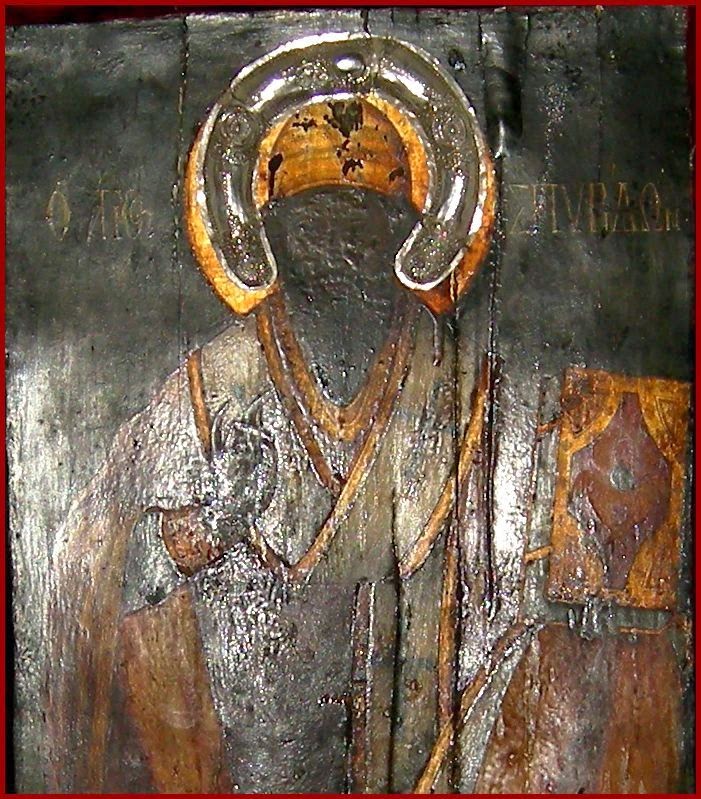
The Church celebrates Saint Spyridon as a holy wonderworker and one of its great fathers. Born in 270, he lacked formal education but possessed wisdom from God.
Born in Cyprus to a shepherding family, Spyridon had little formal education but kept Holy Scripture close throughout his life. He brought fellow shepherds to church, explained the readings, and cared for widows and orphans.
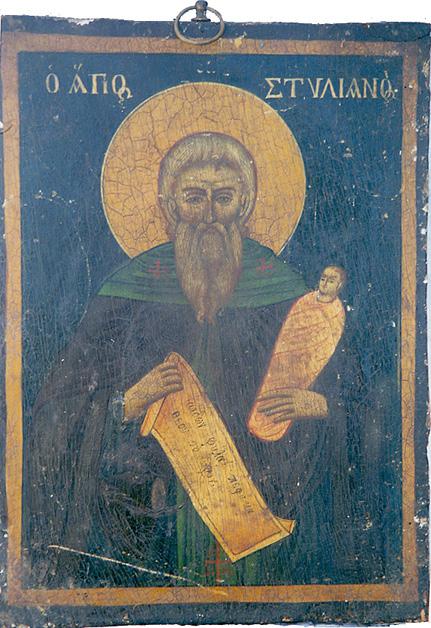
Born in Paphlagonia to the devout Theodotos and Theophano, Stylianos received an education grounded in faith and virtue. He embraced monastic life, then withdrew into the wilderness for solitude, prayer, and severe fasting.
Born Tarasios in Lycaonia, the young shepherd was baptized and took the name Sozon in remembrance of Jesus Christ. He studied Holy Scripture and shared the Gospel with people who gathered near his pastures.
This account recalls the revelations of Saints Raphael, Nicholas, and Irene on Lesbos and the discovery of the icon of Our Lady of Tinos. It then recounts the discovery of Saint Phanourios’s icon in Rhodes and its examination by Bishop Nilus.
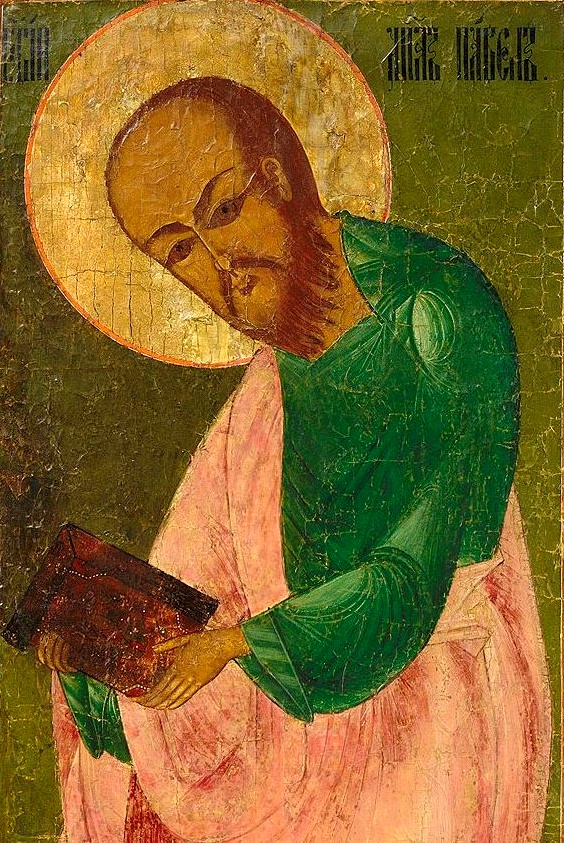
Luke’s Acts of the Apostles introduces Paul as a persecutor of Christians from Tarsus who studied under Gamaliel. On the road to Damascus, Paul encountered Christ, lost his sight, and was baptized by Ananias after his sight returned.
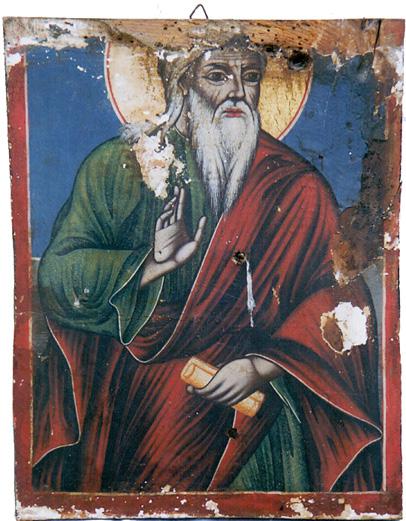
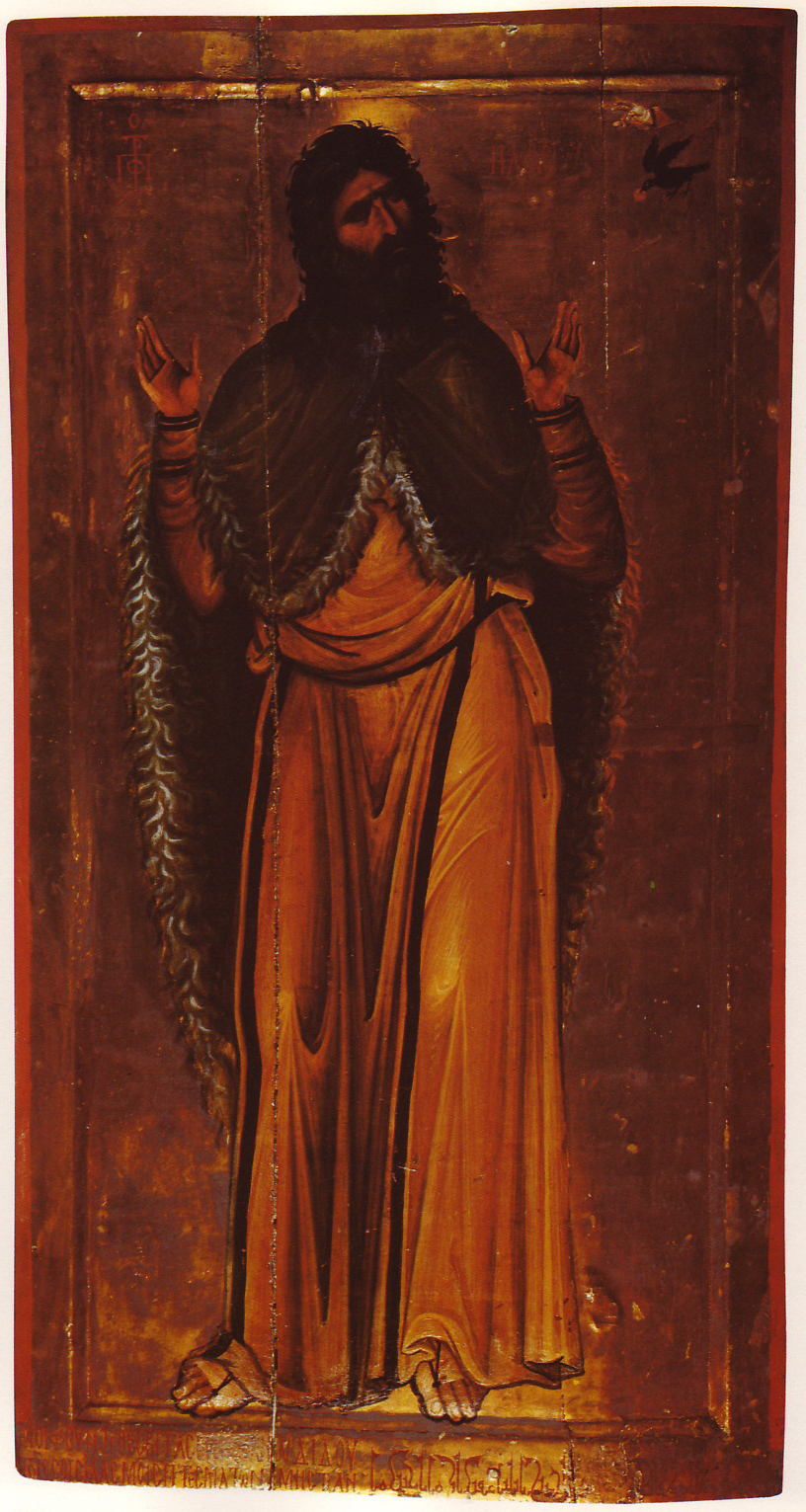
Elijah lived an ascetic life, and John Chrysostom praised his wisdom and zeal for God. Elijah confronted King Ahab’s unfaithfulness and foretold a drought that would end only at his word.
The January 2 commemoration introduces Saint Sylvester of Rome and his life of Orthodox faith, hospitality, and fearless preaching. Ordained by Saint Miltiades, Sylvester reluctantly became bishop of Rome and guided the Church in its worship and teaching.
Orthodox faith and preaching · Persecution and freedom of worship · Public debate on the Trinity
The Church commemorates Saint Gordius on January 3 alongside the Prophet Malachi, Peter the Standard-Bearer, and other martyrs. Gordius, a centurion from Caesarea of Cappadocia, withdrew into the wilderness during Licinius’s persecution of Christians.
Confession of faith under persecution · Preparation through fasting and prayer · Rejection of worldly rewards
On January 4, the Church commemorates the Seventy Apostles alongside other saints and martyrs. Christ sent the Seventy in pairs to prepare people for His coming, proclaim the Kingdom of God, and heal the sick.
Mission of the Seventy · Spread of the Gospel after Pentecost · Ministries of early coworkers
The January 5 commemoration recounts how Saint Syncletica, whose family came from Macedonia, devoted herself to Christ in Alexandria from childhood. She declined marriage, practiced fasting, and sought quiet prayer while guarding her thoughts and desires.
Ascetic life and monasticism · Fasting, prayer and guarding the thoughts · Charity and renunciation of wealth
The Church honors John the Baptist on January 7, the day after Theophany, recalling his baptism of Jesus Christ. John lived as an ascetic in the Judean wilderness before preaching beside the Jordan River.
Baptism of Christ · Preaching of repentance · Asceticism in the wilderness
The Church commemorates Saint Kyranna of Ossa near Thessaloniki, whose faith and virginity shaped her life. An Ottoman tax collector sought to marry her and make her abandon Christianity, but she refused his promises and threats.
Martyrdom and virginity · Resistance to forced marriage · Prayer in prison
On January 9, the Church commemorates Saint Polyeuctus the Martyr and Saint Eustratius the Wonderworker. Polyeuctus, a soldier from Melitene, openly confessed Christ during Emperor Valerian’s persecution and refused an order to renounce his faith.
Confession of faith · Obedience to God · Iconoclasm and monasticism
The lecture commemorates Saint Gregory of Nyssa and traces his education, marriage to Theosebia, and guidance by his brother Basil the Great. Gregory became bishop of Nyssa, where Arian opponents accused him of misconduct and forced him into exile until he returned in 378.
Christian perfection · Theological writings · Arianism and the Second Ecumenical Council
Born in Cappadocia, Theodosius was inspired by Scripture to leave home and seek a life devoted to God. On his journey to Jerusalem, he received Saint Simeon the Stylite’s blessing and later learned monastic discipline from Longinus.
Cenobitic monasticism · Asceticism and prayer · Charity to the poor and sick
The Church commemorates Saint Tatiana, Peter of Absalom, Mertius, the Eight Martyrs of Nicaea, Euphrasia, and Elias the Wonderworker on January 12. Tatiana served the women of Rome as a deaconess through charity, instruction, and care for order at church gatherings.
Deaconesses and charity · Martyrdom under persecution · Fear of God transformed into love
Born Manuel in Lampsacus, Saint Maximos entered monastic life at seventeen and trained under ascetic elders. He practiced poverty, fasting, vigils, humility, and the Jesus Prayer as he traveled to Constantinople and Mount Athos.
Jesus Prayer and noetic prayer · Hesychia and stillness · Discernment of grace
Born to Saint Simeon and Anna, Sava grew in prayer and sought monastic life as a young man. Guided by a monk from Mount Athos, he left the royal court and became a monk despite his parents’ wishes.
Monastic vocation · Founding of Hilandar · Humility versus pride
On January 15, the Church commemorates Saint Paul of Thebes among other saints. Fleeing persecution and a relative’s betrayal, Paul entered the Egyptian desert, where his fear gave way to a desire to please God.
Asceticism · Desert monasticism · Divine providence
The January 16 commemoration honors Saint Peter’s chains and recalls several Christian martyrs. After Herod Agrippa executed the Apostle James and imprisoned Peter, an angel freed Peter and his chains fell away.
Veneration of relics · Holy Chains of Saint Peter · Martyrdom
The Church commemorates Saint Anthony the Great on January 17 alongside Anthony the New, Achillas, and George of Ioannina. Born in Egypt to Christian parents, Anthony grew up attentive to Scripture and lived simply despite his family’s wealth.
Asceticism · Monasticism · Repentance
The lecture opens with the January 18 commemoration of Athanasius, Cyril, and other saints. Born in Alexandria to devout parents, Athanasius became a deacon and helped Archbishop Alexander oppose Arius’s teaching about the Son of God.
Nicene faith · Opposition to Arianism · Ecumenical councils
The lecture commemorates Mark of Ephesus on January 19 and recounts his upbringing and education in Constantinople. Born Manuel Eugenikos, he became a monk at the Monastery of the Mangana, took the name Mark, and later became Metropolitan of Ephesus.
Church union · Opposition to Filioque · Papal primacy
Born in Melitene after his parents’ prayers, Euthymius was dedicated to God as a child and formed by Scripture, worship, and ascetic discipline. Seeking stillness, he traveled to the Holy Land and settled near the Lavra of Pharan, where he formed a close spiritual friendship with Theoctistus.
Humility · Monastic obedience · Divine grace
The lecture commemorates Maximus the Confessor and recalls his education, humility, and service at Emperor Heraclius’s court. Maximus left the imperial court for monastic life, later becoming abbot despite his reluctance.
Two wills of Christ · Monothelitism and Dyothelitism · Sixth Ecumenical Council
The Church commemorates the Apostle Timothy on January 22 alongside other saints and martyrs. Raised in Lystra, Timothy learned the Scriptures from his mother Eunice and grandmother Lois before becoming a disciple of Paul.
Scripture teaching · Apostolic ministry · Martyrdom
Born Demetrios to a poor, devout family, Dionysius studied Scripture and practiced humility and self-restraint from childhood. He entered monastic life at Meteora, then moved to Mount Athos, where he received the name Dionysius and was ordained a priest.
monasticism · asceticism · repentance
The Church commemorates Saint Xenia of Rome and her two companions on January 24. Born Eusebia to a wealthy Roman family, she gave her valuables to widows and orphans and fled an arranged marriage to dedicate herself to Christ.
monasticism · spiritual detachment · fasting and prayer
The Church commemorates Gregory of Nazianzus on January 25 and honors him as a defender of the Orthodox faith. Raised in Cappadocia under the influence of his mother Nonna, Gregory studied widely and formed a lifelong friendship with Basil the Great.
defense of Orthodoxy · Arianism · divinity of the Son
On January 26, the Church commemorates Saint Xenophon, his wife Mary, and their sons Arcadius and John. Xenophon teaches his sons to keep the Orthodox faith, care for those in need, honor their mother, and attend church.
monasticism · family holiness · divine providence
The Church commemorates the return of John Chrysostom’s relics to Constantinople on January 27. Driven into exile through the influence of Empress Eudoxia, Chrysostom endured a harsh journey to Cucusus, where he continued writing to bishops and supporting missions.
Exile and suffering · Relic translation · Constantinople
Born in fourth-century Nisibis, Ephrem studied under Bishop Jacob, who ordained him a deacon and appointed him to teach. Through Scripture, prayer, fasting, and poverty, Ephrem cultivated humility and resisted praise.
Humility and asceticism · Syriac hymnography · Care for the poor
The Church commemorates the return of Ignatius the God-Bearer’s relics and remembers other saints and martyrs on January 29. Ignatius, bishop of Antioch, was martyred by lions in Rome, and Christians brought his relics back to Antioch.
Martyrdom · Repentance and baptism · Persecution and imprisonment
The Church commemorates Saint Elias Ardounis of Kalamata on January 31 alongside other saints and martyrs. After warning that heavy taxes could lead Christians to abandon their faith, Elias rashly converted when a local leader offered him a fez.
Repentance after apostasy · Martyrdom · Mount Athos monastic life
The Church commemorates Saint Tryphon on February 1 alongside other saints and martyrs. Born in Lampsacus, Tryphon lived in poverty, studied Scripture, and became known for healing and driving out demons.
Miracles and exorcism · Martyrdom under Decius · Humility and prayer
The Church celebrates the Presentation of Christ on February 2, recalling how Simeon came to believe Isaiah’s prophecy of a virgin birth. After forty days, the Theotokos brought the infant Jesus to the Jerusalem Temple in obedience to the Law of Moses.
Presentation of Christ · Simeon's prophecy · Mother of God
The Church commemorates the neo-martyrs Stamatios, Ioannis, and Nikolaos on February 3. In 1822, a storm drove the trading vessel of the brothers Stamatios and Ioannis from Spetses to Alatsata, where a man they trusted betrayed them.
Neo-martyrdom · Divine providence · Chios
The lecture names the saints commemorated by the Orthodox Church on February 4. Isidore of Pelusium left a privileged life for monastic prayer and became a respected priest, teacher, and interpreter of Scripture.
Monasticism · Veneration of icons · Patristic letters
On February 5, the Church commemorates Saint Anthony of Athens alongside Saint Agatha, Saint Theodosius, and Saint Polyeuctus. Born to poor Christian parents, Anthony worked from childhood to help support his family.
Martyrdom · Christian witness · Holy Communion
The lecture commemorates Saints Barsanuphius the Great and John the Prophet among the saints remembered on February 6. Barsanuphius left Egypt for the Holy Land, became a monk, and later lived in seclusion near Abba Seridos’s monastery outside Gaza.
Hesychia and asceticism · Spiritual counsel by letter · Humility
On February 7, the Church commemorates Saint Parthenius, Bishop of Lampsacus, among other saints. Born in Melitopolis, Parthenius learned the Scriptures, gave the proceeds of his fishing to the poor, and became known for healing.
Almsgiving · Healing miracles · Virtuous life
The Church commemorates Saint Theodore the Stratelates on February 8 alongside other saints. Appointed commander of Heraclea by Emperor Licinius, Theodore openly preached Christ and brought many people to the faith.
Confession of faith under persecution · Divine deliverance · Christ's cry from the Cross
The Church commemorates Saint Nikephoros, a Christian of Antioch who lived during Emperor Valerian’s persecution. Nikephoros repeatedly sought reconciliation with the priest Sapricius, who refused to forgive him despite Christ’s teaching.
Forgiveness · Martyrdom · Persecution under Valerian
The Church commemorates Saint Charalambos on February 10 alongside other martyrs and saints. At 113, the priest of Magnesia continued to teach, care for the sick, and serve his neighbors.
Martyrdom · Miracles · Old age and service
The Church commemorates Saint Blaise of Sebaste, the seven women and two children who suffered with him, and other saints on February 11. Blaise, a bishop who sought solitude in prayer, was so beloved by animals that they came to him for his blessing.
Animals and creation · Miracles · Martyrdom
The Church commemorates Saint Meletius of Antioch and Saint Mary, known as Marinos, on February 12. Meletius became archbishop of Antioch amid divisions among Orthodox Christians, Arians, and followers of Eustathius.
Holy Trinity · Ecumenical Councils · Slander
The Church commemorates Saint Martinian on February 13 alongside several other saints. Born in Caesarea of Palestine, Martinian began his ascetic life at eighteen and became known for healing and spiritual counsel.
Asceticism · Repentance · Temptation
The Church commemorates Saints Auxentius and Abraham on February 14 alongside other saints. Auxentius left his post at the imperial court in Constantinople to pursue prayer and ascetic life on a mountain near the Sea of Marmara.
Asceticism · Monasticism · Love of enemies
On February 15, the Church commemorates Saint Onesimus, who had been enslaved to Philemon in Colossae. After fleeing to Rome, Onesimus met the imprisoned Apostle Paul, learned the Christian faith, and was baptized.
Conversion and baptism · Martyrdom · Spiritual freedom
The Church commemorates Saint Pamphilus and his fellow martyrs, Saint Flavian of Constantinople, and other saints on February 16. Pamphilus and his companions were arrested at Caesarea of Palestine after identifying themselves as Christians and citizens of the heavenly Jerusalem.
Martyrdom · Christological controversies · Church councils
During Diocletian’s persecution, Theodore, a Christian soldier from the region of Amaseia, sought to discern whether God was calling him to martyrdom. After making the sign of the Cross and killing a feared dragon near Euchaita, he took the victory as a sign to confess Christ openly.
Martyrdom under Diocletian · Miracles and intercession · Dragon episode
Leo became Bishop of Rome in 440 and defended the Orthodox faith against Manichaeism and Pelagianism. His letter to the Council of Chalcedon helped articulate that Christ is one person in two natures.
Chalcedonian Christology · Monastic asceticism · Confessors and persecution
Born Regoula Benizelou in Athens after her mother’s prayers, Philothei grew up in a devout and charitable family. Pressed into marriage despite her desire for an ascetic life, she endured a cruel husband and devoted herself to prayer after his death.
Charity to the poor · Monasticism · Martyrdom and persecution
Born in Ravenna, Saint Leo became Bishop of Catania after the death of Savinus and cared for the poor while defending his flock. Through Leo’s prayer, an idol collapsed and a cross appeared in its place, inspiring the building of a church.
Sorcery and occult practices · Episcopal ministry · Miracles and healing
The lecture opens with a portrait of monastic asceticism, humility, prayer, and healing. Eustathius of Antioch defended Orthodoxy at the First Council of Nicaea and later served as archbishop of Antioch.
Orthodoxy defended at Nicaea · Arian opposition and exile · Monastic humility and asceticism
The relics of the Apostles Andronicus and Junia were identified among those discovered in Constantinople, where their recovery was accompanied by healings. Athanasius became a monk near Nicomedia and joined Theodore the Studite and others in defending the veneration of icons.
Relics of Andronicus and Junia · Veneration of icons · Ascetic life and humility
Polycarp’s Christian parents are imprisoned for their faith, and his mother gives birth to him in prison before both parents are martyred. A Christian widow raises him and names him Pancratius after his father.
Charity toward the poor · Miracles described in the account · Persecution and martyrdom
John the Baptist lived an ascetic life in the Judean wilderness before preaching beside the Jordan River. He called all people to repentance, rebuked the pride of the Pharisees and Sadducees, and urged tax collectors and soldiers to act justly.
Ascetic life in the wilderness · Call to repentance · Witness to Christ as the Lamb of God
Raised in a devout family, Tarasios studied Scripture and grew in virtue while serving in the imperial court. After Patriarch Paul IV resigned, Tarasios accepted the patriarchate on the condition that a council address Iconoclasm and uphold earlier church teaching.
Patriarch Tarasios · Holy icons · Iconoclasm
Porphyry left Thessaloniki for monastic life in Egypt and Jerusalem before becoming bishop of Gaza. When Christians in Gaza faced injustice, Porphyry traveled to Constantinople and sought help through John Chrysostom and Empress Eudoxia.
Martyrdom · Faithfulness to Christ · Episcopal ministry
Procopius defended the veneration of Christ’s icon under the iconoclast emperor Leo III, enduring hardship as a confessor of the Incarnation. Asclepius practiced asceticism both in community and in the Syrian wilderness, while James remained in a small cell into old age.
Asceticism · Passions of the soul · Philautia (self-love)
Basil the Confessor endured imprisonment and torture for defending the veneration of holy icons under Leo III, alongside Procopius the Decapolite. After his release, Basil resumed his ascetic life and guided others toward virtue and the Orthodox faith.
Confession of faith · Veneration of icons · Opposition to Monophysitism
Saint John Cassian left his military position, became a monk in Bethlehem, and cultivated obedience, humility, prayer, and discernment. He visited ascetics across Egypt and the eastern provinces, drawing on their experience in his writings on communal monastic life and the eight evil thoughts.
Monastic life · Eight evil thoughts · Discernment
Born in Samaria and living in Heliopolis, Eudocia amassed wealth through a life the lecture describes as sinful. Hearing the monk Germanus read about judgment and salvation moved her to seek his guidance.
Repentance · Miracles · Martyrdom
Saint Hesychios lost his imperial rank under Maximian rather than renounce Christ, then was drowned in the Orontes River. Bishop Theodotus of Kyrenia endured torture and imprisonment under Licinius for preaching the Christian faith.
Martyrdom · Persecution within the family · Spiritual kinship
Eutropius, Cleonicus, and Basiliscus, soldiers from Cappadocia, confessed Christ during Maximian’s persecution and endured torture. The lecture recounts their healing after a vision of Christ and Theodore the Recruit, and Cleonicus’s prayer that toppled an idol of Artemis.
Martyrdom under persecution · Miracles recounted · Idolatry and refusal to sacrifice
Born in Lycia, Saint Gerasimos left worldly comforts to pursue prayer, fasting, and monastic life. In the Jordanian desert, he founded a community whose monks shared their possessions and followed a strict rhythm of solitude and worship.
Gratitude · Monasticism · Harmony of creation
Conon and his wife Anna chose to live in virginity, while Archangel Michael guided Conon into the Christian faith. Conon’s miracles brought his parents and many neighbors to Christ; his father Nestor died as a martyr.
Virginity · Martyrdom · Deliverance from demons
The lecture commemorates the Forty-Two Martyrs of Amorium and places their story during Emperor Theophilos’s iconoclast reign. After Amorium fell to Caliph al-Mu'tasim’s forces in 838, forty-two Christian leaders were taken captive to Baghdad.
Iconoclasm · Martyrdom · Captivity
Paul the Simple was an Egyptian farmer who trusted God through both abundant and poor harvests. At sixty, he left his household and sought to become a monk under Anthony the Great.
Humility · Obedience · Monasticism
Theophylact became a monk under Patriarch Tarasios and practiced ascetic discipline alongside Michael of Synnada. As bishop of Nicomedia, Theophylact built churches and hospitals and personally cared for the sick and vulnerable.
Iconoclasm and exile · Holy icons · Ascetic discipline
During Licinius’s persecution, forty Christian soldiers refused to sacrifice to idols despite threats from the governor Agricolaus. Candidus defended their loyalty as soldiers while affirming that obedience to God came first.
Forty Martyrs of Sebaste · Persecution under Licinius · Refusal of idolatry
Michael grew up in Granitsa, Evrytania, where his parents taught him to love Christ by keeping His commandments. After his father died, Michael married and moved to Thessaloniki, where he sold bread, gave alms, and attended church services.
Neomartyr Michael of Granitsa · Confession of faith under Ottoman rule · Holy Trinity and Theotokos
Born in Damascus, Sophronius combined learning with ascetic discipline before entering the Monastery of Saint Theodosius near Jerusalem. He and John Moschus visited monasteries across the eastern Mediterranean, gathering spiritual accounts later recorded in The Spiritual Meadow.
Defense of Orthodoxy · Council of Chalcedon and Monothelitism · Monastic life near Jerusalem
Born in Rome, Gregory received a Christian upbringing from his mother Silvia and studied law and philosophy before entering public service. He left public life for the Monastery of Saint Andrew, where his strict asceticism and leadership earned the monks’ respect.
Monastic life · Papacy · Pastoral care
Raised in an Orthodox family during iconoclasm, Nicephorus saw his father exiled for venerating holy icons. After serving as an imperial secretary and hospital director, Nicephorus became Patriarch of Constantinople in 806.
Iconoclasm · Veneration of icons · Holy relics
Born in Nursia, Benedict left his studies in Rome to seek a life of prayer and solitude at Subiaco. With help from the monk Romanus, he spent three years in a cave, resisting temptation through prayer, self-denial, and the sign of the Cross.
Ascetic life · Monasticism · Theosis
Saint Manuel was born to Christian parents in Sfakia, Crete, and was forcibly converted after being captured as a young man. He escaped to Mykonos, confessed, received chrismation, and resumed his Christian life.
Martyrdom · Forced conversion · Chrismation
Born near Nicaea around 1020, Christodoulos studied Scripture and left an arranged marriage to become a monk on Mount Olympus in Bithynia. After pilgrimages to Rome and the Holy Land, he practiced asceticism on Mount Latros and reluctantly accepted leadership of its monasteries.
Monastic life · Hesychia (stillness) · Monastic foundations
Alexios was born in Rome to Euphemianus and Aglaia, whose generosity included personally serving the poor in imitation of Christ. Convinced that earthly wealth was fleeting, Alexios prayed for guidance and reluctantly accepted the marriage arranged by his parents.
Almsgiving · Humility and hidden life · Following Christ over family
Cyril grew up near Jerusalem, was ordained deacon and priest, and became bishop of Jerusalem in 351. A dispute with Acacius of Caesarea over Jerusalem’s standing and Cyril’s Orthodox teaching led to his first two exiles.
Catechesis · Baptismal grace · Exile and persecution
Chrysanthus embraced Christianity despite his father Polemon’s efforts to draw him back to pagan worship. His wife Daria accepted baptism, and together they taught the Christian faith to men and women.
Martyrdom · Conversion and baptism · Repentance
Monks at the Monastery of Saint Sabbas near Jerusalem lived in prayer and ascetic discipline before being killed by raiders seeking wealth. Saint Myron, a young tailor from Crete, was known for his modesty, self-control, and Christian faith.
Martyrdom · Righteous suffering · Asceticism
Saint Serapion lived as an ascetic in the Egyptian desert, practicing self-restraint and seeking to bring others to faith in Christ. He gave his clothing and even sold his Gospel book to provide alms for the poor.
Almsgiving · Temptation · Confession
Basil, a priest in Ancyra, refuses to renounce Christ despite the governor Saturninus’s threats and torture. Brought before Julian the Apostate, Basil again confesses Christ and dies under further torture.
Martyrdom · Love of God · Holy Baptism
A soldier from Naples, Saint Nikon recalled his Christian mother’s teaching and called on Jesus Christ for help in battle. After the victory, Nikon traveled to Chios and Mount Ganos, where a bishop baptized him and later ordained him.
Martyrdom · Grace of God · Baptism and ordination
The Apostle Paul appointed Artemon bishop of Seleucia, where he cared for the poor, widows, and orphans until his death in old age. During Diocletian’s persecution, Artemon the Presbyter encouraged Christians in Laodicea to remain faithful despite threats against his life.
Martyrdom under Diocletian · Humility in monastic life · Episcopal ministry to the poor
The lecture honors Archangel Gabriel after the Annunciation for his role in the Incarnation of the Word of God. Gabriel’s appearances to Daniel and Zechariah are recalled, along with Zechariah’s silence after doubting the promised birth of John the Baptist.
Archangel Gabriel · Annunciation and Incarnation · Angelic obedience to God
Matrona of Thessalonica secretly practiced Christianity while serving Pantila, who had her beaten and imprisoned after discovering her faith. Matrona refused to renounce Christ and died in prison; Pantila later died in a fall.
Martyrdom under Hadrian · Secret Christian faith in a Jewish household · Family martyrdom
Eustratius gave his possessions to the poor and entered the Kyiv Caves Monastery. Through prayer, vigils, and severe fasting, he fought temptation and became known as the Faster.
Asceticism and fasting · Martyrdom and captivity · Baptismal fidelity
Mark of Arethusa endured persecution under Julian the Apostate, and his steadfastness led some of his tormentors to embrace Christianity. Cyril the Martyr and other Christians in Ascalon and Gaza were killed for their faith during Julian’s reign.
Persecution under Julian the Apostate · Martyrdom of saints · Iconoclasm and veneration of icons
After his father’s death, John and his sister Themistia were raised by their devout mother Juliana, who hid them during persecution of Christians. John sought a safer place to pray, received the blessing of the Egyptian monk Pharmouthios, and entered a dry well in the desert.
Asceticism in the Egyptian desert · Prayer and fasting · Angels and demons
Saint Hypatius, a native of Cilicia and bishop of Gangra, took part in the First Council of Nicaea and became known for his miracles. At Emperor Constantius II’s request, Hypatius prayed, led a fearsome dragon from the imperial treasury, and commanded it into a fire in the name of Jesus Christ.
Miracles of a saint · Martyrdom and persecution by heretics · First Ecumenical Council of Nicaea
Born Christopher in Constantinople, Macarius studied Scripture and entered the Monastery of Pelekete, where he became a monk. His humility and service led him to become abbot, and many sought his teaching and prayers for healing.
Monastic life and humility · Iconoclasm and veneration of icons · Courage as a Christian virtue
Raised in Bithynia, Saint Gregory studied Scripture and secular learning while seeking experienced guides in virtue. In a monastery, he practiced prayer, fasting, watchfulness, humility, and obedience, continually striving to grow in virtue.
asceticism · obedience · humility
Born in Sicily in 816, Joseph fled the advancing Arab conquest and later became a monk and priest in Thessaloniki. His ascetic life centered on prayer, Scripture, simplicity, and the cultivation of virtue.
hymnography · iconoclasm · monasticism
Saint Theonas, a sixteenth-century monk of Mount Athos, became a disciple of Saint James the New and followed him to the Monastery of the Forerunner near Nafpaktos. He remained with James during his imprisonment and persecution, while James foretold that his disciples and relics would be reunited near Thessaloniki.
knowledge of God · monasticism · holy relics
Theodora of Thessaloniki entered a convent young and became an example of virtue through her obedience to the sisters and abbess. At her abbess’s burial, witnesses saw Theodora’s incorrupt remains move aside to make room in the tomb, and the lecture recounts healings through her intercession.
monastic obedience · martyrdom · divine grace
Born in Asia Minor, Gregory was captured with his family and freed through the generosity of Christians in Laodicea. He became a monk on Mount Sinai, where he practiced fasting, obedience, prayer, and service.
Hesychasm · Jesus Prayer · Noetic prayer
Theoclea raised her son Calliopius in the Christian faith and taught him to study Scripture. During the persecution, Calliopius confessed Christ before the governor Maximus and endured severe torture.
Martyrdom · Christian parenthood · Eternal life
After years of prayer and ascetic life at the Monastery of the Caves, Niphon became bishop of Novgorod in 1130. He built and adorned churches, taught his flock, and worked to reconcile rival rulers and citizens.
Pastoral ministry · Canonical order · Priesthood
Eupsychius of Cappadocia was beheaded under Julian the Apostate after he and other Christians demolished a temple dedicated to Fortune. Vadim, a Persian cleric who preached the Gospel, was imprisoned and executed with his seven disciples under Shapur II.
Christian martyrdom · Persecution · Witness to Christ
Born in Dimitsana in 1745, Gregory studied in Athens, Smyrna, and Patmos before becoming a monk and priest. As Metropolitan of Smyrna, he rebuilt churches, supported schools and the poor, and publicly sought forgiveness after an error in judgment.
Patriarchal martyrdom · Faithfulness under persecution · Education and the Sacred Canons
Saint Antipas served as bishop of Pergamum under Domitian, strengthening Christians and preaching the Gospel in a center of idolatry. When summoned during a persecution, he rejected the governor’s claim that an older religion must be better, citing Cain as a counterexample.
Martyrdom in Pergamum · Healing and relics · Theosis
Saint Basil of Parium endured persecution for refusing to reject the holy icons during Iconoclasm. Saint Anthousa, daughter of Emperor Constantine V, honored the icons despite growing up in an iconoclast court.
Veneration of icons · Monastic renunciation · Unity in Christ
Saint Martin I defended Orthodox teaching against Monothelitism, which claimed that Christ had only one will. At the Lateran Council of 649, Martin and 105 bishops condemned the teaching with the support of Saint Maximus the Confessor.
Defence of Orthodox doctrine · Martyrdom under persecution · Perseverance in faith
Aristarchus, Pudens, and Trophimus accompanied the Apostle Paul and helped spread the Gospel through persecution. The lecture recalls Trophimus’s role in the accusation against Paul in Jerusalem and says all three companions were martyred under Nero.
Early Christian martyrs · Companions of Saint Paul · Chastity
The elderly Saint Crescens of Myra publicly challenged idol worship and proclaimed Christ despite the danger of persecution. Before the governor, Crescens defended the truth of Christ through the life of the Church and welcomed suffering for his faith.
Martyrdom · Persecution and the Church · Renunciation of idols
Agape, Irene, and Chionia were sisters from Thessalonica whose shared Christian faith endured during the persecutions under Diocletian and Maximian. After their mountain refuge was discovered, Dulcitius questioned them; Agape and Chionia died by fire, and Irene was killed by an arrow.
Virgin martyrs · Martyrdom under Diocletian and Decius · Holy Week
Born in Corinth in 1731, Macarius pursued prayer and study, taught children without pay, and was chosen as archbishop in 1764. As archbishop, he trained clergy, upheld proper baptismal practice, taught his flock, and sought to expand schools.
Sacred tradition · Ascetic life · Frequent Holy Communion
Raised by devout parents in Ioannina, John worked as a tailor and shared his earnings with the poor and his family. After moving to Constantinople, he resisted neighbors who repeatedly urged him to renounce Christ.
Martyrdom · Divine love · Holy relics
Born near Volos around 1500, Symeon learned church teachings from his priest father and entered monastic life under Metropolitan Pachomios of Demetrias. He practiced severe fasting, vigils, and poverty before going to Mount Athos, where he became a priest and later abbot of Philotheou Monastery.
Ascetic life · Mount Athos · Preaching
Orphaned in childhood, Athanasios, baptized Andronikos, escaped captivity and pursued his studies in Thessaloniki. After visiting Mount Athos and traveling through Constantinople and Crete, he returned to Athos to learn from experienced elders.
Monastic life · Hesychia · Humility and obedience
Bishop Januarius and his companions strengthened Christians and brought others to the faith during Diocletian’s reign. When persecuted, Januarius survived wild beasts and a fiery furnace before accepting martyrdom by the sword.
Martyrdom · Holy relics and intercession · Diocletian persecution
Born in Sykeon during Justinian’s reign, Theodore learned prayer, fasting, and charity from the devout cook Stephen. At fourteen, he began an austere life near a church of Saint George and became known for healing and other miracles.
Asceticism · Episcopal ministry · Healing and miracles
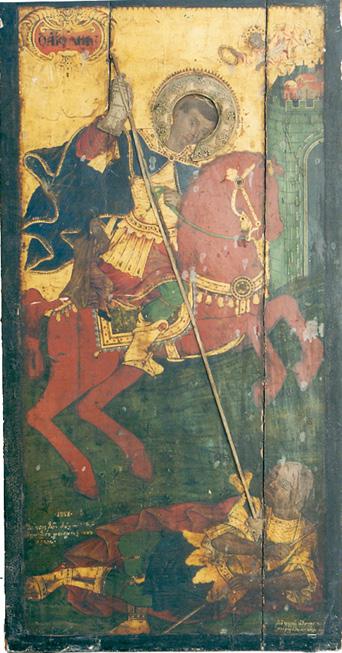
Born to Christian parents, Saint George moved from Cappadocia to Lydda with his mother after his father’s martyrdom. He entered military service in Nicomedia at eighteen and rose through the Imperial Guard for his courage.
Christian martyrdom · Persecution under Diocletian · Steadfast faith
Saint Elizabeth the Wonderworker embraced severe ascetic practices from youth and received the gift of healing through prayer. The lecture recounts healings associated with her tomb after her death.
Asceticism · Martyrdom · Persecution under Diocletian
After Constantine’s victory over Maxentius, Licinius gained control of the East but later came into conflict with Constantine. As Constantine supported Christians, Licinius began persecuting them, drawing accusations against Bishop Basil of Amasia.
Christian persecution · Religious freedom · Episcopal martyrdom
Saint Eulogios, a lay stonecutter in Egypt’s Thebaid, spent each day’s wages feeding and sheltering strangers and the poor. After witnessing his hospitality, Abba Daniel prayed that God would give Eulogios wealth to help more people and pledged responsibility for his soul.
Hospitality · Almsgiving · Danger of wealth
The Nine Martyrs of Cyzicus confessed Christ, endured imprisonment, and refused to sacrifice to idols. The martyrs offered their lives to God and are remembered for healing those who seek their help in faith.
Martyrdom · Miracles through prayer · Repentance
Saint John Kaloktenes was born in twelfth-century Constantinople while Thebes struggled to recover from a Norman raid that devastated its silk industry. His parents dedicated him to the Church, and his devotion to the Theotokos shaped his early life.
Service to the city · Silk industry · Water management
James the Greater, son of Zebedee and brother of John, was called by Christ while mending fishing nets. James joined Peter and John at the raising of Jairus’s daughter, the Transfiguration, and Christ’s prayer in Gethsemane.
Apostolic martyrdom · Saint Donatus · Saint Argyra
Jeremiah was raised in a priestly family in Anathoth and began prophesying during the reign of Josiah. His warning that Jerusalem and the Temple would be destroyed unless the people repented brought threats against his life.
Repentance · Prophetic warning · Conscience
Born in Constantinople, Peter embraced monastic life with his brothers and became known for his ascetic virtue. After declining the bishopric of Corinth, he eventually accepted the pleas of the faithful to serve as bishop of Argos and Nauplion.
Episcopacy · Charity to the poor · Miraculous healing accounts
During Diocletian’s reign, Pelagia of Tarsus sought baptism after a vision of the bishop of Rome. She gave her fine clothes to the bishop for the poor and refused her mother’s plea to renounce Christ.
Martyrdom · Holy Baptism · Hesychasm
Born Penelope in Persia, Saint Irene was raised in seclusion and taught by Apellianus. A Christian servant explained the faith after Irene received dreams calling her to Christ, and a priest baptized her in secret.
Martyrdom · Persecution · Peace in Christ
Job is presented as a righteous worshiper of God who cared for the poor, defended the vulnerable, and lived with purity. Despite his wealth and ten children, Job remained devoted to God and offered sacrifices on his children’s behalf.
Job's trials · divine providence · patience in suffering
In 346, a luminous Cross appeared over Jerusalem, stretching from Golgotha to the Mount of Olives, and the people gathered to give thanks to God. Saint Nilus was raised in Christian devotion, guided by his uncle Macarius, and ordained at the Monastery of Malevi.
Appearance of the Cross over Jerusalem · Saint Nilus of Athos · Holy Myrrh
John, son of Zebedee and Salome, is remembered as the beloved disciple whose Gospel and letters proclaim that God is love. A fisherman who first followed John the Baptist, he met Jesus with Andrew and later left his nets when Jesus called him and his brother James.
Apostle John the Theologian · God is love · discipleship and calling
Reprobus, a captive known for his fearsome appearance, is moved by the suffering of persecuted Christians and receives baptism as Christopher. His staff blossoms after he prays for a sign like the staff of Aaron, strengthening his resolve to confess Christ.
Saint Christopher's conversion · martyrdom under Decius · Eastern vs Western Christopher tradition
Simon the Zealot is identified with Simon the Cananaean and, according to one tradition, left the wedding at Cana to follow Christ. After receiving the Holy Spirit at Pentecost, Simon preached the Gospel abroad and, according to differing traditions, died by crucifixion.
Apostles and martyrs · Monastic life · Hesychia and inner peace
Argyros, a young tailor’s assistant from Epanomi, lived in Thessaloniki in the early nineteenth century. When a jailed Christian renounced his faith to escape execution, Argyros entered a café guarded by Janissaries and urged him to repent and confess Christ again.
Martyrdom under Ottoman rule · Apostasy and confession of faith · Janissaries
Born in Palestine, Epiphanius was raised in the Mosaic Law and inherited the estate of his teacher Tryphon. The monk Lucian’s generosity and a vision moved Epiphanius toward Christianity; he and his sister were baptized, and he gave away his wealth to enter monastic life.
Monastic formation · Miracles and exorcisms · Defense of Orthodoxy against heresy
Born in Iberia, Euthymius joined his father John in Constantinople, entered monastic life, and received a broad education. After recovering from a grave illness through the Theotokos’s help, he went with John to Mount Athos and became a priest at Saint Athanasius’s urging.
Monasticism on Mount Athos · Healings and miracles · Devotion to the Theotokos
Isidore, a sailor from Alexandria, confessed his Christian faith when accused before Admiral Numerius at Chios during Emperor Decius’s reign. After surviving beatings and a furnace, Isidore refused his father’s pleas to renounce Christ and was dragged behind a horse and beheaded.
Christian martyrdom · Holy relics · Persecution under Decius
Born in Cappadocia, Achillios gave his inheritance to the poor and devoted himself to fasting and prayer. After pilgrimages to Jerusalem and Rome, he preached Christ, endured persecution, and became known for healing miracles.
Humility · Healing miracles · Episcopal ministry and charity
Born in Metsovo, Nicholas moved to Trikala, where pressure led him to deny Christ before he returned to Christian life. A barber who recognized him demanded an annual load of kindling in exchange for silence, but Nicholas later resolved to end the arrangement.
Martyrdom · Repentance · Relics and healing prayer
Born into the prominent Apsarades family of Ioannina, the brothers Nektarios and Theophanes joined five other family members in dedicating their lives and wealth to God. They became monks under Elder Savvas, practicing strict fasting and obedience for ten years before receiving the priesthood.
Monastic dedication · Founding of Varlaam Monastery · Fasting and obedience
Peter of Lampsacus confessed Christ under Emperor Decius and died after torture for refusing to sacrifice to Aphrodite. Christina led the soldiers Paul and Andrew to repentance and faith; they, Dionysius, and Christina were martyred.
Self-sacrificial love · Martyrdom · Holy Trinity
Bishop Patrick of Prusa and his companions Acacius, Menander, and Polyenus were executed after refusing to abandon their preaching of Christ. Memnon led monks through obedience and love, and the lecture recounts miracles attributed to his prayers, including the rescue of sailors.
Martyrdom · Monasticism · Ascetic life
Raised in a Christian family in Phoenicia, Saint Thalelaios studied medicine and cared especially for the poor. He treated people without payment, preached Christ, and sought healing for both body and soul.
Healing · Martyrdom · Care for the poor
The lecture traces Constantine’s upbringing under Constantius Chlorus and Saint Helena, his escape from Galerius, and his accession as emperor in 306. Before confronting Maxentius in 312, Constantine sees the sign of the Cross and, according to the account, receives Christ’s instruction to carry it into battle.
Constantine's life · Edict of Milan · True Cross
Saint Basiliscus, nephew of Theodore Tiron, remained faithful to Christ despite imprisonment and pressure to renounce his faith. At a pagan ceremony in Comana, his prayer was followed by the collapse of idols; he was then beheaded on May 22.
Martyrdom · Second Ecumenical Council · Arianism and Pneumatomachi
Born in Synnada in Phrygia, Michael was dedicated to God by his parents and pursued learning before choosing monastic life. In Constantinople, he and Saint Theophylact practiced fasting, prayer, and study under the guidance of Patriarch Tarasius.
Iconoclasm · Defence of holy icons · Episcopal ministry
After Martha prayed for a child, John the Baptist appeared to her and foretold the birth of Simeon. Simeon survived the Antioch earthquake that killed his father and grew up devoted to God's commandments.
Stylite asceticism · Repentance · Prayer and fasting
John lived as an ascetic in the Judean wilderness before beginning his ministry beside the Jordan River. He called everyone to repentance, rebuked the pride of religious leaders, and urged tax collectors and soldiers to act justly.
Repentance · Baptism · Martyrdom
Alexander’s parents sent him from Thessaloniki to Smyrna for his safety, but there he renounced Christianity and converted to Islam. For eighteen years he traveled in the clothing of a dervish, while his conscience drew him toward repentance and martyrdom.
Repentance · Martyrdom · Apostasy and return to faith
Born in southern Russia around 1690, John was raised in the Orthodox faith and later served in the army. Captured during the Russo-Turkish War, he was sold into slavery in Prokopion, Cappadocia, where he endured abuse without renouncing Christ.
Endurance in captivity · Miracles and relics · Humility and asceticism
Born a Scythian, Andrew was educated in sacred writings while serving Theognostos in Constantinople. A dream of wrestling Satan’s champion and receiving heavenly crowns led Andrew to embrace holy foolishness with his spiritual father’s blessing.
Holy foolishness · Spiritual warfare · Asceticism and secret almsgiving
Born in Thessaloniki, John Nanos joined his father and brother Theodore in Smyrna, where they worked as shoemakers. Though unable to read, John listened closely as Theodore read lives of the saints and grew in humility and devotion.
Martyrdom · Life of the Cross · Self-sacrifice and obedience
Saint Isaac, a Syrian abbot, opposed Emperor Valens’s support for Arianism and his closure of Orthodox churches. As Valens marched against the Goths, Isaac repeatedly urged him to reopen the churches and warned that refusal would bring defeat.
Arianism · Closure of Orthodox churches · Gothic campaign
Saint Hermias served as a soldier in Comana, Cappadocia, during the reign of Marcus Aurelius. When persecution began, he refused Governor Sebastian’s order to sacrifice to idols, holding his faith in Christ above his life.
Martyrdom under Marcus Aurelius · Divine protection from poison · Dangers of magic
Saint Agapitus entered the Kiev Caves monastery under Saint Anthony and cared for sick brothers through prayer and practical service. His healings drew crowds, while an Armenian physician grew jealous after Agapitus cured a courtier the physician expected to die.
Monastic care for the sick · Healing through prayer · Humility and obedience
Born in Constantinople in 758, Nikephoros learned steadfast Orthodox faith from his father, who suffered exile for venerating icons. After serving at court and attending the Seventh Ecumenical Council, Nikephoros became patriarch in 806.
Iconoclasm · Defense of holy icons · Exile and faithfulness
Lucillian, an elderly pagan priest in Nicomedia, embraced Christ after hearing Christian preaching and endured torture for confessing his faith. Imprisoned with the young Christians Claudius, Hypatius, Dionysius, and Paul, he survived an attempted execution by fire before they were taken to Byzantium, where the children were beheaded and he was crucified.
Martyrdom · Asceticism · Christ's commandments
Saint Metrophanes became bishop of Byzantium after serving the Church under Saint Titus and following his father and brother in the episcopal succession. Constantine the Great admired Metrophanes’s holiness and established Constantinople at Byzantium.
Episcopal succession · Suffering and spiritual growth · Humility and divine grace
Born in Smyrna to devout parents, Mark traveled to New Ephesus for trade and married on Chios in 1788. After committing adultery, Mark was arrested with the woman and both renounced their Christian faith before the judge.
Repentance · Apostasy and confession · Martyrdom
Hilarion the New left his family and wealth to become a monk, practicing obedience, humility, and prayer. After serving at the Monastery of Dalmatos, he became its abbot and guided the community toward the will of Christ.
Monasticism and obedience · Defence of holy icons · Iconoclasm and exile
Theodotus of Ancyra buried the bodies of Christian women killed for their faith and was arrested for doing so. He told the prefect Theotecnus that Christians know their weakness before God yet receive the promise of His eternal kingdom; after torture, he was beheaded.
Martyrdom · Fear of God · Divine providence
Saint Theodore, appointed commander in Heraclea by Emperor Licinius, openly preached Christ and brought many people to the faith. Theodore invited Licinius to Heraclea, intending to strengthen the Christians there through his martyrdom.
Martyrdom · Idolatry · Divine providence
Cyril was educated in Alexandria, studied Scripture, and became archbishop after his uncle Theophilus died in 412. The lecture defends Cyril against accusations concerning the Novatians, Alexandria’s Jews, and the murder of Hypatia.
Council of Ephesus · Nestorianism · Theotokos
Antonina served the poor and drew women to the Church, then steadfastly confessed her Christian faith before Prefect Festus. After Festus tried to violate her chastity, Alexander helped her escape by giving her his cloak and taking her place.
Martyrdom · Asceticism · Self-love
The lecture identifies the Apostle Bartholomew with Nathanael, whom Philip brought to Jesus. According to tradition, Bartholomew preached in Arabia, Persia, and India, was martyred, and had his relics brought to Lipari.
Apostles · Barnabas and Paul · Axion Estin hymn
Born to the king of Persia after years of prayer, Onuphrius was baptized and raised in a monastery in Egypt’s Thebaid. The monks’ accounts of Elijah, John the Baptist, and desert hermits awakened his desire for solitude with God.
Solitude with God · Desert hermits · Holy Communion
Raised in the Christian faith, Saint Aquilina encouraged other children to turn from idols to Christ. After she confessed her faith before the governor Ulusianus, she endured torture and was executed.
Martyrdom of children · Humility and obedience · Spiritual pride
Elijah calls Elisha from his father’s fields, and Elisha leaves his work to follow him. After Elijah is taken up, Elisha parts the Jordan with his mantle and heals Jericho’s water.
Miracles of Elisha · Truthfulness and vows · Baptismal promise
Born in Thagaste to a Christian mother and pagan father, Augustine learned the faith from Monica but was not baptized as a child. While studying in Carthage, he turned from his mother’s teaching, entered a troubled relationship, and followed Manichaeism for nine years.
Conversion of Augustine · Prayer of parents · Christian upbringing of children
Saint Tychon lived around AD 400, studied Scripture, and became a reader and deacon before Saint Epiphanius appointed him bishop of Amathus. As bishop, he cared for the poor, taught continually, and brought many pagans into the Church.
Miracles and virtue · Almsgiving · Episcopal ministry
The Persian brothers Manuel, Sabel, and Ishmael witness Emperor Julian offering sacrifices to idols in Chalcedon. After refusing to deny Christ, the brothers endure torture and are executed on June 17, 362.
Humility · Martyrdom · Desert monasticism
Leontius of Tripoli, a respected soldier and Christian, shared his rations with the poor. After an angel instructed the feverish Hypatius to call upon Leontius’s God, Hypatius was healed and sought baptism with Theodulus.
Martyrdom · Myrrh-streaming relics · New creation in Christ
Born in fourth-century Egypt, Paisios grew up in a charitable Christian family and developed a devotion to prayer, Scripture, and Holy Communion. Under Abba Pambo, he practiced humility and obedience before withdrawing into the desert for increasingly strict fasting and prayer.
Ascetic life · Holy Communion · Almsgiving
Saint Methodius became bishop of Patara, defended Orthodox teaching against Origenist views, and, according to the account, was killed by an opponent. The lecture honors Methodius as both a bishop and martyr and recalls his writings and prophecies.
Origenist controversy · Virginity and chastity · Patriarchate of Constantinople
Nikitas was raised as a Muslim after his parents abandoned Christianity when he was a child. Learning his Christian name and family history stirred his conscience and led him to seek his ancestral faith.
Martyrdom · Conscience · Confession of faith
Eusebius, bishop of Samosata, defended Orthodox teaching against Arianism during the reign of Constantius II. He refused to yield when threatened with the loss of his hand and endured persecution under Julian and exile under Valens.
Arianism · Martyrdom · Confession before persecutors
Saint Agrippina of Rome devoted her life and resources to Christ, caring for the poor and supporting the Church. After confessing her faith under persecution, Agrippina died from torture; Christian women carried her relics to Sicily, where healings were attributed to her intercessions.
Christian martyrdom · Persecution of Christians · Relics and intercession
Mark introduces John the Baptist as the messenger foretold by Malachi and Isaiah to prepare the Lord’s way. Gabriel tells the priest Zechariah that Elizabeth will bear a son named John who will be filled with the Holy Spirit and turn many toward God.
Nativity of John the Baptist · Annunciation to Zechariah · Prophecy of the forerunner
During Diocletian’s persecution, Febronia lived in a convent near Nisibis, where she devoted herself to fasting, prayer, and sacred reading. When Selenus’s forces arrived, the other nuns fled, while the ill Febronia remained with Abbess Bryene and Hiereia.
Christian martyrdom · Monastic life · Persecution under Diocletian
Saint David renounced worldly comforts and entered a monastery in sixth-century Thessalonica, cultivating humility and self-restraint. Inspired by the stylite saints, he spent three years praying on the branch of an almond tree despite harsh weather.
Monastic asceticism · Stylite saints · Miracles of healing
Born in Rome during Justinian I’s reign, Saint Sampson studied medicine to care for the sick and poor. He welcomed patients into his home, treated them without charge, and humbly concealed healings granted through divine grace.
Charity and healing · Divine grace · Repentance
Saints Cyrus and John practiced medicine without payment, taught the Christian faith, and were martyred under Diocletian. The discovery of their relics around AD 400 is commemorated alongside accounts of healing through their intercession.
Unmercenary healers · Martyrdom · Relics and healing
Andrew brings his brother Simon to Jesus, who names him Peter; the lecture recalls Peter’s confession, walking on water, and witness to the Transfiguration. After Christ’s resurrection, Peter helps restore the Twelve, preaches at Pentecost, heals the sick, raises Tabitha, and welcomes Cornelius into the Church.
Apostles Peter and Paul · Apostolic missions · Conversion of Paul
David’s words about creation and Abraham’s hospitality at Mamre introduce the Holy Trinity and God’s promise to bless all nations. The lecture presents the twelve patriarchs as foreshadowing the Apostles, whom Christ chose and sent to preach after Pentecost.
Holy Trinity · Twelve Apostles · Martyrdom of the Apostles
The lecture distinguishes three pairs of Saints Cosmas and Damian and focuses on the brothers from Rome. These Holy Unmercenaries treated people and animals without payment, asking those they healed to believe in Christ.
Holy Unmercenaries · Martyrdom · Envy
Pulcheria founded the church at Blachernae, where burial cloths of the Theotokos were already kept. Under Emperor Leo I, the brothers Galbios and Candidos embraced Orthodox teaching, gave alms, and traveled to the Holy Land.
Robe of the Theotokos · Blachernae · Translation of the Robe
Saint Hyacinth, a young attendant in Emperor Trajan’s court, prayed to Christ and refused food offered to idols. After a fellow servant reported him, Hyacinth endured beatings, torture, imprisonment, and deprivation without renouncing Christ.
Martyrdom · Keeping vows · Truthfulness
Born in Damascus, Andrew began speaking at age seven after receiving the Eucharist and later devoted himself to Scripture and the pursuit of virtue. His parents dedicated him to the Holy Sepulchre, where Patriarch Theodore of Jerusalem made him a monk and patriarchal notary.
Great Canon · Monothelitism · Repentance
Orphaned in Trebizond, Athanasius was raised in faith and later studied in Constantinople while practicing ascetic discipline. Under Michael Maleinos, he became a monk and devoted himself to obedience, prayer, and solitude.
Monastic obedience and solitude · Founding of the Great Lavra · Care for the sick
Born in fourth-century Egypt, Sisoes entered the desert as a child and trained among the monks of Nitria under Abba Or. Seeking greater solitude after Saint Anthony’s death, he moved to Anthony’s mountain, where he spent decades in ascetic struggle.
Humility and self-restraint · Desert asceticism · Fasting and hospitality
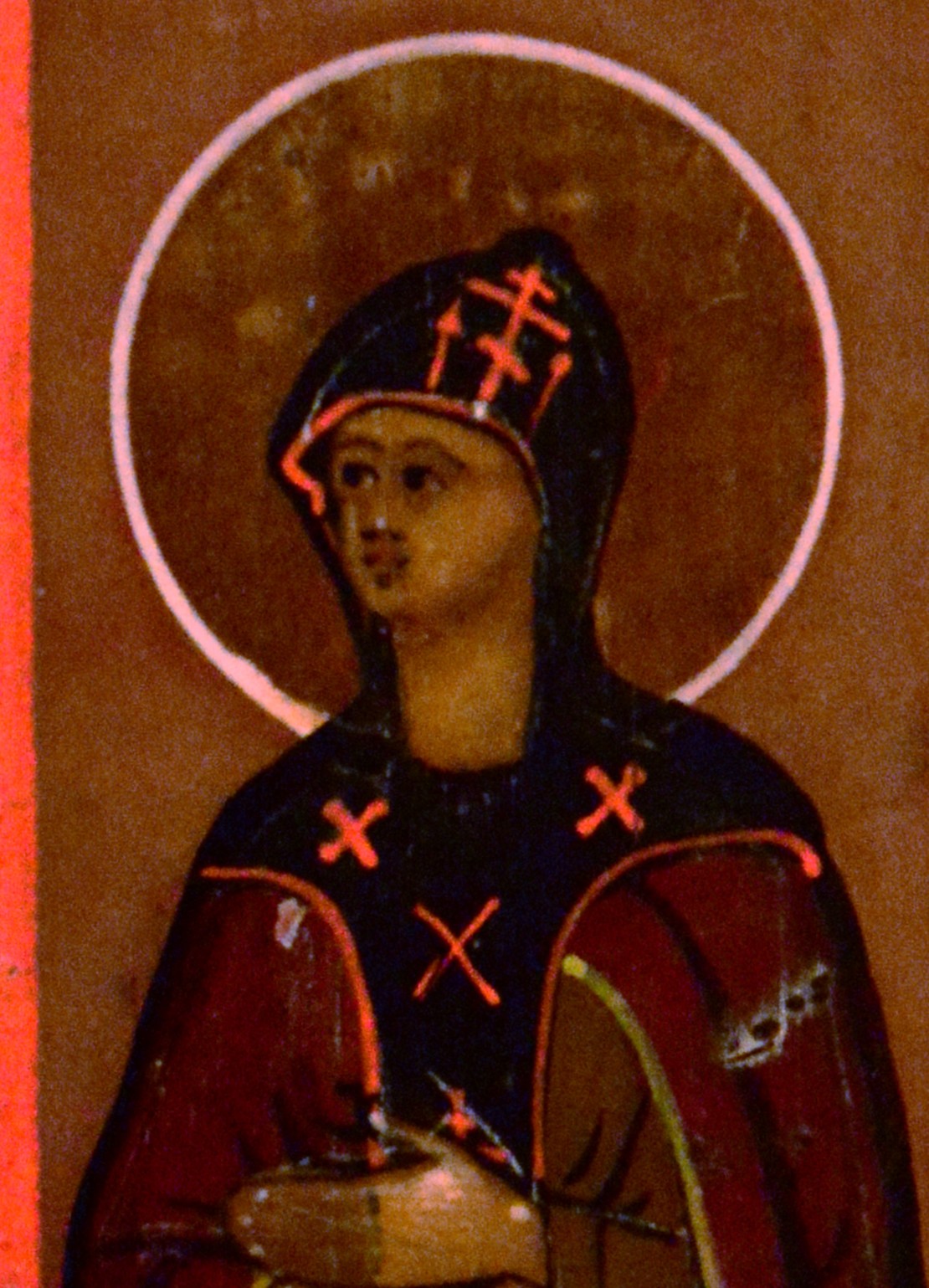
Born to Dorotheos and Eusebia after years of prayer, Kyriaki grew in faith and chose a life of virginity. When she refused a pagan ruler’s marriage proposal, he denounced her family as Christians.
Virginity and steadfast faith · Martyrdom under persecution · Torture and divine appearance
Born Neanias, Procopius grew up in a pagan household after the death of his Christian father, Christophoros. Appointed by Diocletian to persecute Christians, he encountered Christ on the road to Alexandria in an experience likened to the Apostle Paul’s conversion.
Conversion from paganism · Persecution and martyrdom · Healing and destruction of idols
Pancratius and his parents encountered Christ, believed, and were baptized; later, the Apostle Peter ordained Pancratius a bishop. In Sicily, Pancratius destroyed an idol, led the ruler Boniface to faith, and established a church.
Baptism and conversion · Episcopal ordination · Miracles and healings
Born Antipas in Liubech, Saint Anthony traveled to Mount Athos and became a monk at Esphigmenou under Abbot Theoktistos. Sent to Kyiv, he began an austere life of prayer in a cave but returned to Athos during Sviatopolk’s persecution.
Athonite monasticism · Kyiv Caves monasticism · Hesychia and prayer
Saint Euphemia of Chalcedon confessed Christ during Diocletian’s persecution and endured torture and death. Her relics became a place of veneration and were associated with many miracles.
Martyrdom under Diocletian · Fourth Ecumenical Council · Relics and miracles
Born Manuel to a wealthy Cappadocian family, Michael was regarded as a gift from the Theotokos after his parents’ prayers for children. The death of Emperor Leo VI led him to question worldly power and seek monastic life on Mount Kyminas under Elder John.
Monastic foundation · Care for travelers · Humility against vainglory
A vision of a radiant place leads the Persian woman Golinduch to seek Christ, receive baptism, and take the name Mary. After her husband denounces her conversion, Mary endures years of confinement while sharing her faith with other prisoners.
faith and conversion · humility · endurance under persecution
Born on Naxos in 1749, Nicholas showed exceptional learning and devotion before studying in Smyrna. After returning to Naxos, he learned about Athonite monastic life and noetic prayer, then met Saint Makarios of Corinth.
ascetic life · Philokalia and spiritual writings · frequent Holy Communion
During Diocletian’s persecution, the widowed Julitta fled Iconium with her young son Cyricus, but they were arrested in Tarsus. Cyricus professed his love for Christ and was killed by the prefect Alexander; Julitta endured torture and was martyred without renouncing her faith.
martyrdom under Diocletian · parental example and faith · conversion and baptism
Athenogenes of Sebaste became bishop of Pidachthoe, taught the Gospel, and trained disciples to help serve the Church. During Diocletian’s persecution, Athenogenes and his ten disciples confessed Christ and were beheaded.
martyrdom under Diocletian and Decius · episcopal teaching and service · divine light and grace
Raised among Christians near Antioch of Pisidia, Marina embraced faith in Christ despite her pagan father’s rejection. At fifteen, she refused Governor Olybrius’s demands to sacrifice to idols or marry him, enduring imprisonment and torture.
Martyrdom of Saint Marina · Discernment of spirits · Temptation by demons
Saint Emilian of Durostorum destroyed idols during Julian the Apostate’s reign, confessed his deed to spare others, and died a martyr after being beaten and cast into fire. Saint John the Much-Suffering urged a monk troubled by sexual temptation to remain in his monastery, pray, and persevere.
Martyrdom and destruction of idols · Struggle against sexual temptation · Monastic asceticism and solitude
Born into a family of saints, Macrina grew up immersed in Scripture and the Psalms. After her betrothed died, she chose to remain unmarried and devoted herself to God.
Ascetic life and virginity · Women's monastic community · Scripture and the Psalms
During Ahab’s reign, Elijah condemns Israel’s worship of Baal and announces a drought. God sustains Elijah at the Cherith Brook and through the widow of Zarephath, whose flour and oil do not run out.
Prophetic miracles and drought · Idolatry and repentance · God's providence
John and Simeon leave their wealthy lives in Edessa, become monks near the Jordan, and enter the wilderness with their abbot’s blessing. For twenty-nine years they endure hardship and temptation through ascetic discipline and unceasing prayer.
Ascetic life in the wilderness · Holy foolishness · Unceasing prayer
Mary Magdalene, from Magdala in Galilee, followed Jesus after he freed her from seven demons. She joined the women who supported Christ and his apostles and became one of the myrrhbearers.
Resurrection witness · Myrrhbearers · Missionary tradition
The Church commemorates the Prophet Ezekiel and several martyrs and saints on July 23. Exiled to Babylon under Nebuchadnezzar, Ezekiel rebuked sin and guided the Jewish elders.
Vision of the dry bones · Exile in Babylon · Martyrdom and persecution
The Church commemorates several martyrs on July 24, including Saint Christina of Tyre and Saint Theophilos of Zakynthos. Christina embraced Christianity despite her pagan parents’ efforts to make her renounce Christ.
Martyrdom for faith · Conversion against family opposition · Neomartyrdom under Ottoman rule
The July 25 commemorations include Saint Anne, the Fifth Ecumenical Council, and several saints and martyrs. Saint Anne dedicated her daughter, the Theotokos, to God and lived in fasting, prayer, and charity.
Holiness as doing God's will · Spiritual kinship with Christ · Monastic life and charity
On July 26, the Church commemorates Saint Paraskevi of Rome alongside other saints. Born to the devout Agathon and Politia, Paraskevi grew in prayer, self-restraint, and charity.
Martyrdom and torture · Conversion through prayer and the Cross · Almsgiving and renunciation
The Church commemorates Saint Panteleimon, a healer and great martyr, on July 27. Born Pantoleon in Nicomedia, he learned the Christian faith from his mother and later studied medicine.
Healing and medicine · Martyrdom and faith · Baptism of family members
The lecture commemorates Saint Irene of Chrysovalantou, who lived in the ninth century after the restoration of the icons. Traveling from Cappadocia toward Constantinople for a proposed marriage, Irene visited Chrysovalantou Monastery and chose to become a nun.
Monastic asceticism · Humility and purity of heart · Abbess and spiritual guidance
The Church commemorates Saint Kallinikos and other saints on July 29. Born in Cilicia, Kallinikos preached Christ and drew listeners through his words and virtuous life.
Martyrdom of Saint Kallinikos · Love of enemies · Divine grace and prayer
On July 30, the Church commemorates the Apostles Silas, Silvanus, Crescens, Epaenetus, and Andronicus, together with Saint Julitta of Caesarea. Silas traveled with Paul, suffered imprisonment with him in Philippi, and later served as bishop of Corinth.
Apostles Silas, Silvanus, Crescens, Epaenetus and Andronicus · Saint Julitta of Caesarea · Faithfulness unto death
The Church commemorates Saint Eudokimos the Just on July 31 alongside other saints and sacred events. Born to a wealthy Cappadocian family, Eudokimos devoted his youth to Scripture, prayer, worship, and chastity.
Saint Eudokimos the Just · Almsgiving · Chastity and Scripture
On August 1, the Church commemorates the seven Maccabean brothers, their mother Solomone, and their teacher Eleazar. In Judea under Antiochus IV Epiphanes, Jews were ordered to eat food forbidden by the Mosaic Law.
Maccabean martyrs · Persecution under Antiochus IV · Steadfast faithfulness
On August 2, the Church commemorates the translation of the relics of Saint Stephen, the first Christian martyr and archdeacon. After persecution gave way to peace, Stephen appeared to the priest Lucian and revealed where his relics lay hidden.
Relics · Translation of relics · Martyrdom
The Church commemorates Isaac, Dalmatos, Faustos, Stephen of Rome, Theoklete, and other saints on August 3. Isaac urged the Arian emperor Valens to reopen Orthodox churches and foretold his death in battle.
Orthodox faith · Arianism · Monastic life
On August 4, the Church commemorates the Seven Sleepers of Ephesus among other saints. During Emperor Decius’s persecution, the seven young Christians hid in a cave rather than renounce their faith.
Resurrection of the dead · Persecution · Repentance
On August 5, the Church commemorates Saint Eusygnus and Saint Nonna during the forefeast of the Transfiguration of Christ. Eusygnus, a veteran soldier from Antioch, witnessed Christianity’s rise under Constantine and its persecution under Julian the Apostate.
Martyrdom · Family holiness · Trinitarian faith
The Church celebrates Christ’s Transfiguration on August 6, forty days before the Exaltation of the Cross. Christ revealed his glory to prepare the disciples to understand his coming crucifixion as voluntary.
Transfiguration · Uncreated Light · Mount Tabor
The August 7 commemorations focus on Saint Dometius the Persian and Saint Or of Nitria. Dometius embraced Christianity in Nisibis, became a monk, and practiced asceticism in the monastery of Saints Sergius and Bacchus.
Monasticism · Martyrdom · Prayer
The Church commemorates several saints on August 8, including Emilian of Cyzicus and the Neomartyr Anastasios. Emilian defended the veneration of icons during iconoclasm and died in exile after enduring persecution.
Iconoclasm · Martyrdom · Confession of faith
On August 9, the Church commemorates Apostle Matthias, the martyrs of the Holy Icon, and the discovery of Christ’s icon at Camuliana. After Judas’s death, Peter proposed choosing a witness to the Resurrection from those who had followed Christ throughout his ministry.
Election of Matthias · Holy Icon · Baptism and purity
On August 10, the Church commemorates Lawrence, Sixtus, and Hippolytus, along with Heron the Philosopher and the Six Martyrs of Bizye. Sixtus confessed Christ as God and Creator and was executed during a persecution of Christians.
Roman martyrs · Persecution under Decius · Almsgiving to the poor
The August 11 commemoration introduces the life of Saint Niphon, Patriarch of Constantinople. Born Nicholas in the Peloponnese, he pursued ascetic discipline and became a monk under Anthony.
Patriarch of Constantinople · Humility · Monasticism on Mount Athos
The Church commemorates Anicetus and Photius, along with other saints, on August 12. Anicetus publicly opposed Diocletian’s persecution of Christians and remained steadfast through his trial.
Martyrdom under Diocletian · Communion with Christ · Sanctification of believers
The August 13 commemoration honors several saints, with special attention to Empress Irene and Abba Dorotheos. Irene, wife of Emperor John II Komnenos, practiced prayer, self-restraint, gentleness, and care for those in need.
Imperial charity · Monastic life as Xene · Humility and obedience
On August 14, the Church commemorates the Prophet Micah, Saint Marcellus of Apamea, other saints, and the Holy Cross. Micah lived amid the decline of Israel and Judah and condemned corrupt rulers, false worship, and neglect of God’s law.
Prophecy · Blessing of water · Repentance
The Church commemorates the arrival in Constantinople of Christ’s Image Not Made by Hands on August 16. Suffering from leprosy and arthritis, Abgar of Edessa sent Ananias to ask Christ for healing and a portrait.
Icon veneration · Theosis · Image Not Made by Hands
On August 17, the Church commemorates Saint Alypius, the iconographer of the Kyiv Caves Monastery. After witnessing a miraculous sign while assisting Greek iconographers, Alypius became a monk under Abbot Nikon and devoted his art to God.
Iconography · Divine providence · Monastic prayer
The lecture introduces the August 18 commemorations and the tradition that Luke the Evangelist painted the Hodegetria icon of the Theotokos. After a vision, Barnabas and Sophronius left Athens as monks and followed the icon toward Mount Mela near Trebizond.
Icon of the Theotokos · Monastic foundation · Ottoman period
The lecture commemorates Saint Theophanes the New on August 19 and recounts his early life in Ioannina. He became a monk at Docheiariou Monastery on Mount Athos and later guided its community as abbot.
Monastic life · Miracles and relics · Repentance
The Church commemorates the Prophet Samuel on August 20. Hannah prayed for a son and dedicated Samuel to God, placing him in Eli’s care at Shiloh.
Repentance · Prophetic calling · Kingship in Israel
On August 21, the Church commemorates Apostle Thaddeus and Saint Bassa with her sons Theognios, Agapios, and Pistos. Thaddeus follows Christ, then returns to Edessa to baptize Abgar, preach, and establish churches before dying in Beirut.
Christian martyrdom · Family witness to faith · Apostolic mission
On August 22, the Church commemorates the Theotokos of Prousa alongside several martyrs and saints. Tradition attributes the icon of Panagia Prousiotissa to Luke the Evangelist and places it in Prousa during Emperor Theophilos’s persecution of icons.
Icon of the Theotokos · Miracles of icons · Iconoclasm
The lecture commemorates Saint Irenaeus of Lyons and traces his early formation under Polycarp of Smyrna. In Lyons, Irenaeus strengthened Christians during persecution and succeeded the martyred Bishop Pothinus.
Irenaeus of Lyons · Gnosticism · Incarnation
Born in Aetolia in 1714, Cosmas studied at the Vatopedi Academy on Mount Athos before becoming a monk and priest at Philotheou Monastery. Moved by the need to teach ordinary Christians, he sought spiritual counsel and permission from church leaders before beginning his preaching missions.
Saint Cosmas of Aetolia · Missionary preaching · Christian education
The Church commemorates the translation of Apostle Bartholomew’s relics and the ministry of Apostle Titus on August 25. After Bartholomew’s martyrdom in Armenia, Christians preserved his relics, which became a source of healing.
Apostolic relics · Apostle Bartholomew · Apostle Titus
On August 26, the Church commemorates Saints Adrian and Natalia, their twenty-three fellow martyrs, and other saints. During Diocletian’s persecution in Nicomedia, Adrian was moved by the faith of twenty-three imprisoned Christians and joined them as a confessor of Christ.
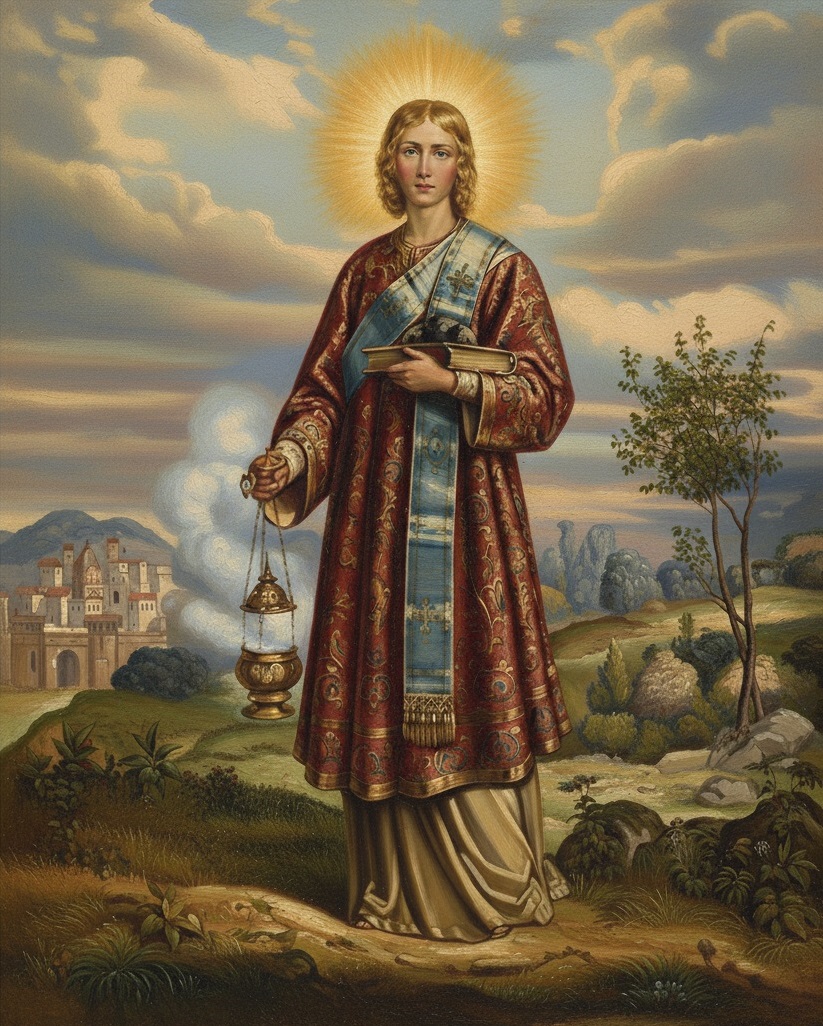
Martyrdom · Saint Natalia · Persecution of Diocletian
The Church commemorates Saint Phanourios on August 27, though the details of his life and martyrdom remain unknown. During repairs to the walls of Rhodes, workers discovered a ruined church and an intact icon depicting twelve scenes of his martyrdom.
Saint Phanourios · Icon and church restoration · Miraculous deliverance
On August 28, the Church commemorates Saint Moses the Ethiopian, whose early life was marked by robbery and violence. Moved to repentance, Moses was baptized, became a monk, and withdrew to Scetis to seek forgiveness through prayer and ascetic struggle.
Repentance · Monasticism · Humility
On August 29, the Orthodox Church commemorates the beheading of John the Baptist, whom the lecture honors as a prophet of truth and righteousness. John publicly rebuked Herod Antipas for living with Herodias, his brother’s wife, and Herod imprisoned him.
Beheading of John the Baptist · Martyrdom and truth · Conscience and sin
The Church commemorates Patriarchs Alexander, John, and Paul of Constantinople, along with other saints, on August 30. Alexander represented Patriarch Metrophanes at the First Council of Nicaea and later traveled to proclaim its creed and condemnation of Arius.
Patriarchs of Constantinople · First Ecumenical Council of Nicaea · Arianism
On August 31, the Church commemorates the deposition of the Theotokos’s Holy Belt and a miracle associated with Empress Zoe. The lecture honors the Theotokos for her holiness and recounts the Belt’s journey to the Hagia Soros shrine in Constantinople.
Feast of the Holy Belt · Veneration of the Theotokos · Spiritual vigilance
September 1 begins the Orthodox ecclesiastical year and commemorates Saint Simeon Stylites among other saints. Inspired by Christ’s Beatitudes, Simeon entered an ascetic community as a young teenager and pursued prayer, fasting, and self-denial.
Saint Simeon Stylites · Ascetic life · Orthodox ecclesiastical new year
The Church commemorates several saints on September 2, with the lecture focusing on John the Faster of Constantinople. From childhood, John practiced fasting and self-control while showing compassion and generosity to the poor.
Saint John the Faster · Fasting and almsgiving · Repentance
Saint Anthimus grew up in Nicomedia and became known for humility, prayer, self-control, and love. After the death of Bishop Cyril, clergy and people chose Anthimus as bishop, and his teaching drew many to Christ, including Indes and Domna.
Saint Anthimus of Nicomedia · Persecution under Diocletian · Martyrdom
On September 4, the Church commemorates Saint Babylas of Antioch and the three young brothers martyred with him. According to the account, Emperor Numerian killed a Persian prince entrusted to him as a hostage, prompting Babylas to condemn the murder.
Martyrdom · Holy relics · Julian the Apostate
The Church commemorates the Prophet Zechariah, father of John the Baptist, on September 5. Zechariah and Elizabeth lived faithfully before God but remained childless into old age.
Prophet Zechariah · Birth of John the Baptist · Doubt and repentance
The Church commemorates Archangel Michael’s miracle at Chonae in Phrygia on September 6. John the Theologian foretold a healing spring dedicated to Michael, where a man’s mute daughter was healed and her family embraced Christianity.
Miracle of Archangel Michael · Healing spring · Angelic hierarchy
On September 7, the Church commemorates Saint Sozon alongside several other saints. Born Tarasios in Lycaonia, Sozon became a Christian shepherd who shared the Gospel with those he met.
Martyrdom under Maximian · Joy in suffering · Missionary shepherd
On September 8, the Church celebrates the Nativity of the Theotokos and commemorates several saints. Saint Gregory Palamas describes Mary as a new paradise, the ark of the Bread of Life, and the branch from the root of Jesse.
Nativity of the Theotokos · Saint Gregory Palamas · Joachim and Anna
The September 9 commemoration honors Joachim and Anna, Saint Severian, Saint Theophanes, the Third Ecumenical Council, Saint Chariton, and Saint Joseph the Wonderworker. During Licinius’s persecution, Severian used his wealth to help poor and imprisoned Christians and encouraged others, including the Forty Martyrs of Sebaste, to remain faithful.
Martyrdom under Licinius · Miracles attributed to intercession · Patience in suffering
On September 10, the Church commemorates the sisters Menodora, Metrodora, and Nymphodora, who grew up in Bithynia. After their parents died, the sisters chose a life of virginity, prayer, work, and charity near the baths of Pythia.
Virgin martyrs · Refusal to sacrifice to idols · Choosing the narrow path
On September 11, the Church commemorates Saint Theodora of Alexandria alongside other saints. After committing adultery, Theodora grieved deeply and left home to pursue repentance in a monastery.
Repentance and monasticism · Disguise as Theodore · Patience under slander
Saint Daniel grew up in ninth-century Thasos and practiced fasting, self-control, and humility from childhood. Seeking stillness and prayer, he lived alone in a cave until others learned of his ascetic life.
Monastic life · Asceticism · Spiritual guidance
The Church commemorates Cornelius the Centurion, a Gentile in Caesarea whose household prayed and gave generously to the poor. An angel directs Cornelius to summon Peter from Joppa, while Peter receives a vision teaching him not to call anyone unclean.
Acts of the Apostles · Baptism of Gentiles · Fear of God
The September 14 feast commemorates the Exaltation of the Holy Cross and Christ’s Passion. Constantine sees the sign of the Cross before defeating Maxentius and later commissions a search for Christ’s tomb and Cross.
Exaltation of the Holy Cross · Discovery of the True Cross · Passion of Christ
On September 15, the Church commemorates Saint Niketas the Goth and other saints. Raised among the Goths beyond the Danube, Niketas learned the Orthodox faith from Theophilus, bishop of the Goths.
Christian martyrdom · Goths and early Christianity · Holy relics
The Church commemorates Saint Euphemia of Chalcedon on September 16, recalling her Christian upbringing during Diocletian’s reign. After refusing to attend a festival honoring Ares, Euphemia and 49 fellow Christians were arrested, imprisoned, and beaten for their faith.
Martyrdom under Diocletian · Refusal of pagan festival · Glory of the Cross
On September 17, the Church commemorates Saint Sophia and her daughters Faith, Hope, and Love. After moving to Rome, Sophia raised her daughters to love Christ and seek His kingdom.
Martyrdom of mother and daughters · Eucharistic offering · Divine Liturgy
Born in Vidin, Romylos entered a monastery near Tarnovo despite his parents’ plans for him to marry. He joined Gregory of Sinai in Paroria, where he served the monastery through demanding work and care for sick monks.
Monastic obedience · Hesychasm and prayer · Mount Athos
The Church commemorates Saints Trophimus, Sabbatius, and Dorymedon on September 19. Trophimus and Sabbatius condemn the pagan festivities at Daphne and are arrested in Antioch.
Christian martyrdom · Pagan festivals at Daphne · Endurance and joy
The Church commemorates Saint Eustathius, his wife Theopiste, and their sons Agapius and Theopistus on September 20. While hunting, the Roman commander Placidas sees Christ on a cross between a stag’s antlers and comes to believe in Him.
Martyrdom of a family · Conversion through a vision · Trials like Job
The Church commemorates the Prophet Jonah on September 21 and recalls his prophetic ministry in Israel. Jonah flees God’s command to preach in Nineveh, boarding a ship for Tarshish that is caught in a violent storm.
Prophetic ministry · Repentance · Divine mercy
The lecture commemorates Saint Phocas and the twenty-six martyred monks of Zographou, along with other saints remembered on September 22. Saint Phocas, bishop of Sinope, preached Christianity, performed miracles, and was martyred under Emperor Trajan.
Martyrs of Zographou · Defence of Orthodoxy · Protection of sailors
The Church commemorates Saint Nicholas the Grocer on September 23 alongside other saints. Born in Karpenisi, Nicholas moved to Constantinople as a teenager to work in his father’s grocery shop and learn Turkish.
Neomartyr under Ottoman rule · Steadfast Christian faith · Persecution and forced conversion
The lecture opens with the September 24 commemorations, then turns to Saint Thecla, who grew up in Iconium and heard the Apostle Paul preach. Drawn to the Gospel, Thecla refused marriage to Thamyris despite pressure from him and her mother, Theocleia.
Martyrdom and virginity · Apostolic witness · Divine protection
The Church commemorates Saint Euphrosyne of Alexandria and her father Paphnutius on September 25. Born after her parents’ years of prayer, Euphrosyne grew up in a wealthy and devout household.
Monastic renunciation · Asceticism · Parent-child devotion
On John’s feast day, the lecture presents him as the beloved disciple whose Gospel and letters proclaim that God is love. John grew up in a fishing family and first followed John the Baptist, who directed him toward Jesus.
Divine love · Beloved disciple · Apostolic ministry
The Church commemorates Saint Aquilina alongside other saints and martyrs on September 27. Aquilina was born to Christian parents in Zagliveri near Thessaloniki; her father converted to Islam to escape execution after killing a neighbor.
Martyrdom · Steadfast faith · Family pressure to convert
The Church commemorates Saint Chariton the Confessor on September 28 alongside other saints and martyrs. Born in Iconium, Chariton became known for his faith and virtue before enduring imprisonment and torture under Emperor Aurelian.
Monastic founder · Persecution and imprisonment · Repentance and forgiveness
Born in Corinth, Kyriakos traveled to Jerusalem at eighteen, drawn by his reading of Scripture. Saint Euthymius clothed him as a monk and sent him to Saint Gerasimos, under whom he served, fasted, and prayed.
Anchoritic monasticism · Prayer and solitude · Ascetic humility
The Church commemorates Saint Gregory the Illuminator alongside Saint Hripsime, Saint Gayane, and their fellow martyrs. Gregory was baptized in Caesarea and later went to Armenia to preach the Christian faith.
Christianization of Armenia · Martyrdom and imprisonment · Repentance and baptism
The Church commemorates the Theotokos as Gorgoepikoos on October 1, honoring her icon at Docheiariou Monastery on Mount Athos. According to monastic tradition, the wall icon dates to the eleventh century and survived damage to the monastery.
Marian icon veneration · Miracles and healing · Repentance and reverence
The Church commemorates Saints Cyprian and Justina on October 2, recounting their journey from paganism to martyrdom. Justina embraced Christ after hearing a deacon teach about His life, death, and Resurrection, and her family was baptized.
Conversion from paganism · Resistance to sorcery · Sign of the Cross
The lecture commemorates Saint Dionysius the Areopagite and his fellow martyrs on October 3. Dionysius, a respected judge in Athens, witnessed an extraordinary darkness during Christ’s Crucifixion and sought its meaning.
Conversion through Apostle Paul · Dionysian theology and hierarchy · Dormition of the Theotokos
The lecture commemorates Saint Ammon of Egypt among the saints remembered on October 4. Ammon and his wife agreed to live in chastity, sharing prayer and work for eighteen years.
Chastity in marriage · Ascetic life in Nitria · Spiritual discernment
Born Irene on Kimolos in 1865, Saint Methodia grew up devoted to prayer and the Church. She married in obedience to her parents, then pursued monastic life after her sailor husband was lost at sea.
Monastic life on Kimolos · Unceasing prayer and asceticism · Holy Communion and charity
The Church commemorates the Apostle Thomas on October 6 and recalls his call from fishing to follow Christ. Thomas declared his willingness to die with Christ, then confessed Him as Lord and God after encountering the risen Jesus.
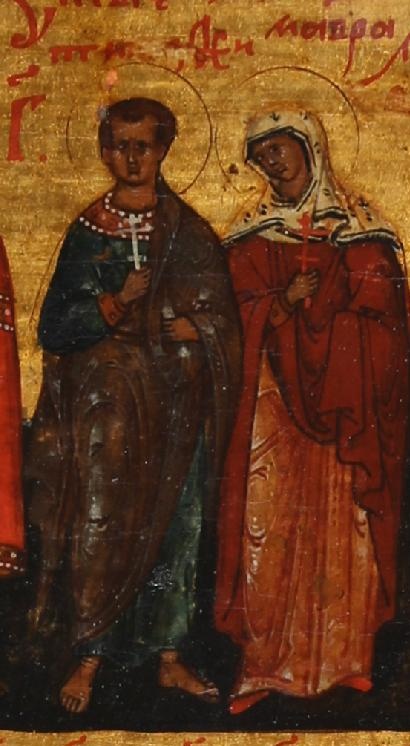
Apostle Thomas · Resurrection · Mission in India
On October 7, the Church commemorates Saints Sergius and Bacchus among other saints. The two young military officers lived faithfully and discreetly during a period of persecution.
Martyrdom · Persecution · Confession of faith
The Church commemorates Saint Pelagia on October 8 and recounts her former life of wealth and sin in Antioch. Bishop Nonnus sees Pelagia’s elaborate appearance and urges his fellow bishops to care more diligently for their souls.
Repentance · Confession · Monastic asceticism
The lecture commemorates Saints Andronikos and Athanasia among the saints remembered on October 9. In Antioch, the couple supported the poor, offered interest-free loans, and lived in prayer and chastity.
Monasticism · Almsgiving · Grief and consolation
On October 10, the Church commemorates the siblings Eulampius and Eulampia, the two hundred martyrs who died with them, and other saints. Eulampius left Nicomedia during Emperor Maximian’s reign, then returned to proclaim the Christian faith despite persecution.
Martyrdom · Idolatry · Zeal for the faith
Raised in a devout Palestinian family, the brothers Theodore and Theophanes studied at the Monastery of Saint Sabbas, where Theodore later became a priest. During Byzantine iconoclasm, the Patriarch of Jerusalem sent them to urge Emperor Leo V to restore the veneration of holy icons.
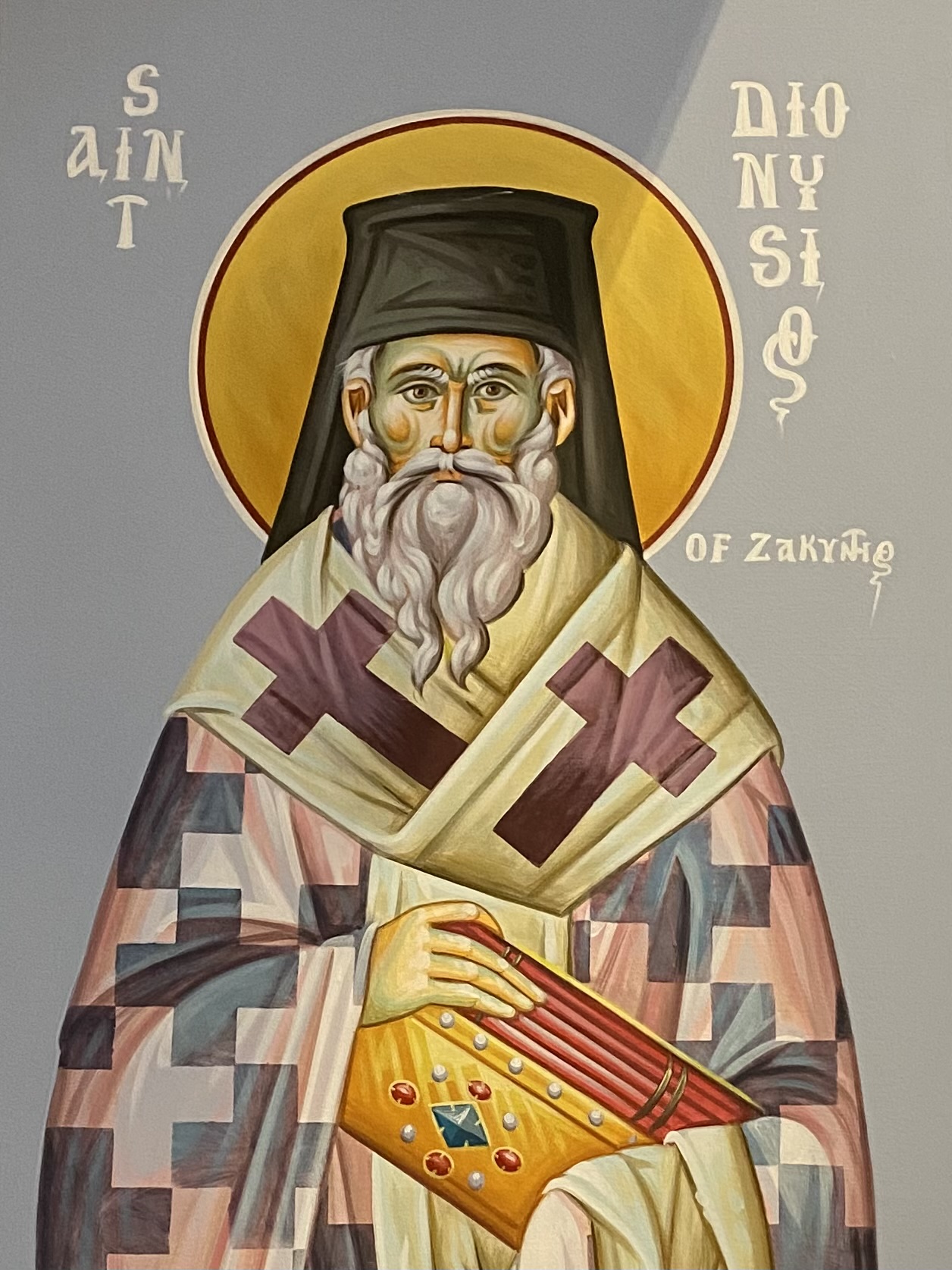
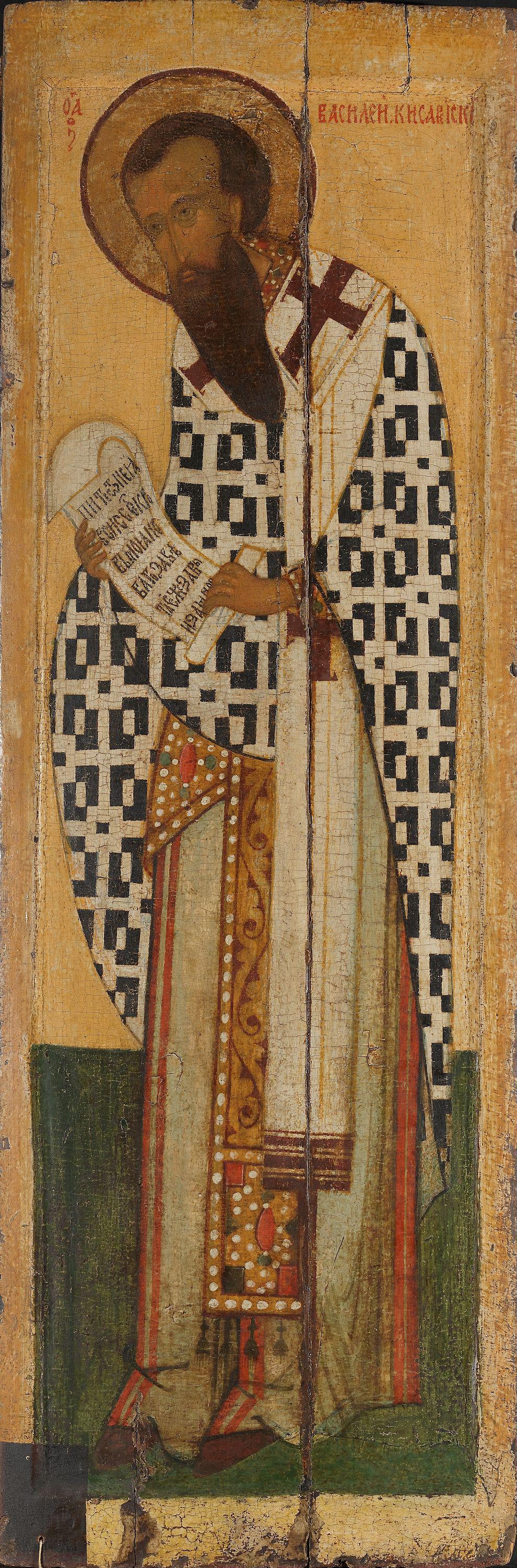
Iconoclasm · Veneration of icons · Incarnation
During Diocletian’s persecution, Tarachus, Probus, and Andronicus lived in the mountains near Tarsus, united by their faith in Christ. After their arrest, each confessed that he was a Christian and refused to sacrifice to idols.
Diocletian persecution · Martyrdom · Baptism
Born into a poor Christian family in Meglen, Saint Chryse was known for her faith, chastity, and beauty. After abducting her, a man pressured her to convert and marry him, but she declared Christ her only bridegroom.
Martyrdom · Spiritual kinship · Parental responsibility
Born in Epivates to devout parents, Paraskeva heard Christ’s call to self-denial as a child and began giving her clothes to the poor. She left home for Constantinople, Chalcedon, and Heraclea, seeking spiritual guidance and a life devoted to God.
Ascetic life · Almsgiving · Holy relics
After his parents died, Lucian gave his possessions to the poor and studied under Macarius in Edessa. He embraced severe asceticism, prayer, and Scripture study before becoming a priest and teacher in Antioch.
Scripture study · Martyrdom · Persecution
Longinus, a centurion serving Pontius Pilate, witnessed the signs at Christ’s Crucifixion and confessed Him as the Son of God. After guarding Christ’s tomb, Longinus proclaimed the Resurrection and refused payment to spread a false account of it.
Martyrdom · Resurrection · Witness to Christ
Andrew of Crete embraced ascetic life and remained faithful to Orthodox teaching from his youth. Emperor Constantine V banned the veneration of holy icons and persecuted those who defied his decree.
Holy icons · Iconoclasm · Martyrdom
The Church commemorates Saint Luke the Evangelist on October 18 alongside several other saints and martyrs. Luke is described as a physician, painter, and learned man from Antioch, though traditions differ about when he became a Christian.
Saint Luke the Evangelist · Icon painting · Acts of the Apostles
Born near Sofia in the tenth century, John of Rila gave his possessions to the poor, became a monk, and withdrew to a life of prayer and fasting. His young nephew Luke joined him, but Luke’s father took the boy away; Luke died from a snakebite, and John entrusted his grief to God.
Ascetic life and monasticism · Divine providence · Humility in authority
Born Maria in Volissos on Chios, Saint Matrona grew up in a devout family and practiced charity from an early age. She refused marriage, pursued an ascetic life of fasting and prayer, and gave her inheritance to the poor and her sisters.
Ascetic life and monasticism · Charity to the poor · Miracles and healing
Saint Philotheos was born in fourteenth-century Chrysoupolis to a family displaced from Asia, and his father died while he and his brother were young. After the brothers were imprisoned during the forced collection of Christian children, their widowed mother prayed to the Theotokos for their spiritual salvation.
Devotion to the Theotokos · Monastic obedience and humility · Ascetic life on Mount Athos
The Church commemorates Saint Abercius, bishop of Hierapolis, on October 22. In the second century, Abercius became bishop in Phrygia and expanded his ministry through preaching, fellow workers, and care for the poor.
Episcopal ministry · Miracles and healing · Baptism
The Church commemorates James the Brother of the Lord on October 23 as an apostle and the first bishop of Jerusalem. Known as James the Just, he lived with strict self-restraint, prayer, fasting, and mercy.
Apostolic ministry · Asceticism · Epistle of James
The Church commemorates Saint Arethas and his fellow martyrs on October 24. In sixth-century Najran, the ruler Dhu Nuwas imprisoned Arethas and other Christian leaders and demanded that they renounce Christ.
Martyrdom · Persecution in Najran · Hope of eternal life
On October 25, the Church commemorates several saints, including Marcian, Martyrius, Anastasius, and Tabitha. Marcian and Martyrius remained loyal to Patriarch Paul I and defended Orthodox teaching against Arianism, even at the cost of their lives.
Orthodox faithfulness · Martyrdom · Almsgiving
On October 26, the Church commemorates Saint Demetrius and other martyrs, along with the earthquake of 740 in Constantinople. Demetrius taught the Christian faith in Thessaloniki and refused Galerius’s demand to worship idols.
Martyrdom · Miracles and healing myrrh · Repentance and faith
The October 27 commemorations include Saint Nestor, Capitolina and Erotheis, Patriarch Cyriacus, and Procla, the wife of Pontius Pilate. In Thessaloniki, the young Nestor sought the imprisoned Saint Demetrius’s blessing before accepting a challenge to fight the champion Lyaeus.
Martyrdom and confession of faith · Prayer and divine help · Spiritual guidance and blessing
The Church commemorates the martyrs Terentius and Neonilla, Stephen the Sabbaite, and other saints on October 28. Terentius, Neonilla, and their children endured torture for confessing Christ and were ultimately beheaded.
Feast of the Holy Protection · Theotokos protection · Martyrs Terentius and Neonilla
The Church commemorates Abraham of Edessa and his niece Mary on October 29. Abraham left worldly life for prayer and asceticism, then gave his inheritance to the poor.
Repentance and return · Prayer for those who have strayed · Asceticism and fasting
The Church commemorates siblings Zenobius and Zenobia of Aegeae in Cilicia on October 30. After their parents died, they gave their possessions to the poor, while Zenobius healed the sick through Christ’s grace and became a bishop.
Healing · Martyrdom · Sibling saints
The Church commemorates six apostles of the Seventy and the martyr Epimachus on October 31. Stachys, Apelles, Amplias, Urbanus, Narcissus, and Aristobulus served as bishops, preached Christ, and in several cases suffered martyrdom.
Seventy Apostles · Ascetic life · Persecution in Alexandria
On November 1, the Church commemorates Cosmas and Damian of Asia, known as the Holy Unmercenaries because they healed without payment. Their mother, Theodote, raised them in the Christian faith, and they studied medicine while seeking to heal both bodies and souls.
Holy Unmercenaries · Healing without payment · Charity and spiritual gifts
On November 2, the Church commemorates Akindynos and his fellow martyrs, who encouraged Christians in Persia to remain faithful during Shapur II’s persecution. Akindynos, Pegasios, and Anempodistos confessed Christ before the king and endured beatings and fire while remaining steadfast in prayer.
Persecution in Persia · Martyrdom · Confession of faith
The Church commemorates Saint George of Neapolis on November 3 alongside other saints and martyrs. An eighteenth-century priest in Neapolis, George served the Church of the Dormition of the Theotokos and cared for persecuted Christians.
Martyrdom of a priest · Relics and healings · 1924 population exchange
The November 4 commemorations include Joannicius the Great, Nicander, Hermas, Porphyrius, and John III Vatatzes, alongside a remembrance of Jeremiah and Abimelech. Porphyrius, a performer who mocked Christian baptism onstage, received Christ’s grace, professed the faith, and was executed for refusing to renounce it.
Martyrdom of Porphyrius · Almsgiving and mercy · Orthodox faith and dialogue with the West
On November 5, the Church commemorates the martyrs Galaktion and Episteme. In Emesa, the monk Onuphrius taught Galaktion’s mother Leucippe the Christian faith and baptized her; her husband Cleitophon later converted as well.
Conversion and baptism · Asceticism at Mount Sinai · Persecution under Decius
The Church commemorates Saint Paul the Confessor and Saint Luke of Sicily on November 6. Elected Archbishop of Constantinople, Paul was repeatedly deposed and exiled amid the Arian controversy.
Arian controversy · Confession of faith · Monastic life
On November 7, the Church commemorates Saint Hieron and the martyrs of Melitene alongside other saints. During the reign of Diocletian and Maximian, Hieron resisted conscription and refused to worship idols.
Martyrdom · Refusal of conscription · Filial obedience
The Church celebrates the Synaxis of Archangels Michael and Gabriel and the other bodiless heavenly powers on November 8. The lecture recounts Michael’s protection of biblical figures and Israel, presenting him as a guardian of human life.
Archangels · Guardianship of humanity · Pride and humility
The Church commemorates numerous saints on November 9, including Symeon Metaphrastes and John the Dwarf. Niketas Paphlagon serves Emperor Leo VI and persuades Arab forces in Crete to pay tribute without battle.
Monastic vocation · Obedience to an elder · Humility
On November 10, the Church commemorates Saint Miles, a bishop and martyr from Persia, along with his two disciples and other saints. After embracing an ascetic life, Miles became a bishop and warned an unrepentant community of the destruction that later befell it.
Persecution in Persia · Miracles and unbelief · Prophecy
On November 11, the Church commemorates Saint Minas alongside several other martyrs and saints. Born in Egypt, Minas served in the army at Kotyaion during Emperor Maximian’s reign but left when Christians were ordered persecuted.
Martyrdom · Asceticism · Intercession of the saints
Born in Cyprus, John turned to charity after the deaths of his wife and children. At the request of the people and Emperor Heraclius, he became Patriarch of Alexandria in 610.
Almsgiving · Care for the poor · Patriarchate of Alexandria
The Church commemorates John Chrysostom, who was raised in Antioch and ordained under Meletius and Flavian. As patriarch of Constantinople, he lived ascetically and taught Scripture, repentance, and care for the poor.
Preaching and writings · Exile · Greed and social justice
The Church commemorates the Apostle Philip on November 14, alongside Saint Gregory Palamas and the New Martyr Constantine of Hydra. Philip, raised in Bethsaida and versed in the Law of Moses, promptly followed Christ and brought Nathanael to Him.
Apostolic mission · Martyrdom · Miracles of healing
The Church commemorates the martyrs Gurias, Samonas, Abibus, Elpidius, Marcellus, and Eustochius, along with other saints of November 15. Gurias and Samonas endured torture and were beheaded in Edessa in 303 for refusing to renounce Christ.
Martyrdom under persecution · Humility and divine grace · Emperor Justin I
The Church commemorates the Apostle and Evangelist Matthew on November 16, recalling his former life as the tax collector Levi. When Christ called him at the tax booth, Matthew followed immediately and welcomed Jesus to a meal with other tax collectors and sinners.
Call of Matthew · Repentance and God's mercy · Gospel of Matthew
On November 17, the Church commemorates several saints, including John and Zacharias the shoemaker. John, a former wealthy man living as a monk, sees a radiant man enter the locked Hagia Sophia through prayer and the sign of the cross.
Fear of judgment · Chastity in marriage · Almsgiving
The Church commemorates Saint Plato of Ancyra and other martyrs on November 18. Plato strengthened fellow Christians, helped the poor, and openly confessed Christ before the governor Agrippinus.
Martyrdom and confession of faith · Divine grace · Prayer in prison
The Church commemorates the Prophet Obadiah and several martyrs on November 19. Obadiah sheltered one hundred prophets from Jezebel and later became a disciple of Elijah.
Prayer in suffering · Repentance · Christian martyrdom
On November 20, the Church commemorates Gregory the Decapolite, Proclus of Constantinople, the martyr Dasius, and other saints. Gregory’s mother nurtured his faith, and he later embraced monastic prayer, work, and care for the poor.
Holy icons · Iconoclasm · Trisagion Hymn
On November 21, the Orthodox Church celebrates the Presentation of the Theotokos in the Temple. After years of childlessness, Joachim and Anna prayed for a child and promised to dedicate her to God.
Presentation of the Theotokos · Prayer and childlessness · Ark of the Covenant typology
The Church commemorates apostles, martyrs, and ascetics on November 22. Philemon, Archippus, Apphia, and Onesimus are remembered as disciples of Paul who suffered for their faith.
Apostles and martyrs · Persecution under Decius · Ascetic perseverance
The Church commemorates Saint Amphilochius of Iconium on November 23 alongside several other saints. Born in Cappadocia, Amphilochius left worldly comforts for an ascetic life of prayer in Lycaonia, where others became his disciples.
Episcopal ministry · Defense of Orthodoxy · Asceticism and prayer
On November 24, the Church commemorates Saint Peter of Alexandria among other saints and martyrs. During Diocletian’s persecution, officers arrested Peter while he was teaching, but the faithful gathered to prevent his execution.
Persecution and martyrdom · Arianism and heresy · Church discipline
The Church commemorates Saint Catherine of Alexandria and those who came to faith through her witness. Catherine’s noble birth, learning, and beauty could not give her the grace she received through faith and Holy Baptism.
Martyrdom · Faith and conversion · Wisdom and witness
The Church commemorates several saints on November 26, with the lecture focusing on Stylianos and Akakios. Stylianos of Paphlagonia gave his inheritance to the poor, entered monastic life, and withdrew to a cave to devote himself to God.
Monastic life · Almsgiving and renunciation · Patience and endurance
The Church commemorates Saint James the Persian on November 27. A respected Persian courtier and lifelong Christian, James renounced Christ under the influence of royal favor and worldly ambition.
Repentance after apostasy · Martyrdom · Persian court
The Church commemorates Stephen the Younger and fellow martyrs on November 28. Born in Constantinople after his mother prayed at the Church of the Blachernae, Stephen was dedicated to God and baptized by Patriarch Germanus.
Defense of icons · Iconoclasm · Monastic life
The Church commemorates Saint Paramonus, 370 fellow martyrs, Saint Philoumenus, Saint Pityrion, and other saints on November 29. Under Decius, the governor Aquilinus ordered 370 Christians to sacrifice to idols and had them killed when they refused.
Martyrs under Decius · Ascetic teaching on passions · Demons and evil thoughts
Born in Bethsaida and trained as a fisherman, Andrew followed John the Baptist before becoming the first disciple called by Christ and bringing his brother Peter to Him. Andrew followed Christ’s teaching and witnessed His miracles, including the feeding of the five thousand, and helped Philip bring visiting Greeks to Jesus.
Calling of the first disciple · Apostolic mission · Martyrdom by crucifixion
The lecture commemorates Saint Philaretos, an eighth-century Christian from Amnia in Paphlagonia known for feeding the hungry and welcoming strangers. When he lost his wealth, Philaretos accepted poverty without complaint and continued to trust God.
Almsgiving · Hospitality · Poverty and trust in God
The Church commemorates the Prophet Habakkuk, four Egyptian hermits, and the martyr Myrope on December 2. Habakkuk condemns idolatry and foretells the Chaldean conquest of Judah and the Babylonian captivity.
Repentance · Desert fathers · Prophetic witness
The Church commemorates the saints of December 3, including the Prophet Zephaniah, Hieromartyr Theodore of Alexandria, and Saint Theodoulos. Zephaniah warned of Jerusalem’s fall and divine judgment while calling Israel to repentance and assuring the faithful that justice would prevail.
Self-denial · Repentance · Almsgiving
The lecture commemorates Saint John of Damascus on December 4 and recounts his upbringing in a devout Christian family in Damascus. Educated alongside his adopted brother Cosmas, John became a learned but humble adviser to the ruler of Damascus.
Defense of icons · Hymnography · Monastic obedience
The lecture commemorates Saint Sabbas, who grew up in Cappadocia and entered the Monastery of the Flavians as a young monk. His discipline in prayer, work, and fasting included refusing an apple that tempted him to break the monastery’s rule.
Gratitude · Monastic discipline · Care for pilgrims and the poor
Born in Patara, Nicholas devoted his inheritance to helping the poor after his parents died. He secretly provided dowries for three impoverished sisters, asking their father to keep his generosity hidden.
Almsgiving · Miracles · Defense of the oppressed
On December 7, the Church commemorates Saint Ambrose of Milan, whose legal career and public service earned broad respect. Though still a catechumen, Ambrose was chosen as bishop amid a dispute between Orthodox Christians and Arians, then baptized and ordained.
Charity · Courage before authority · Arianism
On December 8, the Church commemorates Saint Patapios alongside six of the Seventy Apostles and Saint Sophronios of Cyprus. Born in Thebes, Egypt, Patapios studied Scripture, renounced wealth, and grew in virtue through ascetic life in the desert.
Asceticism · Miracles and healings · Humility
On December 9, the Church celebrates Saint Anne’s conception of the Theotokos and commemorates Hannah, the mother of Samuel. After years without children, Anne and Joachim prayed separately, and an angel announced that Anne would conceive Mary.
Conception of the Theotokos · Hannah and Samuel · Dedication to God
The December 10 commemoration centers on the martyrs Minas, Hermogenes, and Eugraphos. Minas, an educated Athenian, questioned pagan beliefs, studied Christian writings and the Gospel, and became a Christian.
Christian martyrdom · Conversion to Christianity · Persecution under Maximinus
Born to formerly childless parents near Samosata, Daniel was dedicated to God and entered monastic life as a youth. Saint Simeon the Stylite blessed Daniel and later directed him to Constantinople, where Daniel lived near a church of the Archangel Michael.
Stylite monasticism · Endurance and obedience · Council of Chalcedon
Born in Cyprus, Spyridon lived as a shepherd known for hospitality, mercy, and humility. After raising his children and losing his wife, he became a priest and then bishop of Trimythous, while continuing to care for the poor and afflicted.
Holy Trinity · Miracles of Saint Spyridon · Humility and simplicity
During the persecution under Diocletian and Maximian, the officer Eustratios was accused of spreading Christianity and giving alms to those in need. Before Lysias, Eustratios defended his charity, rejected idolatry, and proclaimed Christ’s death and Resurrection despite torture.
Persecution under Diocletian · Christian charity · Martyrdom
In Caesarea of Bithynia, the Christians Thyrsus, Leucius, and Callinicus lived amid growing hostility from Roman authorities. Leucius appealed to Governor Cumbricius for fair treatment of Christians, refused to renounce his faith, and was beheaded.
Martyrdom in Bithynia · Conversion through witness · Opposition to idolatry
Raised in Rome by his devout mother Anthia, Eleutherius studied the Scriptures and was ordained bishop of Illyricum at age twenty. His teaching brought many pagans to faith and baptism, prompting the emperor to send Felix to arrest him.
Saint Eleutherius · Maternal faith · Early ordination
Born during the Babylonian captivity, the Prophet Haggai urged the returned Jews to resume rebuilding the Jerusalem Temple. Despite opposition from the Samaritans, King Darius permitted the work to continue, while Haggai renewed Israel’s hope in the Messiah.
Prophet Haggai · Rebuilding the Temple · Martyrdom of Marinus
Daniel and the three youths are taken to Babylon, where their learning and character earn Nebuchadnezzar’s respect. After praying with his companions, Daniel reveals the king’s dream of a statue and interprets it as a succession of kingdoms followed by God’s enduring kingdom.
Daniel · Babylonian exile · Faith under pressure
Saint Sebastian rose to command the Praetorian Guard while quietly supporting persecuted Christians in Rome. When imprisoned Christians faced torture, he publicly confessed his faith to strengthen their resolve.
Christian martyrdom · Roman persecution · Saint Sebastian
Saint Gregentios grows up in Milan, becomes a deacon, and receives a prophecy that he will serve in Ethiopia. The Patriarch of Alexandria consecrates him as archbishop, and King Elesbaan welcomes him to Ethiopia.
Vision of Christ · Missionary bishop · Conversion of Jews
The lecture introduces Ignatius the God-bearer and presents traditions about his childhood and ties to the apostles. Ignatius served as bishop of Antioch for about forty years, preaching the faith and caring for the Church.
Christian martyrdom · Bishops of Antioch · Letter to the Romans
Juliana came to faith in Christ despite growing up among relatives who rejected Christianity. She refused to marry Eleusius unless he accepted Christ and received baptism.
Martyrdom of Saint Juliana · Holy perseverance · Divine will
Raised in Rome during Diocletian’s reign, Anastasia learned the Christian faith from her mother and her teacher, Chrysogonus. She secretly brought food, clothing, and care to imprisoned Christians, even after her husband tried to stop her.
Saint Anastasia's martyrdom · Care for imprisoned Christians · Christian upbringing of children
During Decius’s persecution, ten Christians from across Crete were brought before the Roman governor. After thirty days of torture, they refused to sacrifice to the pagan gods and declared their willingness to die for Christ.
Ten Martyrs of Crete · Saint Paul the Confessor · Martyrs and confessors
In Alexandria, Eugenia reads the Apostle Paul’s letters, embraces Christianity, and refuses an arranged marriage. She enters a monastery disguised as a man, receives baptism, and becomes known for her humility, asceticism, and healing.
Monastic life and humility · False accusation and trials · Martyrdom
When the Magi failed to return, Herod feared that the child called King of the Jews threatened his throne. Herod ordered the killing of boys aged two and under in Bethlehem and its surroundings, continuing a pattern of violence described in the lecture.
Massacre of the Innocents · Flight into Egypt · Holy Family
Stephen was chosen among the seven deacons to oversee the early Church’s distribution of food according to each family’s needs. Filled with faith and the Holy Spirit, he preached that the Scriptures’ promises about the Messiah were fulfilled in Jesus Christ.
Saint Stephen the Protomartyr · Forgiveness · Seven Deacons
In the early fourth century, Bishop Anthimus cared for Nicomedia’s growing Christian community during the reign of Diocletian and Maximian. Persecutors surrounded the church during the Christmas celebration, and Anthimus hastened to give Holy Communion and baptize the catechumens.
Martyrs of Nicomedia · Persecution under Diocletian · Christmas martyrdom
After the Magi returned home by another route, Herod ordered the killing of young children in Bethlehem and its surrounding area. The Church honors these Holy Innocents as early martyrs of Christ who received a baptism of blood.
Holy Innocents · Saint Thaddeus · Veneration of icons
After her parents’ prayers were answered, Theodora was dedicated to a monastery and raised in the faith. Emperor Leo III forced Theodora toward marriage with his son, but his son’s death allowed her to return to the monastery.
Asceticism and fasting · Monastic life · Confession under persecution
Saint Zoticus came from Rome to Constantinople and served under Constantine the Great. When people with leprosy were condemned to drowning, Zoticus used imperial gold to rescue them and shelter them on Mount Eleon.
Charity toward lepers · Detachment and forgiveness · Theosis
Empress Theodora remained devoted to Orthodox Christianity and secretly venerated icons while her husband, Emperor Theophilos, opposed them. The lecture recounts Theodora’s vision during Theophilos’s final illness and his subsequent veneration of an icon.
Iconoclasm and restoration of icons · Sunday of Orthodoxy · Veneration of icons
Born into a respected family, Gregory excelled in his studies but chose ascetic life over a promising career at the imperial court. He entered monastic life on Mount Athos, practiced fasting and unceasing prayer, and received a vision promising the Theotokos’s help.
Hesychast prayer · Monastic life on Mount Athos · Defence of Orthodox teaching
On the third Sunday of Great Lent, the Church presents the Cross to strengthen those wearied by fasting and remind them of Christ’s suffering. The Cross offers rest midway through Lent, like shade for travelers, and prepares the faithful for Christ’s victory at the Resurrection.
Veneration of the Cross · Great Lent · Tree of Life
Born around 579, John entered monastic life at Mount Sinai at sixteen and trained under the elder Martyrius. For nineteen years, he practiced humility and obedience, setting aside his own will.
Monastic life · Humility and obedience · Repentance
An angel directs Abba Zosimas from his monastery to the Jordan wilderness, where he meets a woman living alone in the desert. The woman, Saint Mary of Egypt, tells him that she left home for Alexandria and lived there in sin for seventeen years.
Repentance · Desert monasticism · Divine grace
After Jesus raised Lazarus, many believed in Him, while religious leaders plotted against both Jesus and Lazarus. Six days before Passover, Jesus came to Bethany, where Martha served a meal and Mary anointed His feet.
Palm Sunday · Holy Week · Christian humility
Holy Monday commemorates Joseph the All-Comely and the fig tree that Christ caused to wither. Joseph’s betrayal by his brothers, rise to authority in Egypt, and forgiveness of them prefigure Christ’s Passion, Resurrection, and mercy.
Holy Monday · Joseph the All-Comely · Withered fig tree
Great and Holy Friday commemorates Christ’s voluntary suffering and the confession of the penitent thief. After Judas betrays him, Jesus is questioned by Annas and Caiaphas, mocked, and brought before Pilate.
Passion of Christ · Crucifixion · Penitent thief
Holy Thursday commemorates Christ washing the disciples’ feet, instituting the Eucharist, praying in Gethsemane, and being betrayed. Christ fulfills the Passover lamb’s symbolism through his coming sacrifice, while his washing of the disciples’ feet teaches humility and love.
Holy Thursday · Eucharist · Foot washing
Holy Saturday commemorates Christ’s burial and descent into Hades, through which humanity is called from corruption to eternal life. The lecture compares Christ’s rest in the tomb with God’s rest on the seventh day of creation.
Holy Saturday · Descent into Hades · Burial of Christ
Holy Wednesday commemorates the woman who anointed Christ with costly myrrh shortly before His Passion. The lecture distinguishes her from the repentant woman who anointed Christ’s feet at Simon the Pharisee’s house and received forgiveness.
Holy Wednesday · Anointing of Christ · Repentance
On Holy Tuesday, the Church recalls Christ’s Parable of the Ten Virgins as a call to prepare for his coming. The wise virgins pair their virginity with almsgiving, while the foolish neglect mercy despite practicing a demanding virtue.
Parable of the Ten Virgins · Mercy and almsgiving · Spiritual vigilance
Lazarus Saturday celebrates Christ raising his friend Lazarus and opens the Church’s journey toward Holy Week and Pascha. Jesus came to Bethany after Lazarus had been buried for four days, where Martha and Mary met him in grief and hope.
Raising of Lazarus · Resurrection of Christ · Great Lent
The Church celebrates All Saints on the first Sunday after Pentecost to show how the Holy Spirit sanctifies people through Christ. The feast honors saints known and unknown from every age and place, bringing together those who struggled for the one Christ.
All Saints · Martyrdom · Call to holiness
The Church commemorates the 318 Fathers of the First Ecumenical Council on the Sunday after the Ascension. Constantine the Great convened the council at Nicaea in 325 amid disputes over Arius’s teaching.
Ecumenical Councils · Arianism · Nicene Creed
On the Monday after Pentecost, the Church honors the Holy Spirit as fully divine and one in essence with the Father and the Son. Christ promised the disciples the Paraclete and told them to wait in Jerusalem for power from above.
Holy Spirit · Pentecost · Divine grace
For forty days after the Resurrection, Christ appeared to His disciples and confirmed that He had risen bodily. He commanded them to preach repentance and forgiveness to all nations, beginning in Jerusalem.
Ascension of Christ · Resurrection · Deification
On the third Sunday after Pascha, the Church commemorates the Myrrh-bearing Women, Joseph of Arimathea, and Nicodemus as witnesses to Christ’s burial and Resurrection. Joseph obtained Jesus’ body from Pilate and buried it with Nicodemus, who brought myrrh and aloes.
Myrrh-bearing Women · Witnesses of the Resurrection · Joseph of Arimathea and Nicodemus
On the fourth Sunday after Pascha, the Church commemorates Christ’s healing of the paralytic at Bethesda. The man had been paralyzed for 38 years and had no one to help him enter the pool when its water was stirred.
Healing miracle · Pool of Bethesda · Sabbath controversy
Fifty days after Christ’s Resurrection, the apostles and other believers gathered in prayer in Jerusalem, awaiting the promised Holy Spirit. The Spirit descended with a sound like a mighty wind and tongues like fire that rested on each person.
Descent of the Holy Spirit · Gift of tongues · Repentance and baptism
On the fifth Sunday after Pascha, the Church commemorates Christ’s encounter with the Samaritan woman and his revelation as the Messiah. At Jacob’s well near Sychar, Jesus asks the woman for water despite the divide between Jews and Samaritans.
Christ and the Samaritan woman · Messiah revelation · Living water
Thomas Sunday renews the celebration of Christ’s Resurrection on the eighth day after Pascha, a sign of the unending day of the age to come. Christ entered through locked doors, offered peace, and showed the disciples the wounds that identified him as the crucified Lord.
Resurrection witness · Doubting Thomas · Wounds of the crucified Christ
On the sixth Sunday after Pascha, the lecture recounts Christ’s healing of a man blind from birth. The disciples ask whether his blindness resulted from his own sin or his parents’ sin, prompting a rejection of the preexistence and reincarnation of souls.
Gospel miracle · Healing of the blind man · Spiritual sight
On Bright Friday, the Church commemorates the dedication of the Life-Giving Spring in Constantinople and the miracles attributed to the Theotokos there. Before becoming emperor, Leo I followed a heavenly voice to a spring, gave water to a blind man, and restored his sight.
Theotokos miracles · Church dedication · Healing spring
The lecture commemorates Saints Raphael, Nicholas, and Irene, who were martyred at Karyes near Thermi on Lesbos in 1463. After Constantinople fell, Raphael and his deacon Nicholas came to Lesbos and joined the monastery of the Nativity of the Theotokos.
Martyrs of Lesbos · Ottoman conquest · Holy relics
No recordings match these filters. Try another month or clear the filters.
Each substantial recording has its own page, including readings about several saints. Brief daily lists of names are omitted as separate entries.